
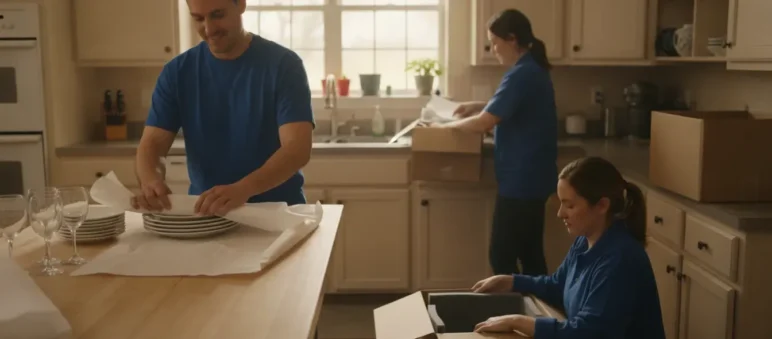
Planning a move in Middletown, DE? Packing often takes more time than expected. Professional help can protect fragile belongings, reduce last-minute decisions, and keep your move on schedule.
Request your free moving estimate to discuss packing needs with a relocation professional.
The right scope depends on your household, timeline, comfort level, and destination. Some households want every room packed. Others need help with dishes, artwork, closets, or a few difficult rooms. This guide explains how to plan packing services Middletown DE households can use with confidence.
What should packing services Middletown DE include?
Packing services Middletown DE households hire should include a clear scope, suitable materials, careful protection, organized labeling, and a plan for move day. Full packing covers most household goods. Partial packing focuses on selected rooms or belongings. Both options should be defined before work begins.
A useful packing plan answers five questions:
- Which rooms and belongings will the crew pack?
- Who supplies cartons, paper, tape, padding, and specialty materials?
- How will fragile, oversized, or valuable items receive extra protection?
- How will boxes be labeled for loading and unloading?
- When will packing happen compared with the move?
Ask for these details in writing. A clear scope helps prevent duplicate work. It also gives the crew a practical starting point when they arrive.
Should Middletown households choose full or partial packing?
Full packing is convenient when you want one crew to prepare most household goods. Partial packing works well when you can handle everyday items but want help with fragile, bulky, or time-consuming areas. The best choice matches your available time and the belongings that need the most care.
| Planning factor | Full packing | Partial packing |
|---|---|---|
| Best fit. | Busy households, large moves, or short timelines. | Households that want control over routine items. |
| Typical scope. | Most rooms and household goods. | Selected rooms, collections, or fragile items. |
| Customer preparation. | Separate essentials and non-movable items. | Finish self-packed areas before the crew arrives. |
| Main advantage. | Less packing work for the household. | More control over cost and personal sorting. |
Many people choose a blended approach. They pack clothing and low-risk items themselves. They ask professionals to handle kitchens, glassware, artwork, mirrors, lamps, or tightly packed storage areas. This approach can preserve control without leaving the hardest work until the final evening.
How do professional packers protect fragile belongings?
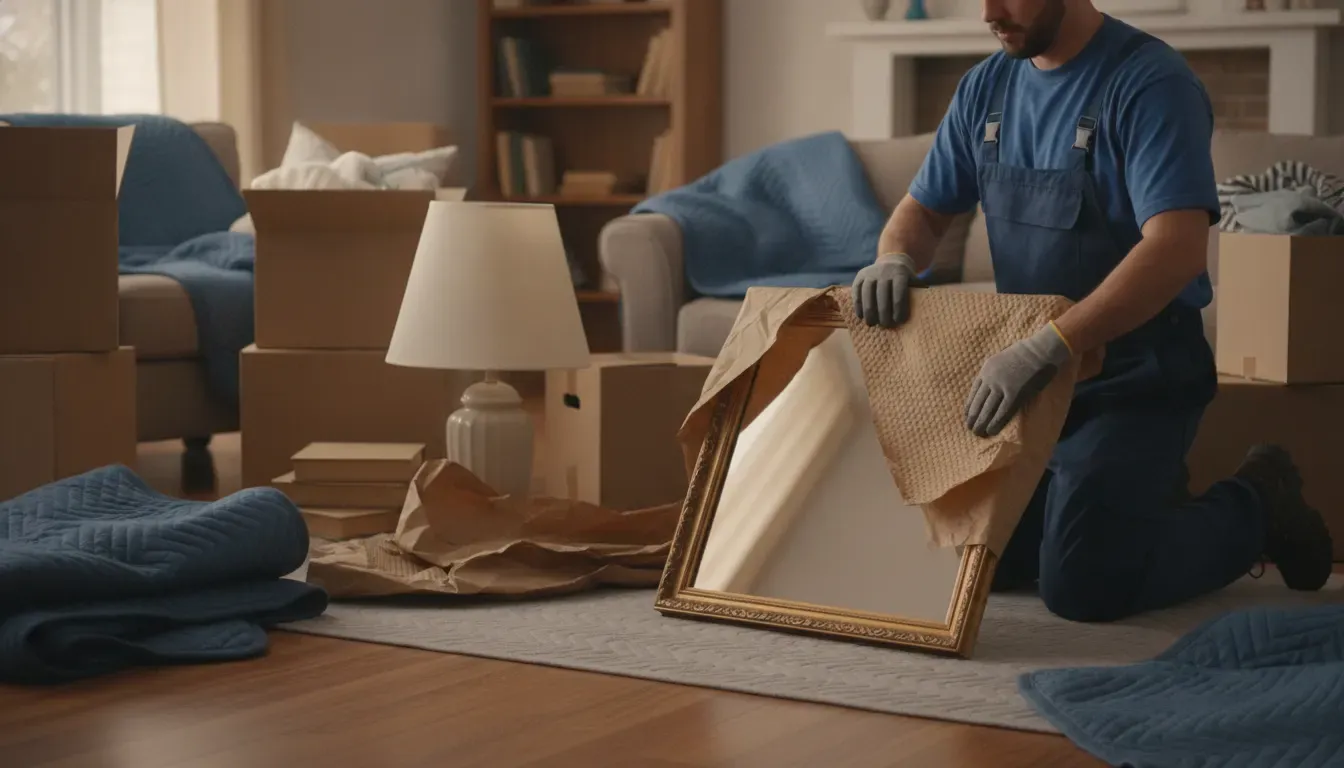
Professional packers protect fragile belongings by matching materials and methods to the item. They wrap individual pieces, cushion empty space, reinforce boxes, and keep delicate items from shifting. The goal is not simply to close a carton. The goal is to create a stable package that can be handled safely.
Start with a fragile-item inventory
Walk through the home before packing day. Identify glassware, dishes, mirrors, framed art, lamps, electronics, antiques, and delicate decorations. Note items that need special handling. Tell the coordinator about unusual shapes, heavy pieces, or items with sentimental value.
Use the right protection
Different items need different materials. Clean packing paper can wrap dishes and smaller objects. Cushioning helps fill voids. Corrugated protection, pads, or specialty cartons may suit mirrors and artwork. Avoid treating every item as if it has the same risk.
Do not place loose fragile items in a box. Wrap them separately. Cushion the bottom, sides, and top. Keep the carton stable enough to close without forcing it.
Separate personal essentials
Set aside prescriptions, identification, chargers, a change of clothes, basic toiletries, and important documents. Mark these items as essentials. Keep them with you rather than sending them on the moving truck.
What materials should you prepare for a Middletown move?
A moving supply plan should cover ordinary cartons, small cartons for heavy items, paper, tape, padding, and markers. Specialty belongings may need stronger cartons or custom protection. Professional packing services can supply materials, while self-packers should buy enough before the first room is opened.
- Small cartons for books and dense items.
- Medium cartons for general household goods.
- Large cartons for light items such as linens.
- Clean packing paper for dishes and glassware.
- Strong tape and a tape dispenser.
- Stretch wrap for grouped items and soft protection.
- Furniture pads or protective coverings.
- Markers, colored tape, and a simple inventory list.
Use the moving supplies checklist for Delaware households as a starting point. Then adjust the list for your rooms, storage areas, and specialty belongings.
Materials should support the move rather than create clutter. Buy or request supplies after you estimate the number of rooms and the amount of fragile inventory. A professional survey can help identify specialty needs before packing day.
How can you plan packing room by room?
A room-by-room plan turns a large packing project into smaller decisions. Start with areas that hold items you rarely use. Leave daily essentials until later. This order limits disruption and gives you a clearer view of the remaining work.
Kitchen and dining areas
Group dishes, glassware, serving pieces, and small appliances by use. Wrap breakables individually. Keep heavy items in smaller cartons. Separate food, cleaning products, and anything that should not travel with household goods.
Bedrooms and closets
Sort clothing before packing. Keep a small wardrobe for the days around the move. Use clean cartons for linens and lighter items. Identify shoes, seasonal clothing, and personal items by room so unpacking does not become a second sorting project.
Living rooms and home offices
Photograph cable connections before disconnecting electronics. Keep remotes, cords, and small accessories together. Protect framed art, lamps, and decorative pieces with materials suited to their shape. Tell the crew about items that are fragile, oversized, or difficult to replace.
Basements, garages, and storage areas
These spaces often contain dense, irregular, or seasonal items. Decide what will move before requesting packing help. Point out shelving, tools, sports equipment, and outdoor items during the survey. Clear a walking path so the crew can work safely.
Use the packing service overview to compare the kinds of help available. Then describe your actual rooms rather than asking for a generic package. A detailed room list produces a more useful planning conversation.
How should you label boxes for loading and unpacking?
Good labels tell the crew where a box belongs and how it should be handled. Use the destination room, a short contents description, and a handling note when needed. Consistent labels help the crew place boxes efficiently and help your household find essentials after arrival.
- Choose room names: Use the same names on every box and on your room plan.
- Add a short contents note: Write ‘serving dishes’ instead of only ‘kitchen.’
- Mark special handling: Identify fragile, upright, or heavy cartons.
- Keep an essentials group: Use a visible label for items needed on the first night.
- Track high-value items: Keep a private record for important belongings and documents.
Labels should remain readable after boxes are stacked. Place them on at least two sides. Avoid relying only on the top because another carton may cover it during loading.

When should you schedule packing before moving day?
Schedule packing early enough to separate sorting from wrapping. The best date depends on household size, packing scope, travel plans, access, and the moving date. Full packing may need more time than a focused kitchen or fragile-item appointment, so confirm the sequence during the estimate.
A practical schedule looks like this:
- Several weeks out: Decide what will move, go to storage, be donated, or be discarded.
- One to two weeks out: Confirm the packing scope, access instructions, parking details, and essentials plan.
- A few days out: Finish sorting personal items and identify anything that must remain with you.
- Before the crew arrives: Clear walkways, secure pets, and make fragile or high-priority items easy to identify.
- After packing: Keep documents and essentials separate from packed household goods.
Middletown households may also need to plan for new construction, apartment access, narrow driveways, stairs, or community rules. Share those details early. The crew can plan equipment, access, and timing more effectively when the information is known.
See professional packing service options if you want help defining full or partial packing for your household.
What should you prepare for a packing estimate?
Prepare a room-by-room overview, a list of fragile or specialty belongings, your preferred packing scope, and the timing you need. A physical or virtual survey gives the mover better information than a quick guess. Accurate details support a clearer estimate and a more useful schedule.
Before the survey, gather:
- The origin and destination addresses.
- Your preferred moving and packing dates.
- A room list, including attic, basement, garage, and storage areas.
- Photos or descriptions of artwork, mirrors, antiques, pianos, safes, and other specialty items.
- Access details such as stairs, elevators, parking limits, or long walks from the truck.
- Your choices for full packing, partial packing, self-packing, storage, or unpacking.
Do not hide difficult items to simplify the conversation. Missing information can create surprises later. Share what you know, ask what needs review, and request a written scope that explains included services and assumptions.
For a local move, you can also review the Middletown local moving guide for access, storage, and move-day planning context.
What should stay out of packed moving boxes?
Keep a small group of personal essentials with you instead of placing them in packed cartons. This group may include medicines, identification, keys, chargers, financial records, basic toiletries, a change of clothes, and items needed for children or pets. Pack these items in a clearly marked bag or vehicle.
Also ask the mover about belongings that need separate arrangements. Some household items may be unsuitable for ordinary shipment because of their condition, contents, size, or special handling needs. Do not guess. Show the coordinator anything unusual during the survey and follow the written instructions for the move.
A short essentials list protects your first night from the larger unpacking project. It also keeps important documents and time-sensitive belongings within your control while the crew loads and transports household goods.
How can packing services fit storage or a local move?
Packing, moving, and storage should be planned together when dates do not line up. A household may need packed items held temporarily, or it may need selected belongings separated from the main shipment. Discuss the sequence so boxes are protected, identified, and delivered to the right destination.
If your move needs a storage interval, review the company’s storage solutions before the estimate. Ask how items will be inventoried, how access works, and which belongings should remain accessible. If you are moving locally, the local moving service page can help you compare the broader move process with your packing needs.
Also ask how valuation protection applies to your shipment. The valuation protection page explains why coverage choices belong in the planning conversation rather than after a problem occurs.
Plan your Middletown packing and moving estimate before the final week fills with sorting, access, and scheduling decisions.
Frequently Asked Questions About Packing Services Middletown DE
Do professional movers offer full and partial packing?
Yes, packing can be planned as a full-service or partial service. Full packing covers most household goods. Partial packing focuses on selected rooms or difficult belongings, such as dishes, artwork, or fragile collections. Confirm the exact scope before the estimate is finalized.
Can I pack some items myself and hire help for fragile rooms?
Yes, a blended plan can work well. Many households self-pack clothing and routine items, then hire professionals for kitchens, glassware, artwork, mirrors, or other delicate belongings. Separate self-packed items from crew-packed items and discuss both groups during the survey.
How early should I schedule packing services?
Schedule packing after you know your move date and before the final week becomes crowded. Earlier planning gives you time to sort belongings, confirm materials, explain access conditions, and reserve the right amount of crew time. The required lead time depends on scope and availability.
Will a mover provide packing materials?
Many professional packing plans include the materials needed for the agreed scope. Ask which cartons, paper, padding, tape, and specialty materials are included. If you self-pack, build a supply list before starting and buy extra materials for fragile or unusually shaped belongings.
How do I get an accurate packing estimate?
Request a physical or virtual survey and provide a complete room list. Include garages, basements, attics, closets, fragile items, specialty belongings, access restrictions, and storage needs. A detailed review helps the mover prepare a more accurate scope than a blind estimate.
Request a detailed estimate for your Middletown move and get a packing plan built around your household, timeline, and belongings.