
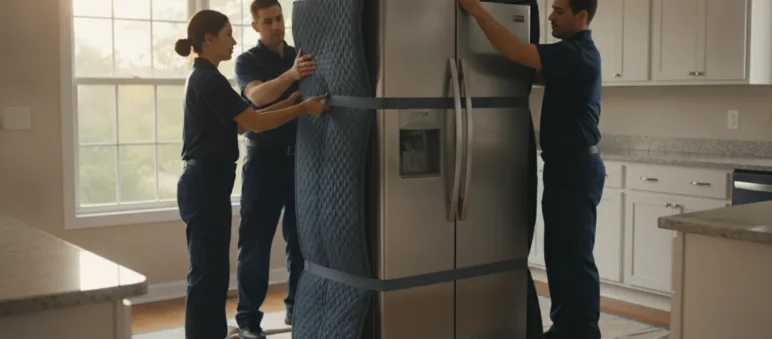
How to prepare appliances for moving comes down to one idea: empty them, dry them, disconnect them, and tell the crew what is ready. A refrigerator that is still full of ice, or a washer that still holds water, slows the whole job and risks a leak on the truck. This guide covers the kitchen and laundry pieces most Delaware homes actually move.
Call (800) 296-0417 to plan dollies, pads, and access before moving day, or request your free in-home estimate.
Delaware Moving & Storage has helped tri-state families move since 1984. We are a Wheaton World Wide Moving agent, and we build every quote from an in-home or virtual survey. We do not give blind estimates over the phone. Local crews bring a truck, a hand truck, a four-wheel dolly, and moving pads. If an appliance needs gas work, a qualified technician handles that, not the moving crew.
This page is the prep checklist. It is not a price guide, and it is not a full moving-day script. For the broader countdown, use our guide on how to prepare for movers. For what the crew does once they arrive, read what to expect on moving day.
How do you prepare appliances for moving before the truck arrives?
Finish appliance prep the day before the truck arrives, not while the crew is in the driveway. Water, ice, and loose parts are the three things that cause the most delays, and a clean, dry, empty appliance is also easier to protect with pads.
Work through this order, because it fits a local hourly move in New Castle County and a longer interstate load the same way.
- Empty every refrigerator, freezer, dishwasher, washer, and oven. Eat, donate, or toss what you will not move.
- Defrost the freezer with the door open and towels on the floor. Wipe it dry before you close the door again.
- Shut off the water supply to the ice maker, washer, and dishwasher. Disconnect the hoses you are comfortable handling.
- Unplug each unit and tape the cord to the back so it cannot drag.
- Remove loose shelves, bins, knobs, and racks. Bag the hardware and tape the bag to the appliance, or box it with a label.
- Secure doors so they cannot swing open on a ramp or in a stairwell.
- Measure doorways, turns, and the truck path. Note stairs, tight landings, and any unit you want left behind.
- Write a one-page list for the crew: which appliances move, which stay, and which still need a technician.
If you are still weeks out, fold these steps into the eight-week Delaware moving checklist. A local week-by-week plan lives in the local moving checklist.
How do you prepare a refrigerator for moving?
Start the refrigerator two to three days early if it has an ice maker. Whirlpool’s moving guidance says to shut off the ice-maker water supply at least one day ahead, disconnect the water line at the back, and empty the ice bin. Then remove all food, unplug the unit, and let the freezer defrost with the doors open.
Put towels down before the ice melts, because a puddle on a wood floor is a slip hazard and a stain. Wipe the interior dry so odors do not sit in a closed box for hours. Take out glass shelves and crisper bins when you can, then wrap them or pad them if they must stay inside.
Keep the refrigerator upright. Whirlpool says not to lay it on its side, because that can harm the sealed cooling system. Use a dolly rated for the weight, and strap the unit so it cannot tip. Tape the power cord to the back, and never roll or lift a refrigerator that is still plugged in or still connected to water.
If the fridge will sit in storage before delivery, prop the doors slightly open so air can move. A climate-controlled space is the safer choice. Our Delaware storage page explains facility options when the new kitchen is not ready.
Model steps vary. Follow the use-and-care guide for your brand, and use Whirlpool’s refrigerator moving-care page as a clear example of the shutoff, defrost, and upright rules.
How should washers, dryers, and dishwashers be prepared?
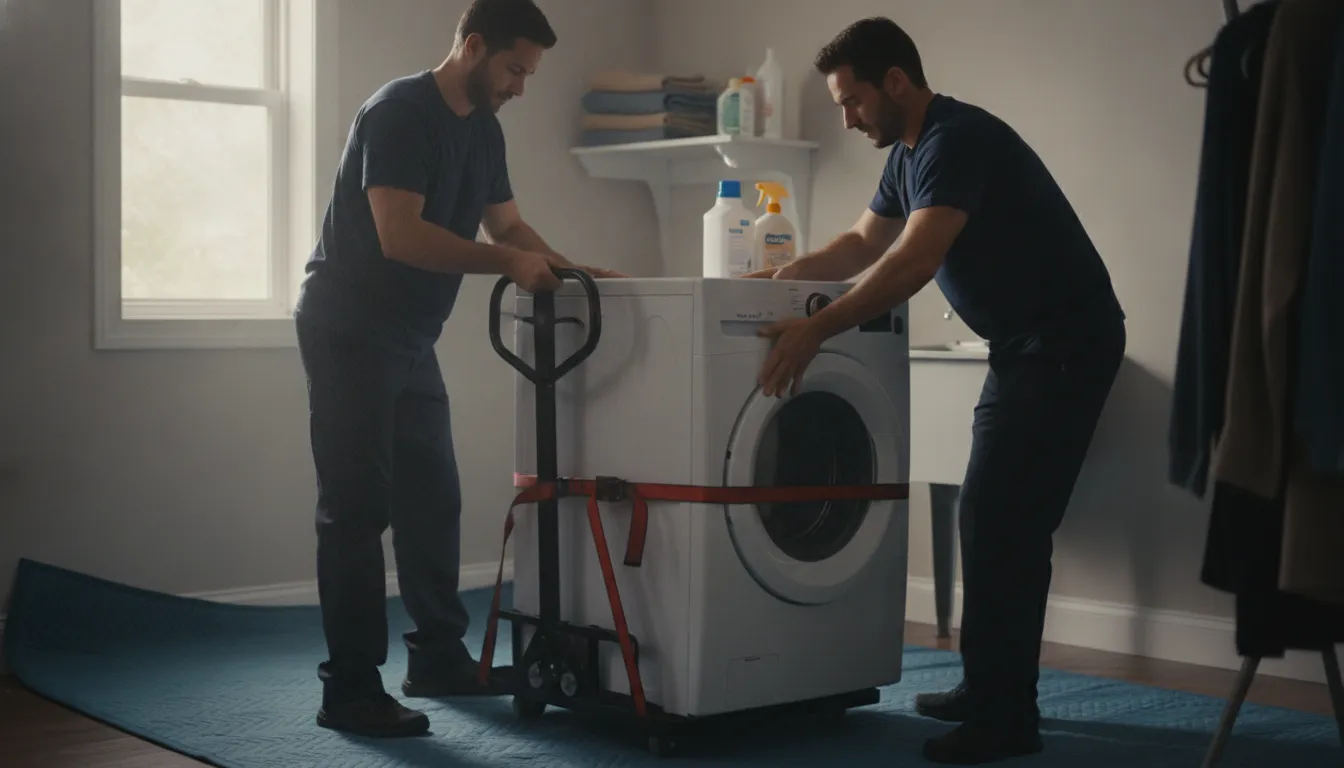
Laundry and dishwashers fail in transit for a simple reason: leftover water. Drain them, shut the valves, and secure anything that can swing or rattle. Do this the day before, so a slow drip has time to show itself.
| Appliance | Prep before moving day | Leave for a technician |
|---|---|---|
| Washer | Run a drain or spin cycle. Shut off hot and cold valves. Disconnect hoses. Leave the door ajar until it is dry, then secure it. | Any valve that will not close, or a leak at the wall. |
| Dryer (electric) | Unplug it. Clean the lint screen. Tape the cord. Secure the door. | Nothing, unless the outlet or cord looks damaged. |
| Dryer (gas) | Do not disconnect the gas line yourself. Clean lint and secure the door only after the gas is safely off. | Gas shutoff and reconnection belong to a qualified technician. |
| Dishwasher | Empty it and run a drain cycle. Shut off the water under the sink. Disconnect the supply and drain lines if you know how. Secure the door and racks. | A stuck shutoff, or a connection you do not recognize. |
Coil washer hoses and put them in a labeled bag, then check the floor for a last drip before you call the room done. Electric dryers are usually a plug and a vent, while gas dryers are not a do-it-yourself disconnect. Whirlpool notes that gas work can be unsafe, and that movers may decline that liability. Hire a technician for the shutoff at the old home and the hookup at the new one.
Front-load washers often have shipping bolts for the drum. If you still have them from the original install, put them back in before the truck moves. If you do not, tell the crew the drum can shift, because that one note prevents a surprise at the landing.
What is different about a range, oven, or cooktop?
Ranges need a clean cavity and a safe disconnect, not a deep clean the morning of the move. Take out racks, broiler pans, and loose knobs, then bag the knobs and tape them inside a drawer or to the back of the unit. Wipe grease so it does not smear pads and clothing.
An electric range unplugs, often from a high-amp outlet behind the unit, so slide it out only far enough to reach the plug and watch the floor. A gas range stays connected until a qualified technician shuts it off and caps the line. Do not ask the moving crew to do that work.
Secure the oven door so it cannot drop open on a ramp. If the door lifts off, wrap it flat and move it as its own piece. Glass cooktops need a pad on the face, not tape stuck to the glass, and the crew should hear about any warming drawer or griddle plate still inside.
Measure the range before you assume it fits the new kitchen, because a slide-in model and a freestanding model do not clear the same openings. If the new house is still under construction, say so on the survey so delivery timing matches the finished opening.
Which parts should you remove, and which should stay put?
Loose parts break when they bounce inside an empty cabinet. Remove what rattles. Leave what the manufacturer says must stay aligned.
- Remove refrigerator shelves, bins, and ice trays when they lift out cleanly.
- Remove washer and dryer hoses, and bag them with any transit bolts.
- Remove dishwasher racks only if they come out without tools.
- Remove oven racks and knobs, and keep knobs in one labeled bag.
- Leave sealed refrigerant parts, gas valves, and internal motors alone.
- Leave the refrigerator upright and the doors secured for the ride.
Use stretch wrap or a soft strap on doors, because hard tape on a finish can lift paint. Our packing service covers cartons, pads, and wrap when you would rather not pack the small parts yourself. For furniture around the appliances, the furniture packing guide is the better page, and this one stays on the machines.
Schedule a survey for your appliance list and we will note stairs, gas units, and what stays behind.
How does a Delaware move change appliance prep?
The prep steps stay the same, but the timing and the paperwork do not. A local move in Wilmington, Newark, Bear, or Hockessin is often an hourly job. Local moving includes the truck, hand truck, four-wheel dolly, and pads, with two or more people when the load needs them. You still defrost and drain the night before, because the clock starts when the crew is working.
An interstate move adds a longer gap between pickup and delivery, so food should not ride in the refrigerator. Dry the interior completely, and plan on storage or a later delivery if the new kitchen is not open. Before that household-goods move, ask the mover for Your Rights and Responsibilities When You Move, and read it before you sign.
Gas ranges and gas dryers need a qualified technician, not a guess at the fitting. The CPSC gas safety guide explains why gas work stays with a qualified person. Our long-distance moving service covers that relocation.
Winter adds one extra check, because a washer hose left in an unheated garage can freeze and split. Drain it, and do not leave standing water in a unit overnight. The winter moving guide covers weather timing, but it does not replace this appliance list.
Tell us on the survey if a refrigerator, washer, or range is part of the shipment. A walkthrough catches weight, stairs, and gas lines that a phone call misses. That is the same no-blind-estimate rule we use on every home.
What should you hand the crew on moving morning?
Hand the lead a short list, not a tour of every cabinet. Say which appliances go on the truck, which stay with the house, and which are already disconnected. Point out a gas range that a technician has already shut off, and point out anything that is still live so nobody pulls it by mistake.
Clear a path from the kitchen and laundry to the door. Pads protect finishes, but they cannot fix a unit that is still full of water. If you want broader help packing the rest of the house, full-service moving is the right conversation. Pianos, antiques, and other specialty pieces belong on the specialty item movers page, not in this checklist.
Ask about valuation protection before loading day. You can choose limited liability or full-value protection. The survey is the time to match that choice to the appliances you are shipping.
At the new home, wait before you plug a refrigerator back in if the manufacturer asks you to let it settle upright. Reconnect water only after the unit is in place and level. Call a technician for any gas hookup. Then run an empty test cycle on the washer and dishwasher before you load them with clothes or dishes.
Book your estimate before you disconnect anything and we will build the plan around the appliances you are actually moving.
Frequently asked questions
How early should I defrost a freezer before moving?
Start at least the day before, and earlier if the freezer is packed with ice. Whirlpool suggests allowing several hours with the door open and towels down. Wipe it dry before the doors are secured for the truck.
Can movers disconnect a gas dryer or gas range?
Do not expect the moving crew to disconnect or reconnect gas. A qualified appliance technician should shut off and later reconnect gas lines. The crew can move the unit once it is safe and disconnected.
Should a refrigerator lie on its side in the truck?
No. Keep it upright for the whole move. Laying a refrigerator on its side can damage the sealed cooling system. Strap it to a rated dolly and keep doors secured.
Do I need to empty a dishwasher and washer?
Yes. Run a drain cycle, shut off the water, and disconnect hoses you can handle safely. Leftover water leaks onto pads, floors, and other furniture. Bag the hoses so they are not lost.
Will Delaware Moving & Storage move appliances on a local job?
Yes, when they are on the surveyed list. Local crews arrive with a truck, hand truck, dolly, and pads. Tell us about stairs, gas appliances, and anything that should stay in the home. Request an in-home or virtual estimate so the quote matches the real load.
Call (800) 296-0417 or request your moving estimate today and we will walk the appliances with you before the truck is booked.