

A moving supplies checklist helps Delaware households buy the right materials before packing starts. You can protect fragile belongings, organize every room, and avoid rushed store trips during a local or long-distance move.
Request your free moving estimate today for help matching supplies to your home, schedule, and packing needs.
Quick answer: A moving supplies checklist delaware homeowners can use starts with small, medium, and large boxes, quality packing tape, packing paper, bubble wrap, markers, and labels. Add specialty protection for fragile or unusually shaped items. Buy a starter set before packing, then adjust quantities as each room is sorted.
This guide focuses on supplies for homeowners and apartment renters in Wilmington, Newark, Middletown, Hockessin, New Castle, Bear, and nearby communities. For a broader plan, use the complete Delaware moving and storage guide as your planning hub.
What belongs on a moving supplies checklist delaware homeowners can use?
A useful checklist starts with sturdy boxes in several sizes, moving-grade tape, packing paper, bubble wrap, labels, and permanent markers. Add mattress bags, furniture pads, dish packs, mirror cartons, and other specialty materials when your inventory calls for them. Your room count, item weight, and fragile belongings determine the right mix.
Start with the supplies that every room uses. Sturdy cartons, tape, paper, and labels create the basic packing system. Specialty items come next, based on what you own.
- Small boxes: Use them for books, canned goods, tools, pantry items, and other dense belongings.
- Medium boxes: Use them for toys, shoes, folded clothing, small appliances, and everyday household items.
- Large boxes: Reserve them for pillows, towels, bedding, lampshades, and other lightweight items.
- Wardrobe boxes: Use them for hanging clothing that should move directly from a closet.
- Dish packs: Choose stronger cartons for plates, glassware, and other dense breakables.
- Mattress bags: Protect mattresses and box springs from dirt during handling and transport.
- Furniture pads: Add a protective layer around wood, upholstered pieces, and finished surfaces.
Do not fill a large carton with books or other heavy objects. Smaller boxes distribute weight better and are safer to carry. The University of Pittsburgh also advises using smaller containers for heavy items in its moving tips.
How many moving boxes should you buy?
Use these ranges as a starting point, not a fixed quote. Decluttering, storage areas, children, collections, and a full garage can change the total.
| Household | Starter box range | Planning note |
|---|---|---|
| Studio or one-bedroom apartment | 20 to 35 | Choose mostly small and medium boxes. |
| Two-bedroom apartment or home | 40 to 60 | Add specialty cartons for the kitchen and closets. |
| Three-bedroom household | 60 to 90 | Allow extra capacity for an attic, basement, or garage. |
| Larger home | 90 to 100 or more | Account for seasonal items, tools, sports gear, and offices. |
Buy or collect a small starter supply first. Add cartons after you sort each room. This approach reduces waste and prevents unopened boxes from taking over your home.
Which tape, paper, and wrap do you actually need?
Most moves need moving-grade carton-sealing tape, a handheld dispenser, clean packing paper, and bubble wrap for delicate surfaces. Tape closes boxes. Paper cushions and fills space. Bubble wrap protects glass or finishes. Use each material for its intended job instead of treating one product as a substitute for everything.
Moving-grade tape adheres securely to corrugated cartons. Household cellophane tape and masking tape are not reliable substitutes for sealed moving boxes. A tape dispenser also saves time and keeps the packing line moving.
- Packing tape: Keep several rolls available for the kitchen, living spaces, bedrooms, and final cleanup.
- Packing paper: Wrap dishes, glasses, décor, and everyday items without transferring ink.
- Bubble wrap: Use it for especially delicate pieces, screens, mirrors, and surfaces that scratch easily.
- Stretch wrap: Secure drawers, bundled items, or protective pads without placing adhesive on furniture.
- Zip bags: Hold screws, cords, remote controls, and small hardware with the item they serve.
- Plastic sheeting: Cover clean furniture or floors when weather creates mud near entryways.
Use paper to cushion the bottom, sides, and top of a carton. Wrap each fragile piece before placing it inside. Fill empty spaces so items cannot shift when the box is lifted.
Do not use newspaper as the only wrap for light-colored dishes. Ink can transfer to surfaces. Clean packing paper is a safer choice for dishes, glassware, and decorative items.
How much packing paper and bubble wrap should you buy?
Estimate by the number of kitchen cabinets, display shelves, and fragile rooms. Buy extra paper for dishes because crumpled paper provides both wrapping and cushioning. Use bubble wrap selectively instead of wrapping every household object.
A short supply is easier to correct than damaged belongings. Keep materials in the room being packed. That limits repeated trips and shows when a room is approaching completion.
Request a free estimate before you shop to discuss the supplies, packing scope, and timing for your Delaware move.
What specialty supplies protect mirrors, TVs, and fragile items?
Specialty supplies reduce risk when an item is heavy, fragile, oversized, or difficult to cushion inside a standard carton. Use dish packs for dense breakables and mirror cartons for framed glass. Choose fitted protection for televisions. When an item is unusually valuable or awkward, ask experienced movers about the safest packing method.
Standard boxes work for many belongings, but they are not ideal for every shape. Specialty cartons give delicate items more structure and make handling instructions clearer.
| Item | Useful supply | Packing reminder |
|---|---|---|
| Plates and glassware | Dish pack and clean packing paper | Wrap pieces individually and keep heavy items low. |
| Framed art or mirrors | Mirror carton, corner protectors, and paper | Protect corners and mark the carton as fragile. |
| Television | Original box or fitted TV carton | Keep the screen covered and avoid loose pressure. |
| Computer equipment | Anti-static bags, paper, and a sturdy carton | Photograph cable connections before disconnecting. |
| Lamps | Long carton, paper, and bubble wrap | Remove bulbs and shades before wrapping the base. |
| Clothing | Wardrobe carton or clean medium box | Keep seasonal clothing together by destination room. |
| Furniture | Furniture pads, stretch wrap, and corner protection | Do not place tape directly on finished surfaces. |
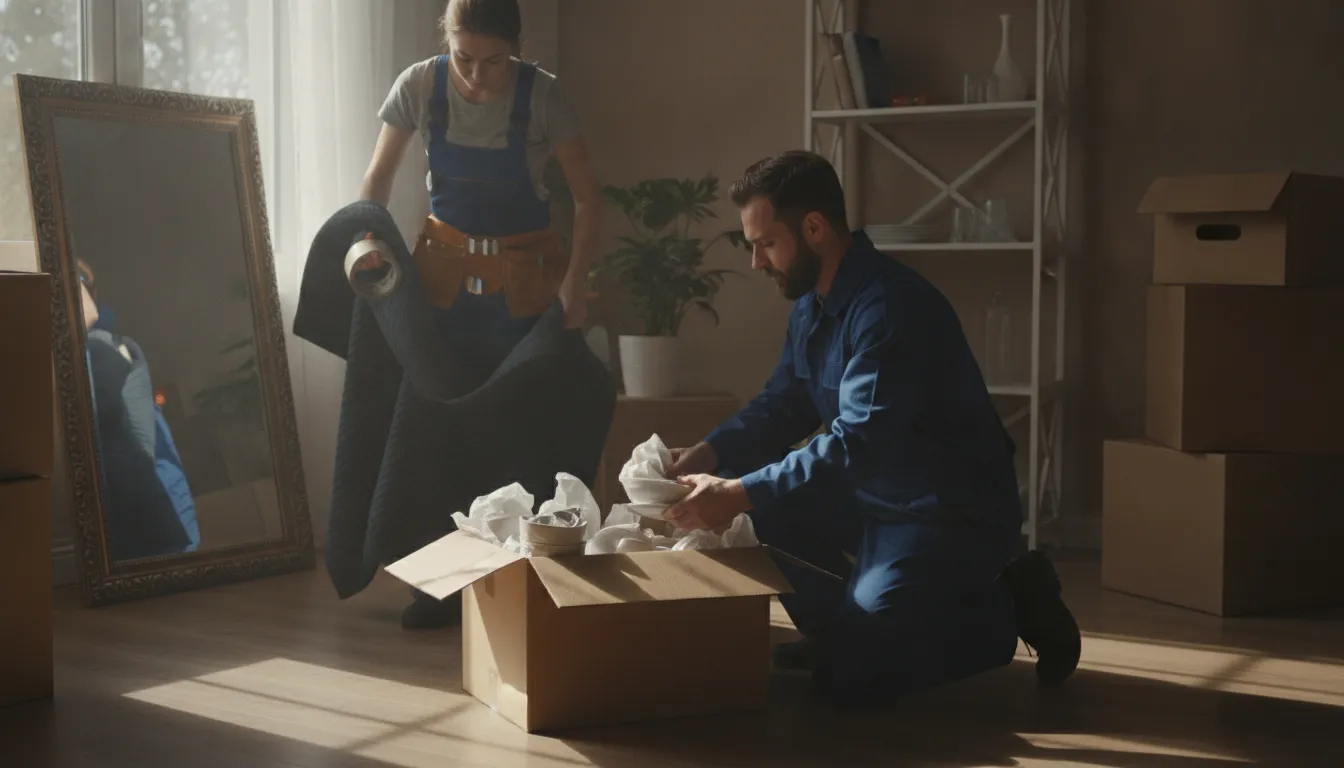
For dishes and other dense breakables, choose a dish barrel or heavy-duty dish pack instead of a large general-purpose carton. Keep each box small enough for safe lifting.
For a television, use its original packaging when available. Otherwise, choose a carton designed for the screen size. Protect the display from pressure, and never place heavy objects on top.
For mirrors and artwork, use corner protection before placing the item in a carton. Keep framed pieces upright when appropriate, with cushioning that prevents direct contact with the carton wall.
Delaware weather can change quickly during a move. Keep paper products dry and stage sensitive items away from open doors. A covered loading path also helps protect cartons from wet ground.
How can labels and markers make moving day easier?
Labels make a box useful before it is opened. Mark the destination room, list the main contents, and note handling needs on two sides. A color system can speed placement. One open-first box keeps bathroom, kitchen, charger, and cleaning essentials available on the first night.
Choose permanent markers with a broad tip. Write labels on at least two sides and the top when possible. Boxes may be stacked, turned, or carried through a hallway.
- Assign a color to each room. Use colored tape, stickers, or labels for bedrooms, the kitchen, bathrooms, and storage areas.
- Write the destination room. Use a large label that a mover can read from several feet away.
- List the primary contents. Name the category, such as dishes, linens, books, or office equipment.
- Mark special handling needs. Use clear words such as fragile, upright, or open first.
- Number boxes when helpful. A simple count can reveal whether a room is missing a carton.
- Keep an inventory for high-value items. Record what is inside without placing sensitive personal information on the exterior.
What should go in an open-first box?
Pack toilet paper, hand soap, chargers, medications, basic toiletries, paper towels, cleaning supplies, a change of clothes, and simple kitchen items. Keep the box visible and tell the moving crew where it belongs.
You may also need pet supplies, children’s comfort items, coffee equipment, snacks, and important documents. Pack these separately when access matters during travel or a long move.
Keep a small tool kit nearby. Include scissors, a utility knife, spare tape, markers, batteries, and a phone charger. These items help you finish setup without opening several cartons.
Should you buy moving supplies or have Delaware movers provide them?
Buy basic supplies when you want to pack gradually and control the shopping list. Ask movers to provide materials when packing requires specialty cartons or professional protection. This choice also helps when the completion date is close. Your time, inventory, and comfort level should guide the decision.
| Option | Best fit | What to confirm |
|---|---|---|
| Buy supplies yourself | Gradual packing and simple household goods | Quantities, carton sizes, dry storage, and disposal plan. |
| Use mover-provided materials | Specialty items, tight schedules, or full-service packing | Which materials are included and how charges are calculated. |
| Combine both approaches | Self-packing for everyday items with help for fragile pieces | Who packs each room and which items need professional care. |
Ask what the moving company supplies before buying a large quantity. Some crews can bring cartons, paper, wrap, pads, or specialty materials as part of a selected packing service.
Delaware Moving & Storage offers packing service guidance for homeowners comparing do-it-yourself packing with professional help. The choice should reflect your schedule and the items that need protection.
A physical or virtual survey can clarify the scope before moving day. It gives the team a better view of room count, access conditions, specialty belongings, and packing requirements. That supports a more accurate estimate than guessing from a short description.
When storage is part of the plan, review the company’s storage solutions before buying disposable materials. The right combination of packing and storage planning can reduce repeated handling.
For federal moving-planning guidance, review the Federal Motor Carrier Safety Administration’s moving checklist. Keep your own records for estimates, inventories, receipts, and important contacts.
What should you do one week before packing and moving?
One week before the move, finish decluttering, confirm supply quantities, and pack nonessential rooms. Reserve materials for daily needs. Separate items that movers cannot transport, label every finished carton, and keep documents and medications with you. A short final checklist prevents supply gaps from delaying the schedule.
- Finish donating, recycling, or discarding items that will not move.
- Check each room for boxes that need stronger cartons or extra cushioning.
- Pack seasonal clothing, décor, books, and rarely used kitchen items first.
- Set aside medications, identification, financial records, keys, and moving documents.
- Confirm how appliances, plants, valuables, and hazardous materials should be handled.
- Keep daily-use supplies in a separate open-first group.
- Reserve enough tape, labels, paper, and wrap for final-day packing.
Do not seal a box before checking its contents and destination label. A quick review can prevent a room from receiving the wrong items or a fragile carton from leaving without a handling note.
For a move across Delaware, Pennsylvania, Maryland, or New Jersey, consider travel time and access at both addresses. Apartment elevators, narrow stairs, parking restrictions, and weather can affect the packing and loading plan.
Frequently Asked Questions About Moving Supplies
Delaware households usually need clear answers about supply timing, box size, protective materials, labels, and mover-provided packing. The questions below address the decisions that most often affect an organized packing plan, a safe move, and a more useful estimate.
How early should I buy moving supplies?
Buy basic supplies before packing begins, then add materials room by room. Starting early gives you time to compare carton sizes, replace weak boxes, and protect fragile items without rushing.
Do I need bubble wrap for everything?
No. Use bubble wrap for especially delicate items, glass, screens, and surfaces that scratch easily. Packing paper can wrap many everyday belongings, while towels can fill gaps when appropriate.
What is the safest box size for books?
Use small boxes for books. Fill them until they are comfortably liftable, then add paper at the top. Large cartons can become too heavy and difficult to handle when filled with books.
How should I label boxes for movers?
Write the destination room and main contents on two sides. Add a clear handling note for fragile items. A room color system can help the crew place cartons efficiently.
When should I ask movers about packing supplies?
Ask during the estimate or planning conversation. The team can explain available materials, packing options, and which items may need professional protection. This prevents duplicate purchases and last-minute decisions.
Request your free estimate before moving day to review your packing needs and create a clear supplies plan.
How can a moving supplies checklist delaware support a smoother move?
A moving supplies checklist delaware households prepare early can reduce interruptions and protect fragile belongings. It can also make each box easier to place. Match supplies to the inventory and label cartons clearly. Decide which tasks need professional help. Then confirm the plan with an accurate physical or virtual survey.
A checklist is most valuable when it supports a decision. Use it to identify what you can pack safely, what needs specialty protection, and where professional help would save time.
Delaware Moving & Storage has served the tri-state area from northern Delaware for more than 42 years. The team can discuss local, long-distance, and storage-related moving needs during the estimate process.
Use the Delaware moving and storage planning hub for related preparation topics. Keep your supply list with your inventory so the plan remains easy to update.
Request your free moving estimate today for a personalized conversation about packing, supplies, and your upcoming move.