
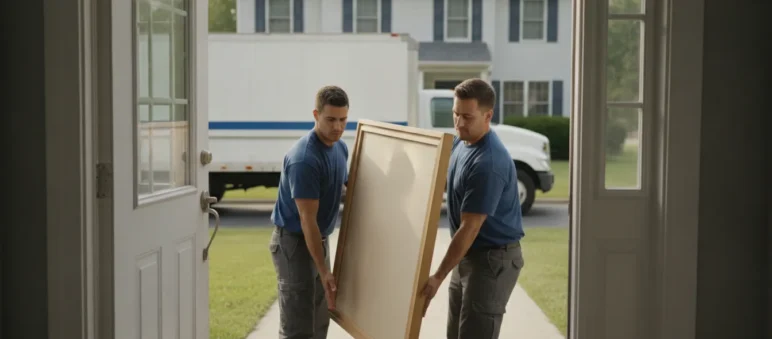
A painting can leave a wall long before the next home is ready. Knowing how to store paintings keeps frames, glass, and canvas from leaning on each other in a garage or spare room.
Request a physical or virtual survey so the estimate covers each painting, not just the number of boxes.
The steps below cover orientation, glass, stacking, a home-versus-facility choice, and a short checklist. For the wider collection plan, use the Delaware fine art storage guide. This page stays on paintings only.
How to store paintings so they stay protected?
Store framed paintings upright, one piece at a time, with the painted surface protected and nothing stacked against the front. That is the practical answer for a move between homes.
The Canadian Conservation Institute says framed paintings and canvas on stretchers should stay in a secure, stable room. Unframed works on card or panel belong flat in boxes or drawers. Canvas that is not on a stretcher can lie flat on a shelf. Oversized pieces need a conservator’s advice before you design a spot for them.
The Smithsonian Museum Conservation Institute says to handle one painting at a time. Use two people for a large canvas or panel. Carry from the sides of a stable frame, keep jewelry off, and use clean hands or cotton gloves. Fix loose keys, the small wedges in the stretcher corners, before the piece moves.
A garage, attic, or damp basement is a poor holding spot. Attics swing hot and dry. Basements take leaks and high humidity. An outside wall can also swing in temperature. Pick an interior room, or a storage facility, and keep the path free of tight turns and stairs when you can.
What orientation and spacing keep a painting safe?
Upright storage beats a pile. A painting stored flat under boxes takes weight it was never built to carry. Face-to-face stacking lets glass, frame corners, and hardware strike the next piece.
Stand each framed painting upright on its bottom edge. Leave a small gap so frames do not touch. If you must place two pieces close together, put a clean sheet of glassine or acid-free board between them. Do not let the painted face rest on that sheet for months if you can hang or rack the piece instead.
Skip plastic wrap for a long hold. Plastic can trap moisture against the canvas and the back of the frame. A short move wrap is different from months in a sealed bag. Ask a packer which sheet is meant for the time you actually need.
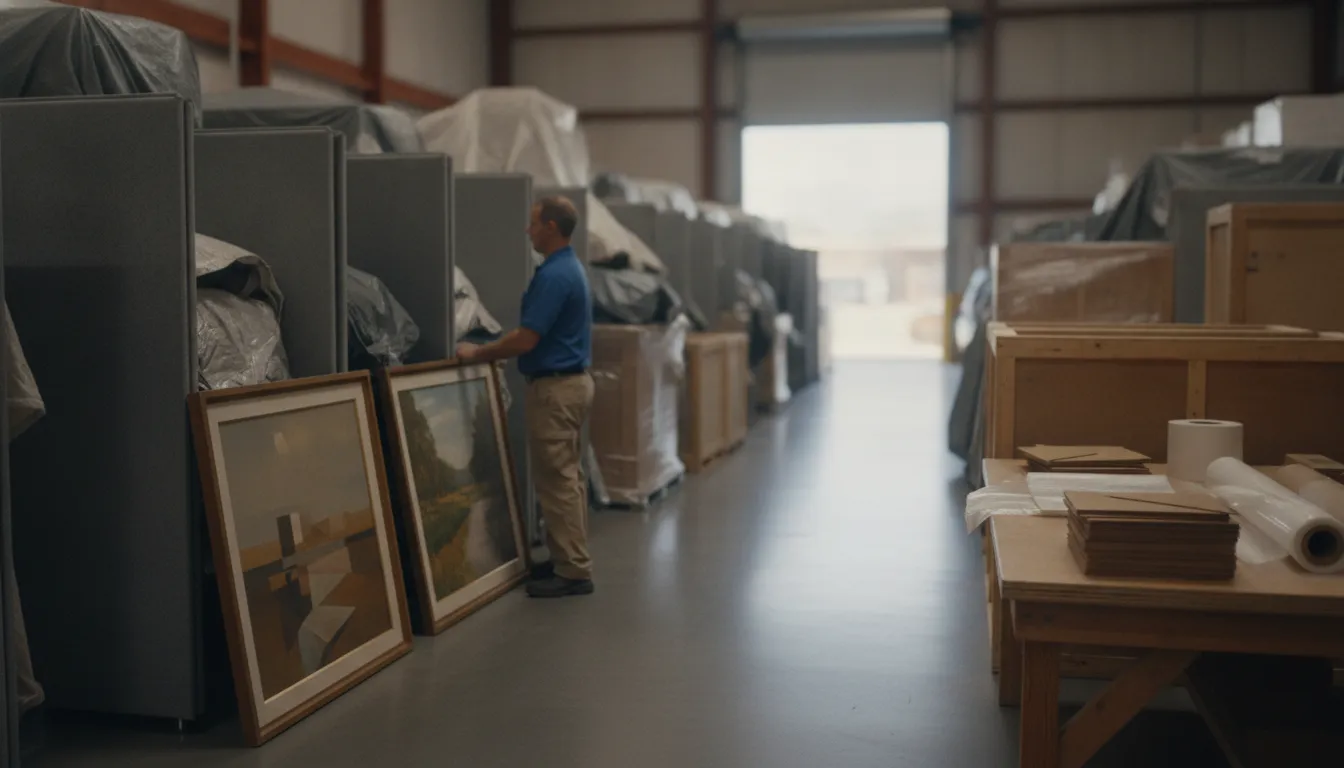
Do not store paintings in a pile on the floor. Art-handling firms use racks so frames carry their own weight. At home, a closet with padded upright slots is closer to that idea than a stack in the corner. Keep the bottom edge off a damp floor with a clean board.
Glass and acrylic glazing need the same gap. A bump can crack glass onto the paint. If the glazing is already loose, do not ship or store the piece until a framer reseats it. Note that condition before anyone wraps it.
Which room or facility should hold paintings between homes?
Use the room test before you book space. If the spot is only fine for a weekend, it is not fine for a closing that slips by two months.
| Holding spot | Works when | Avoid when |
|---|---|---|
| Interior closet or spare room | The stay is short, the room stays dry, and paintings stand upright with gaps. | The room shares a wall with a kitchen, bath, or outside wall that swings in temperature. |
| Climate-controlled storage | The gap between homes is long, or the paint and frame are already fragile. | You have not asked whether temperature and humidity are actually controlled. |
| Containerized storage with a mover | You want the same crew to pack, hold, and deliver, and you need an item list. | You expect to pull one painting out every week without scheduling access. |
| Garage, attic, or basement | Almost never for paintings. A day of staging is the limit. | Any stay that includes heat, freezing, leaks, or direct sun. |
Heat dries paint and can soften layers. Low humidity makes paint brittle. High humidity invites mold. Direct sun fades color. Dirt and soot can darken a varnish. Those are the risks the Smithsonian flags for ordinary rooms, and they apply between homes too.
Delaware Moving & Storage keeps short- and long-term storage in a facility of more than 40,000 square feet. The building has 24-foot clearance, five loading docks, and containerized storage. A 24-hour central alarm is part of the setup.
Ask whether the unit you would use controls temperature and humidity. Do not assume every container does. The climate-controlled storage guide explains when that option matters. The storage service page covers the facility itself.
How should glass, frames, and canvas be protected in storage?
Glass, gilt, and bare canvas fail in different ways. Treat them as three jobs, not one wrap.
Glazed paintings need a firm frame and a gap. If the glass already rattles, a framer should reseat it before travel. Acrylic glazing cracks less often than glass, but it still scratches. Do not store a glazed face against another frame. A corner can star the glass and drop shards onto the paint.
Gilt and carved frames chip when they touch. Pad the outer edge, not the ornament. Tape belongs on the outer wrap only. Adhesive on gilt pulls the finish off later, even when it looked harmless on day one.
Bare canvas shows fingerprints and holds dust. The Smithsonian notes that unprimed canvas, common on newer work, marks easily. Wear clean cotton gloves. Carry from the frame sides. Never grip the front of the canvas, and never slide one canvas across another.
The back of the painting matters too. Loose wires, sawtooth hangers, and sticking-out screws cut the next piece. Tape wires flat against the back board, or remove them and bag them with the inventory number. Leave the stretcher keys in place if they are seated. If a key is missing, note that on the photo so a later sag is not a surprise.
A short home stay can use a glassine sheet and an upright closet slot. A long stay, or a painting with heavy glass, deserves a talk about a crate or a bin. That choice belongs in the survey, not in a last-minute wrap at the curb.
How to store paintings before a move?
Preparation is a record, not a restoration. You are trying to show what the piece looked like before it left the wall.
- Look at the front, back, frame, glass, and hanging hardware. Write down chips, cracks, loose joints, and flaking paint.
- Photograph the full piece, then the corners and any mark you already see. Name the file with the same number you will put on the inventory.
- Check the stretcher keys. If they are loose, set them back before the canvas is moved. Do not force a warped frame.
- Dust only with a clean, soft, dry brush if the surface is stable. Do not spray cleaner on paint, gilt, or glass over paint.
- Ask for packing that matches the piece. Full or partial packing is available. Read the packing service page and the fragile packing guide before you wrap anything yourself.
- Label the outside of the wrap, not the frame. Include the inventory number and an upright arrow. Keep tape off the canvas, gilt, and glass.
- Walk the carry path. Note stairs, tight turns, and low fixtures. Large pieces need two people, even for a short carry to the truck.
If a painting is torn, flaking, or already wet, stop and ask a conservator before a mover wraps it. Storage will not fix that damage. It can make it worse.
Specialty pieces sit next to this plan, but they are not the same job. A piano has its own method in the piano storage guide. Broad specialty moving lives on the specialty item movers page.
What should you confirm before a mover stores your paintings?
A survey is how the count becomes a price. Delaware Moving & Storage uses physical or virtual surveys so the estimate matches the items, not a guess from a phone call. Walk the paintings during that visit.
Ask who writes the inventory and whether each painting is its own line, with photos. Ask whether the crew pads the piece, crates it, or only wraps it. Ask where it will stand, who may touch it, and how much notice you need to take one painting out.
Ask about valuation in plain terms. Basic valuation and full value protection are different products. The valuation protection guide and the valuation service page spell out what movers must offer. A storage conversation should name which option applies while the painting is in the building, not only on the truck.
Keep the brand facts straight. Delaware Moving & Storage is a family-owned mover and storage company based in northern Delaware since 1984, and a Wheaton World Wide Moving agent since 1999. Local holding and a later interstate delivery can be one plan. They are still two steps, and the survey should say which step includes the paintings.
For a short gap between addresses, the short-term storage guide covers timing. This page still owns the painting rules inside that gap.
Which checklist should you finish before paintings leave the wall?
Use this list the day before pickup. It is short on purpose.
- Every painting has a number, photos, and a note of existing marks.
- Glass is seated, hardware is tight, and stretcher keys are not falling out.
- Nothing will be stored face-down or in a pile.
- The hold spot is not a garage, attic, or damp basement.
- You have a yes or no on climate control for the actual unit.
- Access, inventory, and valuation are written into the estimate.
- A torn or flaking piece is flagged for a conservator before wrap day.
If one line fails, fix that line before the truck is loaded. A later delivery is a poor time to learn that two frames shared one wrap.
Delivery day uses the same list in reverse. Match each number to a painting before you sign. Look at the glass, the corners, and the canvas. If something new shows up, photograph it and note it on the inventory while the crew is still there. A clean handoff is part of how to store paintings, not a separate chore.
Families often split the collection. One or two pieces go to the new house. The rest wait. Write that split on the estimate. The crew should not guess which frame rides to the house and which frame stays in storage. A named list prevents the favorite piece from sitting in a bin for an extra month.
Timing matters in northern Delaware and the nearby counties the company serves. A summer attic is a heat problem. A winter garage is a freeze problem. Neither season makes a garage acceptable. If closing dates slip, extend the facility plan. Do not move paintings to a porch, or leave them on a truck overnight, as a temporary fix.
Plan paintings into your storage estimate before pickup day, while the crew can still see each frame.
Frequently Asked Questions
Can I store paintings in a garage for a month?
No. A garage runs hot, cold, and damp, and it is a common leak path. Use it only to stage a piece on moving day. For a month, use an interior closet or a storage unit you have asked about.
Should paintings be stored flat or upright?
Store framed paintings and canvas on stretchers upright, with a gap so frames do not touch. Store unframed works on card or panel flat, in a box or drawer. Do not pile framed pieces on the floor.
Is plastic wrap safe for a stored painting?
Not for a long hold. Plastic can trap moisture against the canvas and the frame. Ask for a material meant for the length of your storage, and keep tape off the paint and gilt.
Do I need climate-controlled storage for every painting?
Not always. A short, dry, interior stay can be enough for a stable frame. A long gap, a fragile surface, or a prior repair is a reason to ask for real temperature and humidity control. Confirm the unit. Do not assume it.
Who should I call if the paint is already flaking?
Call a conservator before a mover wraps the piece. Packing and storage protect a stable painting. They do not treat loose paint, a tear, or water damage.
Ready to store paintings with a clear plan?
Bring the inventory, the photos, and the access questions to the survey. That visit is what turns a stack of frames into a written plan.
Request your free moving and storage estimate and point out every painting while the consultant is there.