
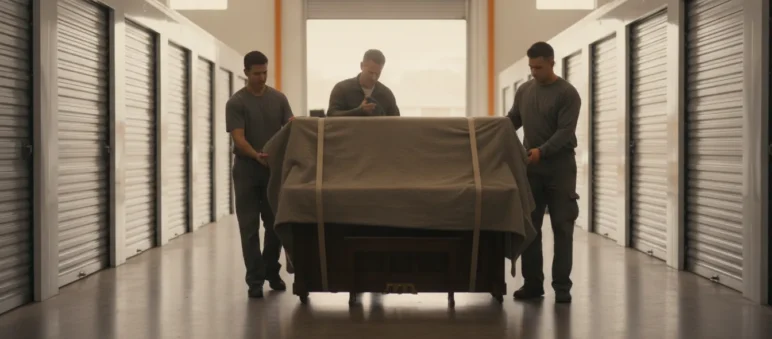
A piano is more than a large piece of furniture. It is a carefully built instrument with wooden components and finishes that deserve thoughtful protection. You may choose storage during a renovation, a move between residences, or a change in living arrangements. The way you prepare and store the piano matters.
Request your free moving and storage estimate today for a firm price on protecting and storing your instrument.
To understand how to store a piano safely, prepare it carefully, choose a secure climate-controlled environment, and confirm the storage provider’s handling, access, and protection terms before the move.
Long-term storage is not just placing the piano in an open space and leaving it. Temperature and humidity can affect sensitive belongings. Proper preparation, organization, and periodic attention reduce avoidable problems over time. The same planning that protects a piano can also simplify the rest of a household storage project.
Delaware homeowners can use our complete guide to moving and storage in Delaware for broader planning advice. In this article, we focus on the decisions that matter most for a piano. We begin with why climate-controlled storage deserves careful consideration.
Why Do Pianos Need Climate-Controlled Storage?
A piano’s strings, soundboard, wood frame, and keys work together under dynamic tension. The instrument responds continuously to temperature and humidity. Climate-controlled storage holds both conditions steady. That reduces the repeated expansion and contraction that can stress the piano and change its sound over time.
A piano is not simply a large piece of furniture. Its components work together under dynamic tension and respond continuously to their surroundings. Temperature and humidity swings can affect its structural integrity and the way it sounds. For long-term care, the University of Oxford’s guidance recommends an environment without wild variations in temperature and relative humidity: care and preservation guidance for musical instruments.
That is why a climate-controlled storage room is more than a convenience. A stable environment reduces repeated expansion and contraction that can stress an instrument over time. Quick, dramatic changes in temperature and humidity can cause lasting damage. They also affect a piano’s vibrational qualities, which directly influences its sound, according to the University of Delaware’s musical instrument preservation guidance.
Why common household storage areas fall short
Attics, basements, and garages may seem practical for a piano, but they rarely stay consistent. Attics can become very hot in summer and cold in winter. Basements are often vulnerable to elevated humidity. Garages may experience both extremes, along with drafts whenever the door opens.
Heat sources create another problem. A piano should not sit next to a radiator, heater, fireplace, or other concentrated heat source. Localized heat exposes one part of the instrument to conditions that differ from the rest of the room. That adds unnecessary stress.
Common piano storage mistakes
- Choosing an attic: Seasonal heat and cold create the kind of temperature variation delicate instruments should avoid.
- Using a damp basement: High humidity and changing conditions can affect wood and alter the piano’s sound.
- Parking it beside a heater: Radiators and other heat sources create damaging localized swings.
- Assuming a garage is neutral: An unconditioned garage is exposed to outdoor weather changes, not a stable indoor environment.
- Moving it without a plan: Because pianos are under dynamic tension, mishandling or unsuitable conditions can cause severe damage.
Comparing common storage options
| Storage option | Temperature and humidity | Risk to a piano | Best use |
|---|---|---|---|
| Unconditioned attic | Very hot in summer, cold in winter | Wild seasonal swings | Avoid for pianos |
| Damp basement | Often high, variable humidity | Moisture and swelling risk | Avoid for pianos |
| Unconditioned garage | Tracks outdoor weather, drafts | Rapid swings when doors open | Short-term only, if at all |
| Climate-controlled storage facility | Stable, managed conditions | Low, with professional handling | Recommended for long-term storage |
The safest approach is to keep the piano in a protected location. Temperature and relative humidity should stay as consistent as possible. If the home cannot provide that stability, a professional climate-controlled facility is the more responsible choice. It preserves the instrument’s construction, appearance, and voice, and it gives you a better foundation when the piano moves, is placed, and is tuned for its next use.
How to Store a Piano Safely Before It Goes into Storage
Store a piano safely by inspecting it, cleaning it gently, using a breathable cover. Padding vulnerable surfaces, and coordinating a survey with a professional team before it leaves the house. A short preparation checklist protects the instrument and makes the transfer more predictable.
Before your piano leaves the house, give it a careful inspection. Note its current condition, including loose hardware, sticking keys, damaged casters, scratches, or signs of moisture. If it has not been serviced recently, consider having a qualified piano technician inspect it before storage. A baseline check makes changes easier to notice and gives the moving team useful information about the instrument.
Tuning before storage can also help, especially if the piano will stay unused for a long time. The goal is not to tune it repeatedly during storage. Instead, document how it sounds and how the pedals, keys, lid, and music desk function before the move. After the piano returns to a stable home environment, allow it time to acclimate before arranging its next tuning.
Clean and cover the instrument carefully
Remove surface dust with a soft, dry cloth and follow the manufacturer’s guidance for the finish. Avoid spraying cleaner directly onto the cabinet, keys, or any opening. Then cover the piano with a breathable cover or clean moving blankets that do not shed lint. Covering an unused instrument helps protect it from light, dust, and debris, according to conservation guidance from the University of Delaware. Read the University of Delaware’s musical-instrument care guidance for additional context.
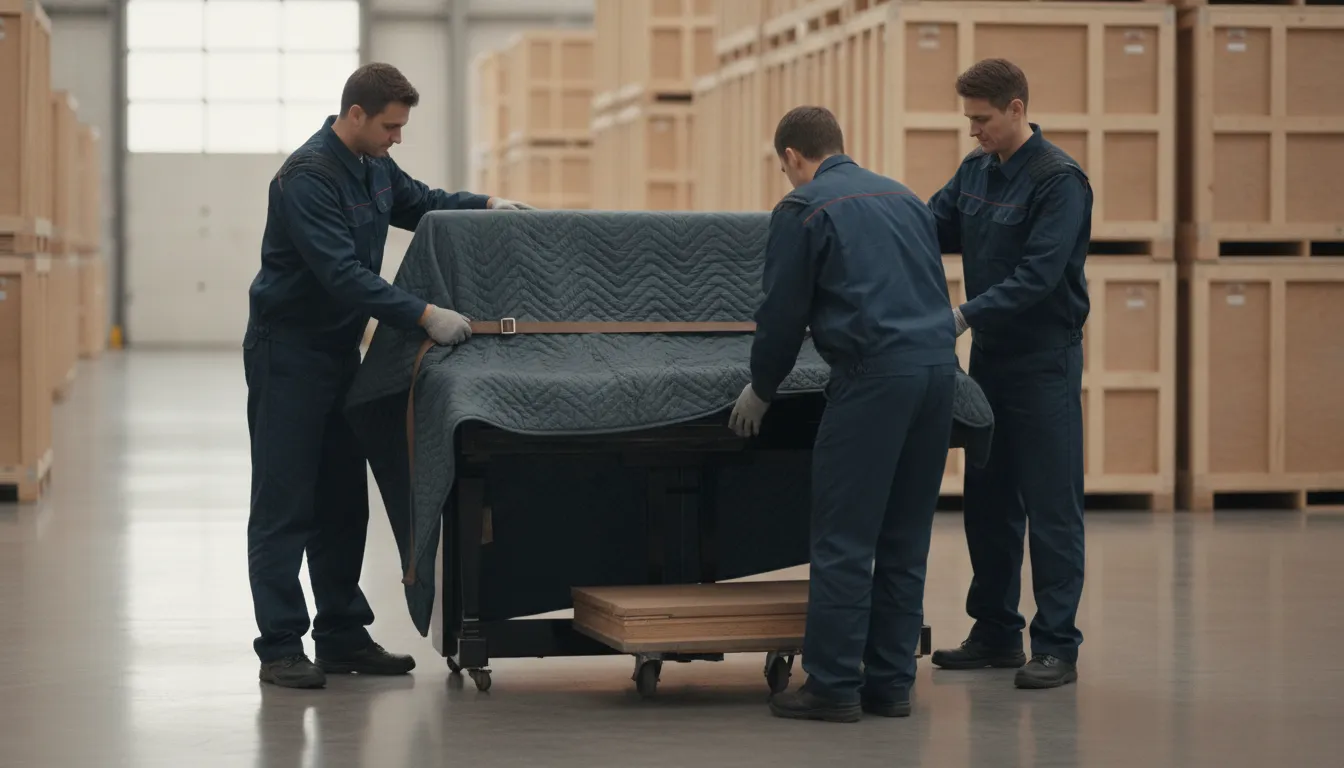
Do not seal the piano in plastic wrap. Plastic can trap moisture against the finish and create condensation inside the covering. That is the opposite of what a wood-and-metal instrument needs. Use breathable protection instead and let the storage environment control temperature and humidity.
Choose a safe position while you wait
Until pickup, place the piano in a protected spot away from walkways, door swings, and busy areas. Keep it away from children, pets, visitors, or furniture that may bump it. Conservation guidance warns against keeping instruments underfoot or where they are likely to be jostled. An upright piano can remain safely in a protected corner of a public room if its upper surfaces are covered. Keep anything from leaning against it or falling onto it.
- Inspect and photograph the piano before preparation.
- Clean it gently, then use a breathable cover.
- Pad vulnerable exterior surfaces without compressing the cabinet.
- Keep the piano out of traffic and away from bump zones.
- Tell your movers about loose parts, existing damage, and special handling concerns.
For the actual transfer, use a crew familiar with specialty items. Proper preparation reduces avoidable contact and helps the piano arrive ready for its stable storage environment.
Get a detailed moving and storage estimate and ask about piano-specific handling before the work begins.
What Happens to Piano Tuning During Long-Term Storage?
During long-term storage, a piano can drift out of tune because temperature and humidity shifts affect its soundboard, wooden frame, and strings. The change is usually gradual. A qualified tuner should inspect and re-tune the instrument before you play it again after it leaves storage.
A piano does not remain acoustically unchanged just because no one plays it. During storage, temperature and humidity changes can affect the soundboard, wooden frame, and strings. As those materials respond to the environment, the instrument’s tuning and tone can shift.
Pianos are built under dynamic tension, and their materials are chosen to produce a particular sound. That sound depends partly on the instrument’s lifetime condition. The University of Delaware’s Art Conservation program explains that quick, dramatic swings in temperature and humidity can cause lasting damage. They also affect a piano’s vibrational qualities, which directly affects its sound. Read the University of Delaware’s guidance on protecting musical instruments.
Why environmental swings change the sound
Wood can expand and contract as moisture levels change. In a piano, that movement can influence the soundboard and wooden frame. It also places changing demands on the strings and other tension-bearing parts. The result may be a piano that sounds noticeably different after storage, even if its exterior looks clean. Oxford’s Bate Collection notes that environmental changes affect an instrument’s construction, materials, and the sound it was designed to produce. See the Bate Collection’s care and preservation guidance.
This is why a garage, attic, or basement can be risky for a piano over time. Seasonal heat, cold, and humidity create repeated environmental stress. A stable storage environment is the better goal because preventing wide swings is easier than correcting damage later.
What to do before playing the piano again
Plan to have a qualified tuner re-tune the instrument before regular use after storage. Ask a professional to inspect the piano for movement, damage, corrosion, or other condition changes first. The inspection lets you address problems carefully instead of returning the instrument to regular service immediately.
Allow the tuner to evaluate the piano in the environment where it will be played. If the instrument moved into a different room or climate, its materials may need time to settle before tuning. Your tuner can recommend timing based on the piano’s condition and the length of storage. With a stable environment and a careful return-to-use inspection, you can protect the instrument’s tone and make its next step more predictable.
Is a Climate-Controlled Warehouse the Safest Way to Store a Piano Long-Term?
Yes, for most Delaware homeowners a climate-controlled warehouse is the safest way to store a piano long-term. It holds temperature and humidity steady, provides professional handling, and keeps the instrument out of attics, basements, and busy living spaces where damage is more likely.
A piano needs more than an empty corner during extended storage. It needs a stable environment, careful handling, and protection from conditions that can affect its finish, structure, and sound. Academic preservation guidance notes that specialist storage companies can provide suitable long-term accommodation when a home cannot stay consistent. Secure storage facilities in Delaware give families a more dependable option than a high-value instrument in an attic, basement, or busy living area.
A warehouse built for protected storage
Delaware Moving & Storage operates a more than 40,000-square-foot, Class A rated warehouse for professional moving and storage services. The facility has a 24-hour central alarm system and is climate-capable. That makes it a practical setting for specialty items that should not face dramatic temperature or humidity changes.
That matters because a piano holds materials under tension and can be sensitive to its surroundings. Preservation guidance warns that quick, dramatic swings in temperature and humidity can cause lasting damage. A climate-capable warehouse addresses the environmental part of the plan. Experienced movers handle the physical protection and placement of the piano.
Specialty handling from the first survey
Safe storage begins before the piano enters the warehouse. Delaware Moving & Storage provides specialty moving and complete packing services. The team plans for the instrument instead of treating it like an ordinary household item. The process accounts for the piano’s type, size, access points, route through the home, and the protection needed during handling.
We do not rely on blind estimates. A physical or virtual survey captures the move and storage requirements so the estimate can be accurate and detailed. You can discuss the piano, the expected storage period, and any concerns about access or timing before the work begins.
For homeowners comparing options, our complete guide to moving and storage in Delaware provides broader planning context. The key decision for a piano is simple. Choose a team that combines a stable storage environment with deliberate preparation and professional care. That combination gives your instrument a trusted home while you are between residences, renovating, downsizing, or waiting to bring it back into your living space.
Request your free estimate today for a firm price on moving and storing your piano.
Frequently Asked Questions
How do you store a piano safely?
Prepare the piano carefully, cover it with a breathable protective cover, and keep it away from heat, heavy foot traffic, pets, and areas where it could be bumped. An upright should remain supported and protected, while a grand should not be placed on its side unless it is secured to a purpose-built skid. Professional piano movers should handle the preparation and positioning.
Do I need climate-controlled storage for my piano?
Climate-controlled storage is the safest choice for long-term piano storage because the instrument’s wood, metal, and other materials respond to temperature and humidity changes. The ideal environment keeps both conditions stable. Quick swings can affect the piano’s sound and cause lasting damage, according to the University of Delaware’s musical-instrument preservation guidance.
Can I store a piano in a regular storage unit?
A regular unit may not provide the stable environment a piano needs, especially during Delaware’s seasonal changes. Avoid attics, basements, and spaces beside radiators or other heat sources. Ask the storage provider how it manages temperature, humidity, floor protection, and access before committing to long-term storage.
What is the best way to protect a piano during storage?
Clean surface dust and debris before storage, use a breathable cover rather than plastic wrap, and have the instrument padded and positioned by experienced movers. Plastic wrap can trap moisture and create condensation that harms the finish and internal mechanics. Once the piano is in a stable environment, limit unnecessary handling and leave it undisturbed until it is needed.
Get Started With a Clear Moving and Storage Estimate
If you are deciding how to store a piano safely, plan for a renovation, a move, or a period between residences. A conversation with a moving professional can help you organize the right storage environment, handling, and access. Delaware Moving & Storage uses a physical or virtual survey to prepare a detailed estimate. You will not rely on a blind estimate or guess about the work involved. As a family-owned company serving the area for more than 42 years, our team brings experience and personal attention to each move.
Request your free in-home moving and storage estimate to get started with a plan tailored to your instrument.