
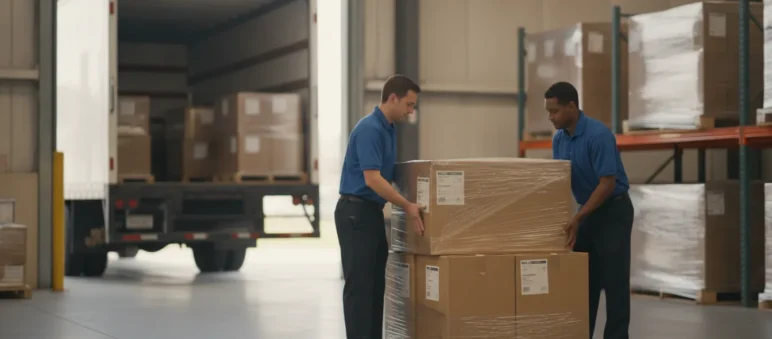
Commercial storage is warehouse or unit space built for business goods, not a spare closet for household boxes. Retailers, contractors, and small distributors in northern Delaware use it when inventory, fixtures, or job materials outgrow the shop. The right choice depends on pallet size, how often you pull stock, and whether a trained crew should handle the freight.
Request your free estimate today and get a clear plan for inventory overflow.
This guide compares three practical paths for overflow freight. You can rent a self-storage unit and haul goods yourself. You can place freight in a full-service warehouse. Or you can park a portable container at the job site. Office files and surplus desks are a different job. That planning lives in our office storage guide.
What does commercial storage cover for a Delaware business?
Commercial storage holds goods a business still needs, but not on the sales floor or in the shop every day. It is not the same as storing a household during a home sale. Typical loads include boxed retail stock, palletized parts, seasonal displays, trade-show crates, and contractor materials between jobs.
A useful space has three traits. It accepts the load shape you actually ship. It lets the right person retrieve a specific pallet without unpacking the whole stack. And it protects goods from weather, theft, and rough handling.
Delaware Moving & Storage runs a warehouse in Bear with more than 40,000 square feet, 24-foot clearance, five loading docks, and a 24-hour central alarm. Containerized storage is available when a sealed vault fits the job better than open floor space. Those details live on the storage facilities page.
Service for local commercial work covers New Castle County, nearby Chester and Delaware Counties in Pennsylvania, and Elkton in Cecil County. Lancaster is not a routine local stop. Confirm that area before you plan around it.
Which commercial storage option fits inventory, not office files?
Match the option to the freight, not to the cheapest monthly rate. A locker that looks affordable can cost more once you add truck rental, labor, and damaged cartons.
| Option. | Best for. | Who handles freight. | Watch-outs. |
|---|---|---|---|
| Self-storage unit. | A few dozen boxes you can carry. | Your staff, with your vehicle. | No dock. Tight doors. You supply labor. |
| Full-service warehouse. | Pallets, fixtures, and overflow stock. | A trained crew at a dock. | Access is by appointment, not a personal key. |
| Portable container. | A job site or a short shop overflow. | You load it, or a crew can help. | Weather, placement rules, and street access. |
Self-storage works when cartons fit through a standard door and your team can lift them. It fails when goods sit on pallets, need a forklift, or must stay in receiving order. A warehouse with docks is built for that freight.
Portable containers, including the container-on-wheels option, help when the goods should stay near the shop or job. They are a poor fit for long runs of climate-sensitive stock you will pull weekly.
If the real project is relocating the whole operation, start with commercial moving services and add storage only for the overflow. Do not treat a storage unit as the move plan.
A contractor with pipe, fittings, and spare fixtures usually needs a dock more than a cheap locker. The load is heavy, dirty, and awkward. A boutique storing folded apparel and a few display tables may do fine in a clean unit if staff can carry every carton.
Write the choice down in one sentence before you call. “We need dock access for eight pallets through November” is a brief a coordinator can price. “We need some storage” is not.
How do you size commercial storage before you reserve it?
Guessing by “a few pallets” is how businesses overpay or run out of room in week two. Measure the load, then add working space.
- Count pallets, loose cartons, and odd pieces such as racks or displays.
- Note the height of the tallest pallet and anything that cannot be stacked.
- Mark goods that need climate control, extra security, or fast retrieval.
- Add aisle space so a later pickup does not require unstacking everything.
- Add a buffer of about 15 percent for the next inbound shipment.
A standard pallet is 48 by 40 inches. Four pallets in a single layer need more than the pallet footprints, because you still need a path to the back row. Tall, light cartons can stack. Heavy or crushable goods should stay in one layer.
Photograph each pallet and write a short contents line before it leaves your floor. That list is what a later pickup uses. Without it, staff pay labor to hunt for one SKU inside a sealed stack.
Measure odd pieces on their own line. A clothing rack, a rolled carpet, or a glass display does not cube like a carton. If it cannot stack, it consumes floor the way a pallet does, even when it looks smaller.
Do the math in feet, not in “about a unit.” Four single-layer pallets plus a walkway often need a space roughly 10 feet wide and 12 feet deep. Double-stacked light goods cut that footprint. Crushable goods do not.
Bring the count to the estimate. A coordinator can match it to vault size or floor space. A verbal “maybe half a truck” usually comes back wrong once the freight is on the dock.
Climate control matters for electronics, paper goods, adhesives, and anything that warps in humidity. Delaware summers are humid, and unconditioned space can sweat cartons. Use the climate-controlled storage guide when the product itself is sensitive. Ordinary durable stock often does fine in a dry, alarmed warehouse.
How should a business prepare freight for warehouse storage?
Warehouse storage goes smoothly when freight arrives ready to receive. A crew can move it. They should not have to guess what is inside or which side is up.
Pack loose goods in sturdy cartons and close every box. Wrap pallets so the load cannot shift on a dock plate. Keep labels on one face, and do not write only on the top, where the next pallet hides the words.
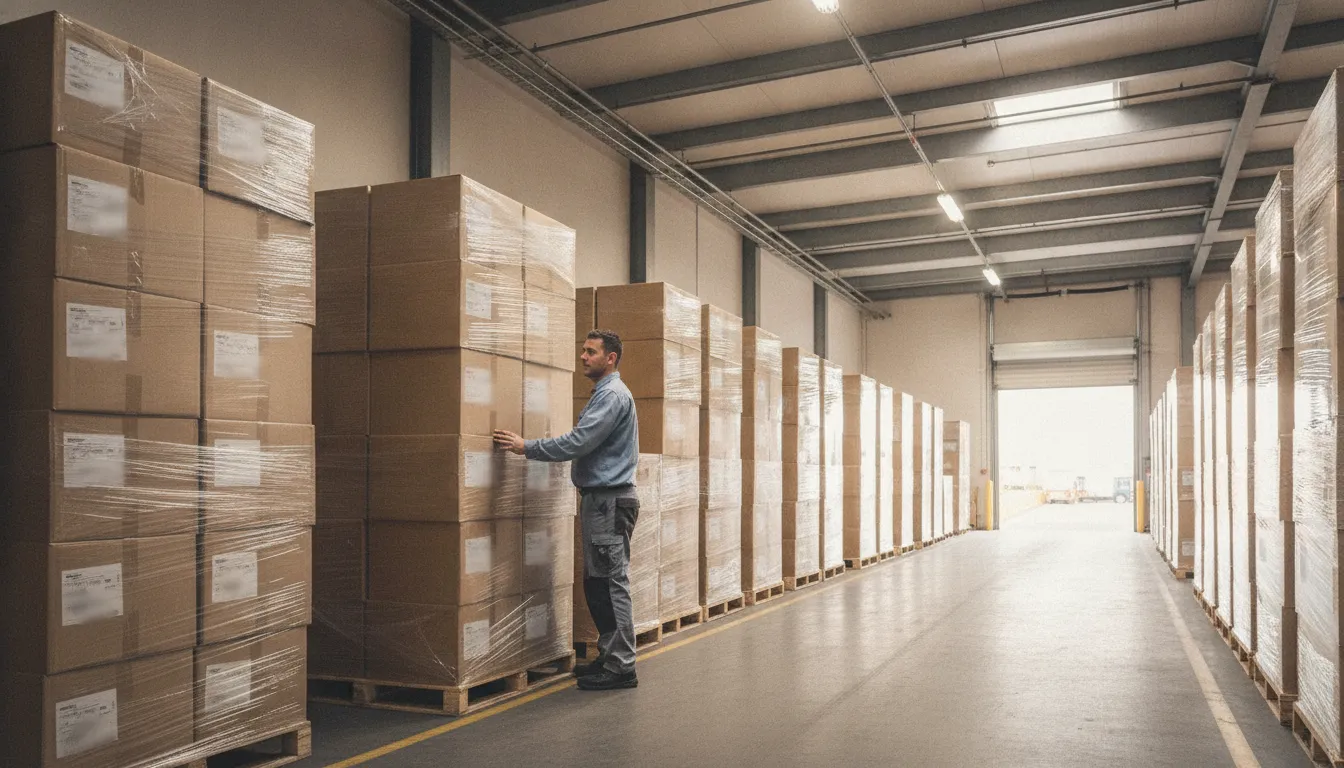
Separate three groups before pickup day. Keep daily sellers at the shop. Send slow or seasonal stock to storage. Hold aside anything staff will need within two weeks, and put that group where it can come off first.
Tell the crew about weight limits, glass, liquids, and anything that must stay upright. Professional packing services help when the cartons themselves are the weak point. A crushed corner on a retail carton is a loss even if the product inside survives.
Ask for an itemized inventory at intake. Match it to your pallet list the same day. Gaps are much easier to fix while the truck is still in play.
Stage freight in pickup order at your own door. Put first-out goods last on the truck only if the crew confirms that plan. Otherwise the pallet you need in week one ends up against the wall.
Remove trash, old price signs, and loose plastic before the crew arrives. A clean pallet moves faster and is less likely to snag. It also makes the intake count obvious.
Name one person at your company who can answer content questions on pickup day. A driver should not have to call three managers to learn whether a leaking carton stays or goes back.
What should you ask before you book commercial storage?
Price is only one line. Ask how the building works on a normal Tuesday, because that is when you will need one pallet back.
- Is there a loading dock and equipment for pallet freight, or only a swing door?
- Who may retrieve goods, and how much notice does a pull require?
- Are individual lots kept separate, or is everything stored in shared stacks?
- What alarm, access control, and visitor rules protect the floor?
- Is climate control available for part of the load, not only the whole lot?
- How are short-term and longer holds billed, and what ends the term?
A full-service warehouse usually releases goods by request during business hours, not with a personal gate code at midnight. That is a feature when you want a crew and a dock. It is a problem if your process depends on unscheduled late access.
Bear warehouse hours are Monday through Friday, 8 am to 4:30 pm. Build pulls around that window. A Saturday floor set will not happen if the request lands Friday at 4 pm.
Also ask what the storage agreement covers if something is damaged in the building. Safe stacking is part of that conversation. OSHA’s warehousing hazard guide flags unstable stacks and falling loads as a real warehouse risk. Read your storage term before you release high-value freight. Our valuation protection guide explains the moving-side options in plain language.
Ask how partial pulls are billed. Taking one carton off a pallet can cost as much labor as moving the pallet. If you expect weekly piece picks, say so. The layout should put those SKUs in front.
Confirm whether your goods stay in a sealed vault or on open racking. A vault limits mixing with other customers’ freight. Open floor can be fine for durable, well-wrapped pallets when lots stay labeled and separated.
Get the notice window in writing. Same-day pulls are not a safe assumption on a busy dock. Two business days is a practical planning rule unless the coordinator offers something faster.
When is short-term commercial storage enough?
Short-term storage fits a known end date. Examples include a shop renovation, a holiday floor set, a trade show, or a lease gap of a few weeks. You are buying time, not a second warehouse.
Keep the scope tight. Store only what will not fit during the gap. Leave fast-moving SKUs in the shop so staff are not paying a retrieval fee for Tuesday’s bestsellers.
If the project is a whole relocation, pair storage with the office moving checklist. Keep this hold limited to inventory that cannot travel yet.
Longer holds make sense for seasonal retail, spare fixtures, and slow parts you still own. Revisit the pile every quarter. Storage should not become a hiding place for dead stock you could sell, donate, or scrap.
If you are comparing a sealed vault with a unit you visit yourself, read the containerized storage comparison. Vault storage favors goods that should stay packed. Self-storage favors goods you will dig through often.
Put the end date on the estimate, not only in a calendar note. “Out by the Friday after Thanksgiving” tells the crew when labor and a truck must be free. A rolling “we’ll see” hold is how short-term storage becomes a surprise bill.
Walk the pile two weeks before the out date. Pull anything the shop needs first. Leave a clean, labeled remainder so the return trip is one job, not a scavenger hunt.
For a longer hold, schedule a quarterly look. Sell, donate, or scrap what has not moved. You pay for every pallet that no longer earns its floor space.
If the project is only a few cartons between home sales, that is household storage, not this guide. Business freight is the load that belongs in commercial storage.
Plan your overflow hold before the dock fills up so the crew and the space match the freight.
Frequently asked questions
What is commercial storage?
Commercial storage is space for business goods such as inventory, fixtures, and job materials. It is meant for freight a company still uses, not for household furniture from a home move.
Do I need a loading dock for pallet storage?
Yes, if the goods sit on pallets or need a forklift. A standard self-storage door is a poor fit for that freight. A warehouse dock lets a crew unload without breaking the pallet down.
Can I store retail inventory in Delaware for one season?
Yes. Short seasonal holds are a common use, as long as you label each lot and name an end date. Leave everyday sellers in the shop so you are not retrieving them every week.
Is climate control required for all business goods?
No. Durable stock often stores well in a dry, secure warehouse. Electronics, paper goods, and anything that warps in humidity should go in climate-controlled space.
How is business inventory storage different from an office-file plan?
Inventory storage is about pallets, access, and product care. An office-file plan is about records, furniture, and who may open a box. Use a separate plan for files and desks.
Get a storage plan that matches the freight
Commercial storage works when the space, the dock, and the retrieval rules fit the goods you actually ship. Measure the pallets, label every lot, and decide who pulls stock before you reserve the floor. A short survey beats a guess based on a monthly rate alone.
Delaware Moving & Storage can walk the load with you, then recommend warehouse space, a container, or a staged pickup from the Bear facility. You get a written scope instead of a blind quote.
Start with a free storage estimate and tell us what has to come off the floor.