
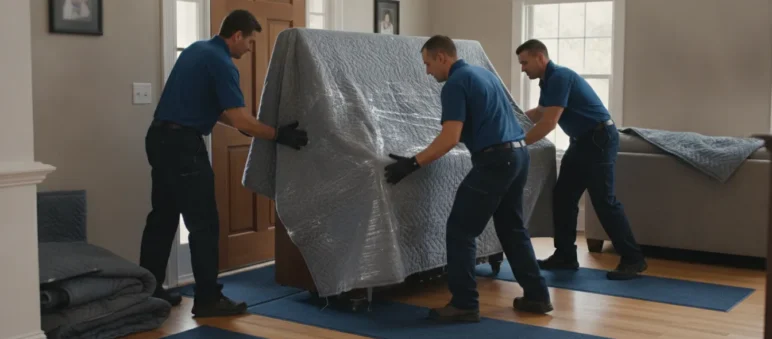
Moving a piano through Cecil County is not simply a matter of getting it from one room to another. Door widths, tight turns, stairs, driveways, parking, weather, and the piano’s condition can all affect the plan. A careful move starts with honest details about both the origin and destination.
Request a free estimate based on a physical or virtual survey.
For piano movers cecil county md, the safest starting point is a route and access review covering the piano, property, protection, storage timing, and valuation options. Sharing these details early helps create a detailed estimate instead of a blind quote.
Whether you are moving within Elkton, North East, Perryville, Rising Sun, Chesapeake City, or Cecilton, the right questions make the process more predictable. Begin by looking at how the moving team can plan the route through your home and into the truck.
How Do Piano Movers Cecil County MD Plan the Route?
Answer: Piano movers plan the route by checking the instrument’s measurements, every doorway, turn, stairway, railing, driveway, parking area, and elevator involved. A physical or virtual survey gives the moving team the information needed to identify access concerns, discuss protection, and prepare a more accurate estimate before moving day.
Route planning starts with the piano itself. Share its length, width, height, approximate weight if known, and whether it is an upright, spinet, console, baby grand, or grand piano. Measurements should include any removable parts that affect the overall path. A few inches can change whether the piano can pass through a doorway or make a turn without contacting walls, trim, or railings.
Next, walk the full route from its current position to the truck. Note narrow doors, low ceilings, sharp corners, stairs, steps, porch railings, uneven walkways, and changes in elevation. Inside the home, identify furniture or fixtures that may need to be moved temporarily. Outside, describe driveway width, slope, surface, gate access, street parking, and the safest place for the truck to load.
Destination access matters just as much. Tell the movers about elevators, loading docks, building rules, long hallways, stairs, and parking restrictions at the new address. If an elevator is available, confirm its interior dimensions and whether advance reservations or building approval are required.
- Measure the piano and the narrowest points on the route.
- Photograph stairs, turns, doorways, driveways, and parking areas.
- Share the details during the physical or virtual survey.
These details are especially useful across Cecil County communities, including Elkton, North East, Perryville, Rising Sun, Chesapeake City, and Cecilton. If you need moving help in Elkton, share access information early rather than waiting for moving day.
A physical or virtual survey helps replace assumptions with documented route information. To prepare for a moving survey, gather clear photos, measurements, stair details, and destination requirements. The survey supports an accurate estimate and gives you an opportunity to ask how the crew plans to handle difficult access points.
What Should Piano Movers Cecil County MD Know Before Arrival?
Before arrival, give piano movers a clear picture of the instrument, its condition, and the route between both homes. Share stairs, tight turns, railings, flooring, parking limits, weather concerns, and the intended destination. This lets the move be planned around the property rather than discovered at the door.
A physical or virtual survey helps Delaware Moving & Storage prepare an accurate estimate. This county-specific planning step complements, rather than repeats, the company’s broader piano-moving guidance.
- Piano type, approximate size, age, visible damage, loose parts, or recent repairs.
- Exact origin and destination addresses, including floor levels and room locations.
- Stairs, narrow turns, low ceilings, door widths, railings, and uneven surfaces.
- Hardwood, tile, carpet, thresholds, or other flooring that needs protection.
- Driveway access, parking restrictions, loading distance, and neighborhood limitations.
- Rain, snow, heat, or other weather expected on moving day.
Photographs of the piano, stairways, doorways, and tightest turns can make the conversation more productive. Also explain whether the piano will go directly into its final room or wait in another space, and disclose any fragile finishes or known stability concerns.
If the move involves a delicate or unusually difficult item, review the available specialty moving services and raise specific questions before scheduling. Accurate details support a clearer scope of work and a more useful estimate.
How Is a Piano Protected During the Move?
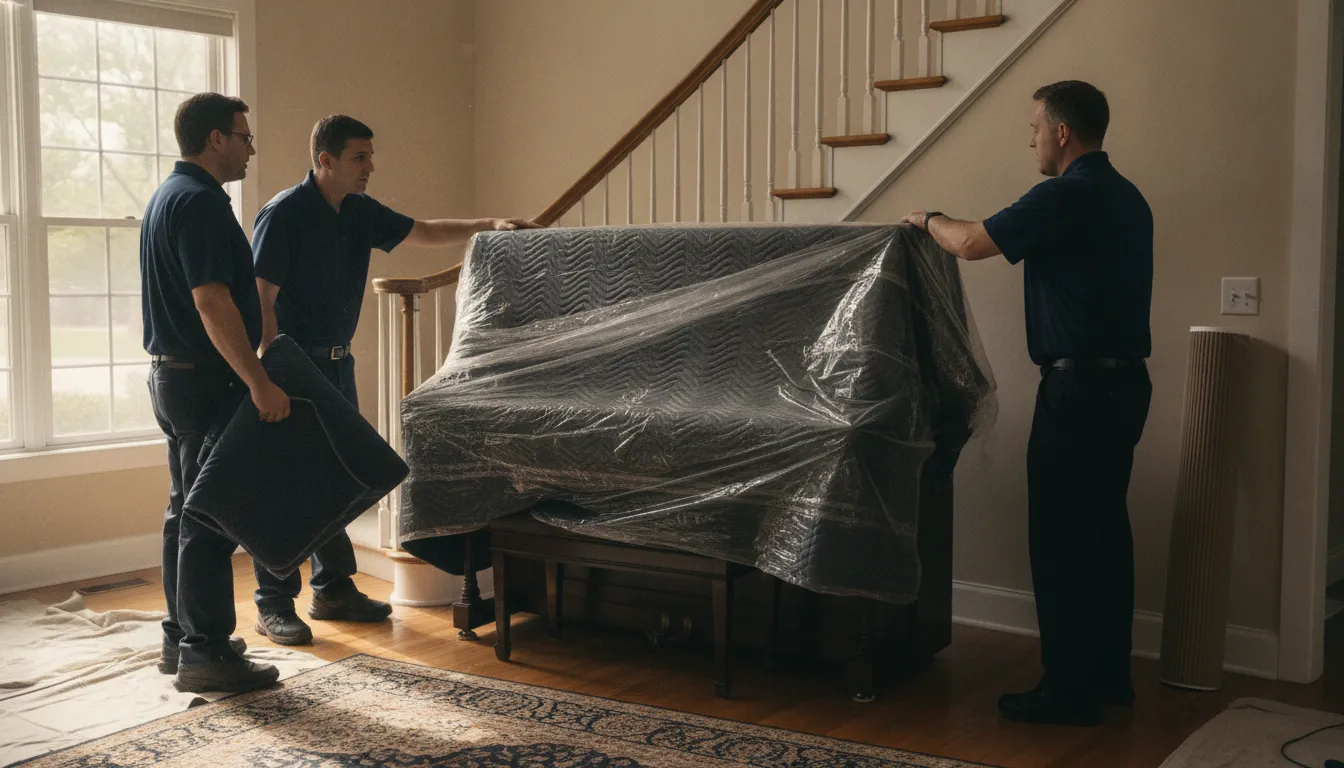
A piano move should protect both the instrument and the home around it. The plan typically includes a secured cover, padded moving materials, protected floors and doorways, and coordinated handling. Ask specialty moving services what protection steps are included before moving day.
In practice, piano movers Cecil County MD should be able to explain how they will protect the piano, the route, and the property without relying on vague promises. The details matter more than a label such as “special handling.”
What protection should be part of the plan?
Moving pads can help shield finished surfaces from contact with walls, door frames, and equipment. Delaware Moving & Storage lists moving pads, premises protection, hand trucks, four-wheel dollies, and careful loading among its local-move resources. The exact equipment and sequence should be confirmed during the estimate.
Floor and doorway protection is especially important when the route includes tight turns, stairs, thresholds, or delicate flooring. Ask who will install and remove that protection, and whether the crew has reviewed the path before arrival. A homeowner can also ask how the truck will be positioned for a short, controlled loading route.
How should the crew coordinate the handling?
Keep the lid down while the piano is being moved. A university piano-moving procedure also calls for two people during piano moves and advises keeping the piano cover on when moving into or out of storage. These are useful questions to raise with any mover, not a promise that every piano or property requires the same technique.
Ask how the crew will communicate around corners, stairs, and the loading point. Confirm who will direct the movement and how the piano will be secured once it reaches the truck. If the move also includes fragile household items, ask about professional packing services and which items need separate preparation.
A clear answer should connect the piano’s condition and route to a practical protection plan. It should also identify any access concern early, before the crew arrives.
Should You Store a Piano Between Homes?
Yes, temporary storage can help when your new home is not ready, access work is delayed, or the move needs to happen in stages. Ask how long the piano will remain in storage, where it will be placed, how you can arrange access, and how the facility manages temperature and humidity. The right questions help you compare storage options without assuming that every facility provides the same environment.
Short-term storage may bridge a few days or weeks between closing dates, renovations, or delivery schedules. Long-term storage calls for more detailed planning, especially if the piano may remain out of the home for an extended period. Delaware Moving & Storage offers both short- and long-term storage, along with a 40,000+ square-foot facility, containerized storage, and a 24-hour central alarm system. Confirm which storage arrangement is appropriate for your piano and ask how access is handled before the move is scheduled. Safe piano storage options deserve a closer look before you commit.
Ask about humidity, temperature, and placement
Humidity changes can affect tuning stability and touch because wood parts swell and shrink. Extreme swings may eventually damage wood or cause glue joints to fail, according to the Piano Technicians Guild. Ask what environmental conditions the storage provider monitors and whether the proposed space is intended for a piano. Do not assume that a storage facility is climate-controlled unless that service is specifically confirmed.
At the destination, placement matters too. The Piano Technicians Guild recommends keeping a piano away from heating and cooling vents, doors, and windows, where temperature and humidity extremes are more likely. Tell the mover about the intended room and ask whether the placement should be adjusted before delivery.
Include storage needs in the estimate, not as an afterthought. The storage period, pickup and delivery timing, access requirements, and environmental questions can affect the work involved and the services listed in your detailed estimate.
Source: Piano Technicians Guild humidity guidance; storage details.
What Does Valuation Protection Cover?
Valuation protection describes the level of responsibility and protection selected for your belongings during a move. Delaware Moving & Storage offers options ranging from basic to full coverage. Review the options before moving day, considering the piano’s condition, value, age, and your comfort with the terms.
Answer: Valuation protection sets out what responsibility applies if a piano is damaged or lost during the move. Options may range from basic to fuller coverage, but the terms and limits differ. Document the piano’s condition, ask what each option covers, and confirm your selection in the estimate or moving paperwork.
Document the piano before the crew arrives
Take clear photos of the cabinet, keyboard, pedals, legs, wheels, lid, and any existing scratches or finish changes. Note anything that already sticks, rattles, or needs repair. Share those details during the survey so the piano’s pre-move condition is understood and recorded as accurately as possible.
Condition notes are especially useful for older instruments or pianos that have been moved before. They create a practical reference for discussing any change after delivery without implying that every defect is caused by the move.
Ask what each option actually includes
Before choosing, ask whether the option addresses damage, loss, partial damage, pairs or sets of components, and the documentation needed for a claim. Ask about exclusions, deductibles, valuation methods, and deadlines as applicable to the agreement. Avoid relying on labels such as “full” without reading the actual terms.
| Valuation discussion | Questions to ask | Documents to keep |
|---|---|---|
| Basic option | What responsibility and limits apply? | Estimate, terms, and condition photos |
| Fuller option | What added protection and exclusions apply? | Selected option and signed paperwork |
You can review the available moving valuation coverage options and ask the estimator to explain anything unclear. A physical or virtual survey can also help connect the piano’s condition and moving requirements to a detailed estimate.
How Can You Prepare for a Detailed Moving Estimate?
A detailed piano-moving estimate starts with a clear picture of the work involved. A physical or virtual survey lets the mover review the piano, the route, and the services needed before outlining costs and services. Gather measurements, photos, and access details so the discussion is specific rather than based on assumptions.
To prepare, document the piano’s location at the origin and its intended placement at the destination. Include room dimensions, doorway and hallway widths, stairways, turns, elevators, driveway conditions, parking limitations, and any other constraint that could affect the path. Photos of entrances, stairs, tight corners, and the piano in its room can help the survey stay accurate when a virtual appointment is used.
Also explain what you want included. Tell the mover whether you need packing services, temporary storage between homes, or help coordinating more than one part of the move. Delaware Moving & Storage provides packing services, so identifying those needs early helps keep the scope of the estimate complete.
You can prepare for a moving survey by gathering these details before the appointment. During the survey, ask which tasks, access conditions, protection steps, and services are included in the written estimate. The goal is to compare scope and documentation, not unsupported prices that may leave out important work.
Request a free estimate based on your piano, properties, and moving plan.
When Should You Contact Piano Movers in Cecil County, MD?
Contact piano movers when you know the instrument must change homes, ideally before your moving date is fixed. Early planning allows time to review stairs, turns, parking, protection, storage, valuation, and placement. It also gives the mover a chance to identify access questions and prepare an estimate that reflects the actual move.
Contact a specialty mover as soon as you know a piano may need to change homes. Start especially early when the move involves stairs, narrow access, uncertain parking, renovation work, or a gap between closing dates. Early planning gives you time to discuss the route, protection, storage, valuation, and estimate process.
For Cecil County moves, ask whether the mover handles pianos and how the crew will review access. Ask what protection and valuation options are available, and whether temporary storage can help if your timelines do not align. A clear conversation is more useful than a generic moving quote.
Delaware Moving & Storage, a family-owned company serving the tri-state area from northern Delaware, lists piano handling among its specialty moving services. Its Cecil County coverage includes Elkton, North East, Perryville, Rising Sun, Chesapeake City, and Cecilton. Confirm that your specific origin and destination are included when you reach out.
Because piano handling is a specialty service, share practical details rather than only the address. Include piano type and condition, stairs or tight turns, driveway and parking limits, flooring concerns, weather exposure, and the planned placement room. These details help the mover determine what the visit or survey should address.
Start with an estimate so your piano move can be planned around the home, route, and timing.
Frequently Asked Questions
How do movers move a piano safely?
A careful move starts with an access plan, protection for floors and nearby surfaces, and equipment suited to the piano and route. The piano should remain covered, with the lid down during movement, and at least two people should coordinate the handling. These practices are consistent with the University of California, Santa Barbara piano moving procedure.
What is the cheapest way to move a piano?
The lowest-risk approach is not necessarily the one with the lowest initial price. Compare the complete scope, including access challenges, protection, loading, valuation protection, and any storage or packing needs. A physical or virtual survey helps the mover prepare a detailed estimate instead of relying on incomplete assumptions.
When is piano storage useful between homes?
Temporary storage can help when closing dates do not align, a new room is not ready, or the piano needs to remain out of a construction area. Ask how the piano will be protected, how you will access it, and whether short- or long-term storage fits your timeline. Humidity changes can affect tuning stability and touch, according to the Piano Technicians Guild.
What should I share during a piano-moving estimate?
Describe the piano, its current condition, and every part of the route at both addresses. Include stairs, narrow turns, railings, flooring, driveway or parking limits, weather concerns, destination placement, packing needs, and possible storage. Photos and measurements can make the physical or virtual survey more productive.
What valuation protection should I choose for a piano?
Discuss valuation protection before moving day and ask what each option covers, what documentation is needed, and how existing condition will be recorded. Available options can range from basic to full coverage, so the right choice depends on the piano’s condition, value, and your comfort with the stated terms.
Get Started With a Clear Piano-Moving Plan
A piano move in Cecil County is easier to plan when the access details, protection needs, storage questions, and valuation choices are discussed before moving day. Share your piano’s location, destination, and any stairs, tight turns, or parking concerns so the estimate can reflect the work involved. To request a free piano-moving estimate, contact Delaware Moving & Storage through the estimate form.