
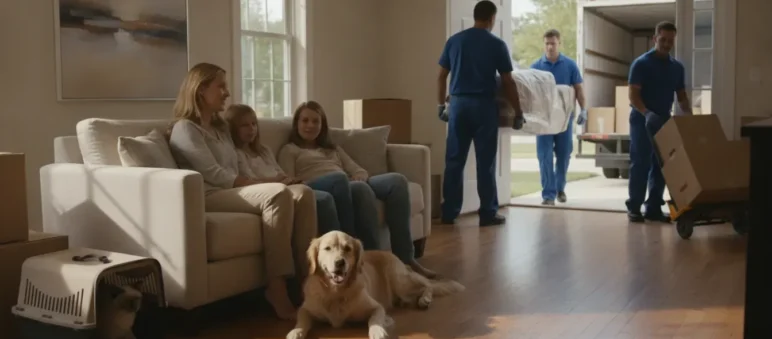
Moving with pets in Delaware takes more than packing a few extra bowls. Dogs, cats, and other household animals notice changes in routine, familiar smells, and daily activity. A simple plan can reduce confusion and help everyone reach the new home safely.
This guide covers preparation, packing hazards, moving-day safety, travel, arrival, storage, and professional moving support. It is written for Delaware households moving locally or preparing for a longer relocation.
Request your free moving estimate to discuss the timing, packing, and storage support your household may need.
How can moving with pets in Delaware start calmly?
Moving with pets in Delaware starts calmly when you protect familiar routines before boxes fill the house. Keep meals, walks, playtime, and rest periods as consistent as possible. Introduce changes gradually, then create a clear plan for the final packing day and the first hours at the new home.
Start with a pet-specific moving folder
Keep important pet information together in a folder or secure digital note. Include identification details, medication instructions, feeding notes, and contact information for your regular animal-care provider. Add a recent photo in case your pet slips away during a hectic transition.
Pack the folder where you can reach it quickly. Do not place it in a moving box. Keep food, water, bowls, leash, collar, litter supplies, waste bags, bedding, and comfort items together in a clearly identified personal bag.
Make boxes part of the routine
Boxes can change a pet’s familiar space overnight. Bring packing materials into the home in stages. Let your pet investigate safe, empty boxes while you supervise. Keep tape, plastic wrap, rubber bands, packing peanuts, and loose cords out of reach.
A quiet room can become your pet’s temporary base as packing progresses. Use familiar bedding and a favorite toy. Keep that room as normal as possible until the move is close.
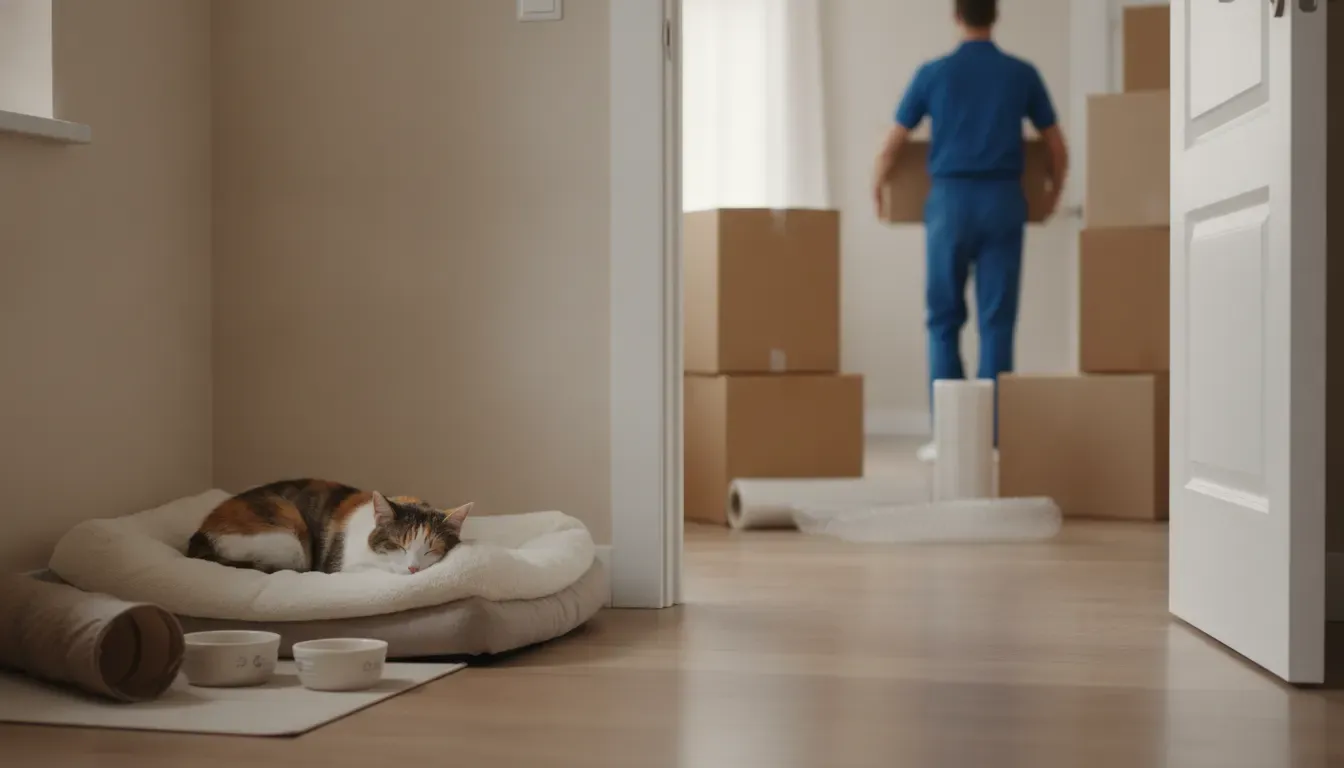
What should you prepare before packing the pet’s room?
Prepare the pet’s room before packing by deciding what must stay available until departure. Separate daily supplies from items that can be boxed early. This keeps the pet’s environment predictable and prevents a late search for food, medication, or cleanup supplies.
Sort items by timing
- Keep with you: food, water, bowls, medications, leash, carrier, bedding, waste supplies, and comfort items.
- Pack early: duplicate toys, seasonal gear, spare bedding, and extra food that will not be needed during travel.
- Pack last: the bed, daily toys, litter box, food mat, and other familiar items used until departure.
Use sturdy containers for food and supplies. Seal dry food against moisture and pests. Keep any medication in its original container and follow the existing instructions. For questions about health or medication during a move, contact your animal-care provider.
Identify common packing hazards
Pets can chew or swallow small objects that seem harmless during packing. Watch for tape rolls, string, cords, foam, plastic bags, staples, and pieces of broken boxes. Store cleaning products and pest-control products away from areas where pets eat, sleep, or play.
Do not leave an open exterior door unattended. A nervous pet may move faster than expected when unfamiliar people carry furniture outside. Door control is one of the most important parts of moving-day preparation.
How can you make moving day safer for a dog or cat?
Moving day is safer when your pet is separated from the loading path. Choose a closed room, secure carrier, or trusted temporary caregiver. Add a visible reminder for people not to open the space. Keep identification on your pet even when the animal stays indoors.
Choose the right safe area
A closed bedroom can work when it is away from the busiest hallways. Place a note on the door and tell the crew where the pet is located. Check the latch before the first item leaves the home.
A carrier may be appropriate for short periods when your pet already accepts it. Do not introduce a carrier for the first time during the busiest part of moving day. Use gradual, positive practice before the move.
If a friend, family member, or boarding provider can care for your pet, arrange it early. Confirm pickup times and provide written feeding and contact instructions. Choose the option that keeps the pet calm and prevents escape.
Separate the pet from the moving crew
Professional movers need a clear path between rooms, the truck, and the entryway. Keeping your pet separate protects the animal and helps the crew work without an unexpected trip hazard. It also reduces the chance of a pet hiding inside a box, closet, or vehicle.
Tell the crew about the plan during the initial walkthrough. If a pet must be moved between rooms, use a leash or closed carrier. Never rely on an open door, verbal instruction, or a quick glance.
Explore local moving services in Delaware for a carefully planned household move with clear communication from start to finish.
What should pet owners know about travel-day safety?
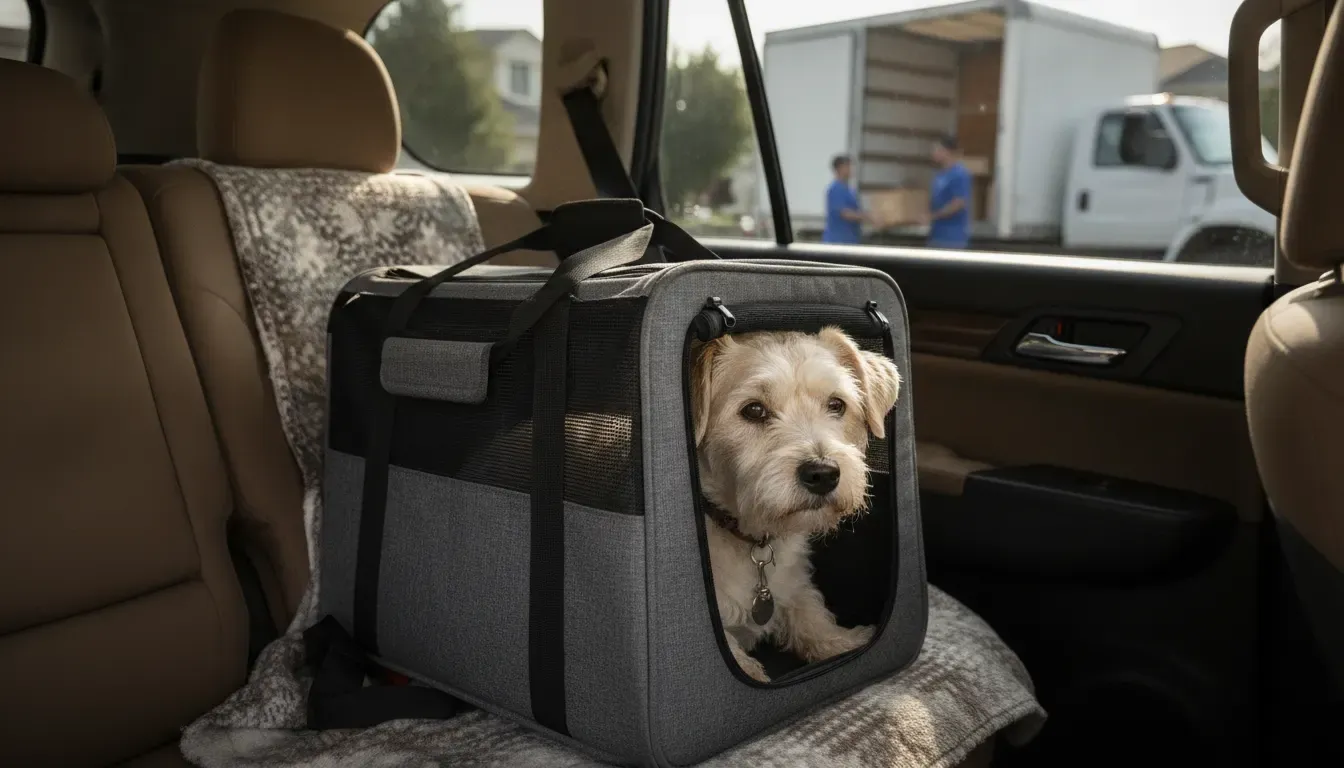
Travel-day safety begins with a secure setup inside the vehicle. Pets should not roam loose while the vehicle is moving. Use a properly fitted carrier or a suitable restraint, and plan stops around the pet’s normal needs without leaving the animal unattended in a parked vehicle.
Build a travel kit
- Food and water in leak-resistant containers.
- Bowls, waste bags, litter supplies, and paper towels.
- Leash, collar, identification, and a recent photo.
- Medication and written care instructions.
- Familiar bedding or a small comfort item.
- Cleaning supplies for spills or accidents.
- Weather-appropriate supplies for the route and season.
Keep the travel kit in the passenger area rather than inside the moving truck. The same applies to identification documents and medication. You should be able to reach these supplies without opening packed boxes.
Practice before the move
If your pet is not used to a carrier or longer car rides, practice in small steps. Leave the carrier open at home. Add familiar bedding and treats. Later, try brief secured rides before attempting the full trip.
For a longer relocation, plan the route before departure. Confirm pet-friendly lodging if an overnight stop is necessary. Check each new space for open doors, damaged screens, tight gaps, and unsafe objects before allowing your pet to explore.
The ASPCA moving guidance recommends keeping pets in a quiet area during loading and helping them adjust to carriers gradually. The American Veterinary Medical Association vehicle-safety guidance also supports securing pets during car travel.
How should you set up the new home for a pet?
Set up one quiet home-base room before giving your pet access to the entire house. Add water, food, bedding, familiar toys, and a litter box when appropriate. A smaller first space gives your pet time to adjust while boxes and furniture are still moving.
Pet-proof before exploring
Walk through the room and nearby hallways before opening the carrier or gate. Look for loose cords, open windows, narrow gaps, unstable stacks, exposed nails, and leftover cleaning products. Check doors and screens before your pet begins exploring.
Keep exterior doors closed while the moving crew finishes. Ask everyone in the home to follow the same rule. A consistent door plan matters even after the truck leaves because a pet may behave differently in an unfamiliar space.
Restore familiar patterns
Use the same feeding and walking schedule when possible. Let your pet choose the pace of exploration. Some animals will investigate quickly, while others need more time in the home-base room.
Keep familiar bedding and toys available. Familiar smells can make a new room feel less confusing. Expand access gradually after the main traffic and noise have ended.
If your pet shows a concerning health change, contact a qualified animal-care provider. This moving guide is about household planning, not diagnosis or treatment.
When can storage or professional packing simplify a pet move?
Storage or professional packing can simplify a pet move when boxes, furniture, and timing create too much activity at once. Removing some items from the immediate transition can preserve a calmer home base. The right support also gives you more time to manage travel and arrival.
Consider storage during a staged move
Temporary storage may help when your move-out and move-in dates do not align. It can also reduce the amount of furniture and equipment moving through the home on one day. Ask about the access, timing, and protection details before selecting an option.
Delaware Moving & Storage provides storage solutions in Delaware for temporary and longer-term needs. A storage plan can be useful when a pet needs a quieter space during a transition.
Decide whether packing help fits your household
Professional packing may be useful when work, caregiving, or pet routines limit your available time. Discuss partial packing if you want to keep control of personal items and pet supplies. The packing service can be part of a broader moving plan.
Keep your pet’s daily supplies, travel kit, and personal documents separate from the packing workflow. Tell the moving team which items should remain with you. Clear instructions make the handoff easier for everyone.
Request an in-home or virtual estimate to talk through packing, storage, and timing for your move.
What should a Delaware pet-moving checklist include?
A Delaware pet-moving checklist should cover preparation, separation, travel, arrival, and follow-up. Put dates beside each task so the plan is useful before boxes appear. A short checklist can prevent rushed decisions during the busiest hours of the move.
- Several weeks before: introduce boxes gradually and practice the carrier or travel setup.
- One week before: confirm care arrangements, gather records, and prepare the travel kit.
- The day before: pack duplicate supplies while keeping daily food, bedding, and comfort items available.
- Moving morning: place the pet in the planned safe area before loading begins.
- During travel: secure the pet, keep supplies nearby, and follow a planned route.
- At arrival: inspect the home-base room before opening the carrier or gate.
- After arrival: restore familiar routines and expand access gradually.
Share the plan with every adult involved in the move. One person should own pet logistics so instructions do not get lost between packing, loading, driving, and arrival.
Frequently Asked Questions About Moving With Pets in Delaware
Should pets ride in the moving truck?
No. Keep pets with you in a suitable passenger vehicle or with a trusted caregiver. The moving truck has changing temperatures, open doors, heavy items, and unfamiliar activity. A separate travel plan protects your pet and keeps the loading process organized.
How do I keep my pet from escaping on moving day?
Use a closed room, secure carrier, or trusted caregiver away from the loading path. Mark the door, tell the moving crew, and check the latch often. Keep a collar and identification on your pet. Do not depend on an open doorway or verbal reminder alone.
Should I pack pet supplies in the moving truck?
Keep food, water, medication, identification, bedding, and cleanup supplies with you. These items may be needed during travel or immediately after arrival. Pack duplicate or seasonal supplies separately when appropriate, but keep daily essentials in a personal travel kit.
Can storage make moving with pets less stressful?
Temporary storage can reduce household traffic when move-out and move-in dates differ. It may also allow you to stage furniture and boxes instead of moving everything at once. Discuss access, timing, and protection needs with the moving company before choosing storage.
How long should a pet stay in the home-base room?
Keep your pet in the quiet room until loading, unloading, and exterior door traffic are finished. Then let the animal explore at a comfortable pace. Some pets adjust quickly, while others need more time. Familiar bedding, food, and routines can make the transition easier.
Plan your Delaware move with a free estimate and discuss the moving, packing, or storage support that can help your household transition smoothly.