

Moving during home renovation in Delaware takes more than choosing a move-out date. You need to coordinate the work, household access, packing, and the place where furniture will stay while rooms are under construction. A clear sequence helps protect belongings and gives the renovation team room to work.
Start by deciding which rooms need to be empty, when the work is expected to begin, and whether you will remain in the home. Then match the move plan to those facts. Some households move only selected furniture and boxes. Others leave the property temporarily and arrange storage for most of their belongings. The right plan depends on the renovation scope, the space available, and how long the work may affect safe access.
How Should You Plan a Move Around Renovation Work?
Think of the move and the renovation as connected projects with separate responsibilities. The contractor manages construction tasks. You coordinate household decisions and moving logistics. Before setting a moving date, ask the renovation lead which rooms must be cleared, what paths workers need, and when those areas should be available. Ask for changes to be communicated as early as possible.
Make a simple list of spaces and belongings. Mark each item or group as one of four choices: keep accessible, move to another room, place in storage, or remove from the home. This prevents the common mistake of treating every item as though it can be shifted temporarily into a nearby room. A room that seems available at the start may later be needed for materials, tools, or contractor access.
Build the plan around confirmed information, not an optimistic guess. Renovation schedules can change when work reveals a condition that needs attention or when materials and trades are not ready. Ask which dates are firm, which are estimates, and what change would affect your move. A moving estimate should reflect the services and belongings you actually expect to move, so update the mover if the plan changes in a meaningful way.
For a broader overview of the company’s moving services in Delaware, review what support may fit your move. For local moves, the details of the home, inventory, and access help shape the plan. For a move across state lines, discuss the destination and route as part of the estimate.
Should You Move Everything or Clear Only the Work Area?
The renovation scope is the first guide. If work is limited to one room and a safe, clear route remains available, you may be able to keep some belongings in the home. If several connected rooms are being renovated, the home will have limited paths, or dust-sensitive belongings cannot be separated from the work, moving more items out may make the project easier to coordinate.
Ask the contractor to identify the work zone and the route workers will use. Consider what happens to furniture when supplies need to pass through a hallway or when a room must be accessed repeatedly. Leaving belongings in a room that is technically outside the renovation area may still create obstacles if it blocks doors, stairs, or the work route.
Do not rely on a quick shuffle from one room to another unless the contractor confirms that the destination room will stay clear and usable. A second move of the same boxes can add handling and make it harder to find everyday items. If you must keep some things at home, choose one clearly designated area and keep the route to it separate from construction traffic when possible.
Use this comparison to decide what to discuss with your household, contractor, and mover:
| Plan | May fit when | What to clarify |
|---|---|---|
| Keep selected belongings at home | The work is limited and a separate, safe space remains available. | Which rooms and routes stay clear, and whether the space could be needed later. |
| Move items to another part of the home | A temporary room is available and will remain outside the work zone. | How items will be protected and whether they will need to be moved again. |
| Move some belongings to storage | Furniture and boxes must leave the work area, but some possessions will remain accessible. | What goes into storage, what stays with you, and how access or delivery will be arranged. |
| Move most household goods out | Several rooms or major access routes will be affected, or the household is relocating temporarily. | Where you will stay, what you need day to day, and the expected move-in sequence. |
These options can be combined. For example, you might keep daily-use items with you, place larger furniture in storage, and move a small set of belongings directly to temporary housing. Make the categories specific before packing begins so the moving crew can understand what goes where.
How Can You Protect Furniture and Belongings From Renovation Dust?
First, ask the contractor how dust and construction activity will be managed in the home. That answer helps you decide whether belongings can safely remain elsewhere in the house. A closed door alone may not be enough to make a room suitable for long-term storage during active work, especially if workers need to pass through it or if the room is next on the schedule.
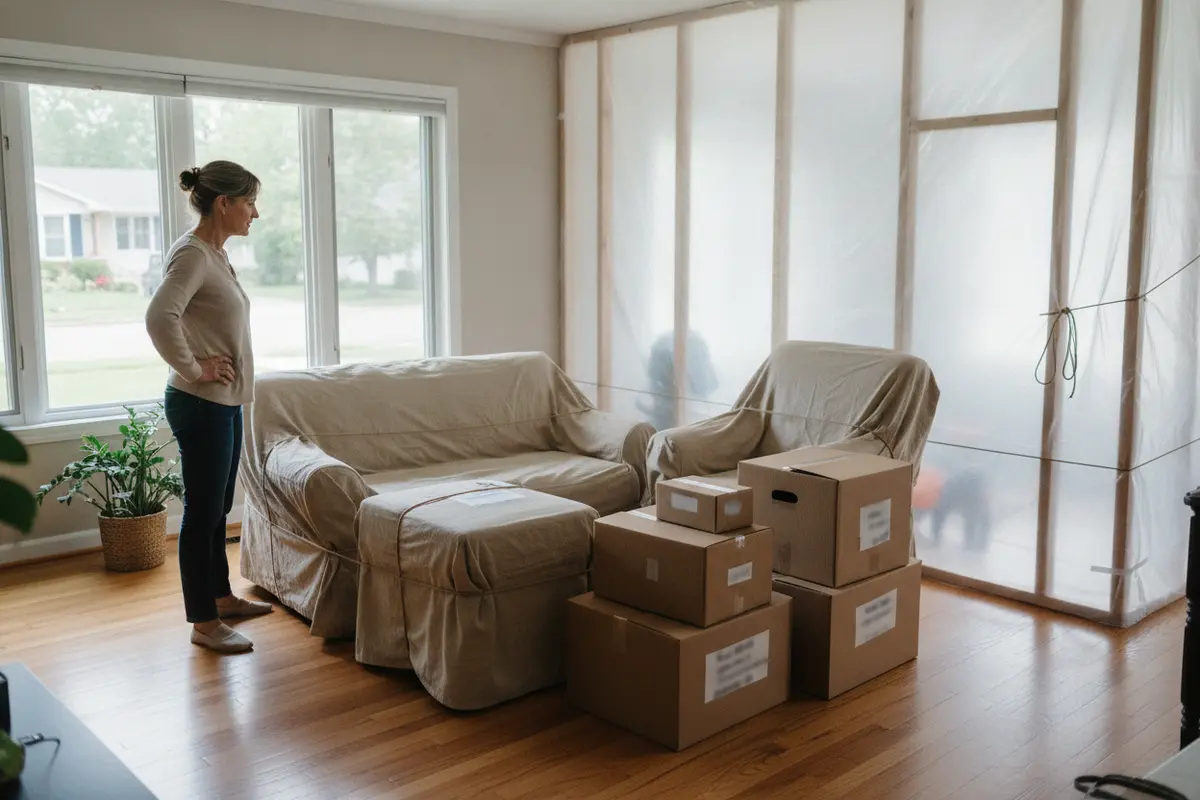
Remove items from active work areas before materials and equipment arrive. Keep furniture away from walls or openings that workers must reach. Do not leave boxes on stairs, in hallways, near an exit, or where they may prevent access to the work. A clear route protects both household belongings and the people moving through the home.
For items that will be moved, decide whether they need packing before the move, after arrival, or both. Fragile pieces, electronics, artwork, and furniture with loose parts may need a more deliberate plan than sturdy, everyday items. Take apart only what you can reassemble safely, keep hardware together, and label the container with the item and its destination. Discuss items that need special handling when requesting an estimate rather than waiting until moving day.
Do not assume that household wrap or a sheet makes an item suitable to remain beside construction. Different materials and finishes may require different care, and the contractor can explain the conditions in the work area. When you are unsure, remove the item from the renovation zone and ask the appropriate professional for advice. For help with household packing, review the company’s packing services and packing guidance.
When Should You Pack and Move Before Construction Starts?
Work backward from the point when the contractor needs the room clear. Before that date, allow time to sort belongings, decide what is going to storage, prepare items for transport, and complete the move. The amount of time needed depends on the size of the household, the services selected, and how much packing you will do yourself. Avoid treating the first construction day as the moving deadline if the work area must already be empty.
Use a sequence such as this, then adjust it with the contractor and mover:
- Confirm the work area. List rooms, closets, hallways, and entrances that must be available. Ask when each one needs to be cleared.
- Choose what leaves the home. Separate daily essentials, items going to temporary housing, belongings going into storage, and items that will stay in a permitted area.
- Request a moving estimate. Share the inventory, move addresses or storage needs, access conditions, and any special handling requests. Ask what the estimate includes and what information could change it.
- Pack in stages. Start with belongings you will not need during the renovation. Keep the items for everyday use until closer to the move, and label them so they can be found quickly.
- Clear the work zone. Move the agreed items out before the contractor needs access. Walk the route with the household and confirm that doors and work areas are unobstructed.
- Keep a short-term essentials set. Set aside the belongings you will need during the first days in temporary housing or after returning home.
Some tasks can overlap, but do not let packing interfere with construction preparation. If workers will need the room to protect floors, inspect surfaces, or bring in materials, ask when they need it clear. Use the move preparation guide and moving tips as additional planning references.
How Do You Decide What to Keep With You and What to Store?
Storage is useful when belongings need to leave the construction area but you do not want to send everything to temporary housing. Start with access, not just size. Ask what you will need during the renovation and what can remain packed until the home is ready. Seasonal belongings, extra furniture, and boxes you do not expect to open soon may be candidates to store, depending on your needs.
Create three labeled groups: “keep with us,” “store,” and “deliver to the home later.” If you have a fourth group for items that stay in a cleared part of the house, confirm that choice with the contractor. Keep a written inventory of stored belongings and note the container or box numbers. Photograph the contents of a box before closing it if that will help you identify items later.
Before choosing a storage arrangement, ask how belongings are packed, handled, and retrieved, and whether you will need access during the renovation. Clarify the expected storage period and how a changed renovation schedule would affect delivery planning. Do not assume a particular access arrangement or delivery date without confirming it. Delaware Moving & Storage offers storage services; discuss your move and storage needs directly so the estimate reflects the plan you are considering.
There is also a difference between storage at a facility and a container-based option. Delaware Moving & Storage is a dealer for COWs Mobile Storage Containers of Delaware. Ask about the practical steps, placement, access, and handling relevant to your property before choosing. The right arrangement depends on the location, household, and renovation schedule rather than a one-size-fits-all answer.
What Should You Coordinate With the Contractor and Movers?
Give each party the information they need, and make one written version of the schedule available to everyone involved. The contractor needs to know when the space will be cleared and which routes must remain open. The mover needs accurate details about the inventory, pickup and delivery locations, stairs or other access conditions, and whether items are going to more than one destination.
Discuss practical access details in advance. Identify the entrance the crew should use, where the moving vehicle may be able to stop, whether there are building or neighborhood rules to follow, and how the crew can reach the home. If a driveway, loading area, elevator, or shared entrance needs coordination, ask who is responsible for arranging it. Do not assume that the contractor’s staging plan and the moving crew’s route will automatically fit together.
Set a point of contact for schedule changes. If the contractor moves the start date or changes which rooms are being worked on, pass that information to the mover promptly. If the moving plan changes, let the contractor know what will remain in the home and when. Keep any important estimate and schedule details in writing, including notes about the inventory and destinations.
For questions about the company’s service area, see its Delaware and nearby service areas. Households moving within northern Delaware, nearby Pennsylvania counties, or Cecil County, Maryland can use the conversation to explain the actual addresses and travel needs. If your move is long distance, the company works as an agent for Wheaton World Wide Moving; provide the destination and expected scope when requesting an estimate.
How Can You Plan for a Renovation Schedule That Changes?
Renovation dates are plans, not guarantees. A delayed inspection, a change in scope, or a trade schedule can affect when rooms are ready. Keep the moving plan organized around decision points: the date the work area must be empty, the date you expect to need belongings delivered, and the latest point at which you should revisit the plan with the contractor and mover.
Ask the contractor what kinds of changes are possible and how you will hear about them. Then ask the mover what notice is needed if your moving date, inventory, or delivery plan changes. This is a conversation about options and terms, not a promise that a particular date can be changed without cost or availability limits. Read the estimate and any service documents carefully, and ask questions before you accept them.
Keep a flexible household plan as well. Pack the items you will need for a few days separately, maintain access to important documents and medications, and avoid placing essential belongings in a box that will be difficult to reach. If you are living elsewhere, keep a list of what remains in storage and how to contact the people coordinating the work.
A useful planning habit is to review the schedule at regular milestones: before packing starts, before the first move, and before the home is expected to be ready for delivery. At each review, confirm the active work areas, access, destination for each group of items, and who has the next action. A brief check-in can catch a mismatch before a crew or contractor arrives.
What Should a Detailed Moving Estimate Include?
A detailed estimate begins with a clear description of the move. Explain the home size and the belongings to be moved, what you plan to pack yourself, which services you want, and whether there will be storage or more than one destination. Tell the estimator about access conditions and items that may need special handling. If you expect some belongings to stay in the home, describe where they will be and whether the crew needs to work around them.
Ask how the estimate is prepared and which details could change the amount or scope. Delaware Moving & Storage uses physical or virtual surveys to prepare estimates rather than relying on a blind estimate. The company describes local moving rates as hourly and long-distance or interstate pricing as based on weight and mileage. Ask which approach applies to your move, what services are included, and how additional requests are handled.
Compare estimates by reading what each one includes, not by looking only at a total. Check whether packing, materials, storage, and delivery are included or separate; whether the inventory reflects the items you intend to move; and whether the addresses and access details are correct. Ask for clarification on any term that is unclear. A careful estimate discussion helps both sides work from the same description of the plan.
For a physical survey or estimate discussion, review the company’s in-home estimate information or use the Get Started page. You can also contact Delaware Moving & Storage with the renovation dates and moving questions you have so far. It is fine to ask for guidance while the schedule is still taking shape; be clear about what is confirmed and what may change.
What Should You Check Before the Move-Out Day?
Review the inventory and destination labels. Identify items going to temporary housing, storage, and the renovated home later. Confirm that boxes for immediate use are easy to find and remain with you if needed. If a furniture item or room has been added to or removed from the move, make sure the estimate and moving plan reflect the current list.
Walk the exit route and work zone. Remove loose objects from the path, make sure the contractor’s materials are not blocking the moving crew, and confirm where the crew should park or enter. If a door, stairway, or shared access point has a restriction, communicate it before the crew arrives. Keep children and pets away from active work and moving paths, and follow the contractor’s direction about site safety.
Separate documents, keys, valuables, medications, chargers, and other personal essentials from packed household goods. Keep important renovation paperwork and contacts accessible. Take a final look through closets, cabinets, and rooms that are being cleared. Once the movers have completed their work, check that the agreed rooms are empty and that the contractor has access.
When the renovation is complete, do not assume that every room is ready for furniture at once. Confirm with the contractor which areas can be used and whether any access or protection steps remain. Then coordinate delivery according to the moving arrangement and your updated inventory. If the work is still underway, keep items out of rooms that have not been released for household use.
Frequently Asked Questions
Can I leave furniture in part of the home during renovation?
Possibly, if the contractor confirms that the space will stay outside the work area and will not block access. Ask how dust and construction traffic may affect that room. If its role in the project is uncertain, move the furniture elsewhere or discuss storage before work begins.
Should I move belongings to storage before or after renovation starts?
Move items out before the contractor needs a clear work area. The exact date depends on the project sequence and the moving plan. Confirm the room-clear deadline with the contractor, then arrange packing and moving so the space is ready when needed.
What if the contractor changes the schedule after I book movers?
Contact the mover as soon as you learn about the change and ask what options are available under your estimate and service documents. Also confirm the revised work sequence with the contractor. Do not assume dates can be changed without limits; make sure the updated plan is clear to everyone.
How do I estimate how much storage I will need?
Start with an itemized list of what must leave the work area and what you will keep with you. Note larger furniture separately, and explain whether items need to go to one place or more than one destination. Discuss the list with the mover so the proposed plan matches your household belongings and access needs.
Talk through your renovation move
A renovation move is easier to coordinate when the contractor, household, and mover share the same room list, access plan, inventory, and schedule updates. Begin with the areas that must be cleared, then build the moving and storage plan around what you will need during the work.