
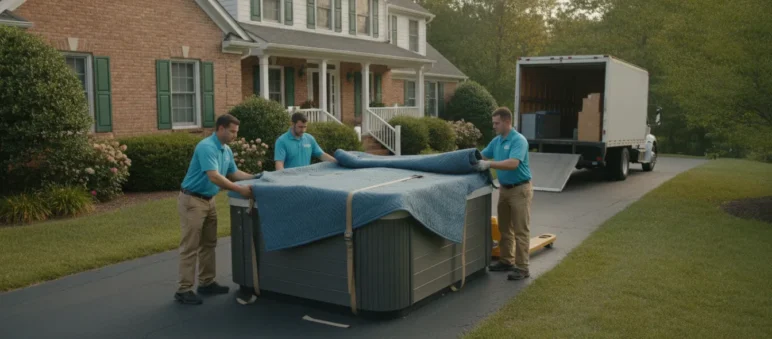
A hot tub can be one of the most demanding items to relocate because its weight, shape, access route, and utility connections all affect the plan. A careful move starts well before moving day, with accurate measurements, a clear path, and a realistic understanding of the destination.
Moving a hot tub safely requires draining and inspecting the tub, protecting its shell and surroundings. Measuring every tight access point, and confirming how it will reach the new foundation. A physical or virtual survey can help identify handling concerns and support a more accurate, detailed estimate.
Before discussing equipment or scheduling, walk through the space from the tub’s current location to its destination. The checks below will help you spot obstacles, document important details, and prepare useful information for a Delaware moving estimate.
What should you check before moving a hot tub?
Before moving a hot tub, drain the water, inspect the shell and frame, and clean the unit. Record its dimensions, dry weight, water volume, and footprint. These details help identify access concerns, protect the tub from existing damage, and give movers useful information for a careful survey.
Start with the tub itself. Delaware DNREC advises draining the hot tub before movement, then checking for damage that movement could worsen. Clean the tub extensively before it is handled. This creates a clearer baseline for discussing its condition and preparing it for transport. Read the Delaware DNREC guidance.
Which measurements matter?
Measure the tub’s length, width, and height. Note the dry weight if the manufacturer provides it. Also record the filled water volume, even though the unit should be drained before movement. Water weight is calculated at 8.33 pounds per gallon in a Town of Mammoth Lakes deck-load worksheet, so volume helps explain the tub’s potential total load when full.
Record the footprint as well. The footprint is the area the tub occupies, calculated from its length and width. This matters when the destination includes a deck, platform, or other elevated surface. Keep the specification plate, owner documentation, or manufacturer information available if you have it.
What should you share before the survey?
Tell the moving company about the tub’s condition, measurements, dry weight, water volume, and footprint. Mention whether it sits on a deck or other structure. Photos can help show the current placement and surrounding conditions.
Also document the route from the tub to the truck and the planned placement area. Measurements do not replace an on-site review, but they help the mover prepare questions. You can prepare for a moving survey by gathering these details before the appointment.
- Drain the tub and inspect the shell, cabinet, and visible connections.
- Record dimensions, dry weight, water volume, and footprint.
- Photograph the current placement, route, and destination.
- Share the details before the physical or virtual survey.
How do access and the route affect the move?
Access can determine whether moving a hot tub is practical, what equipment is needed, and how much protection the property requires. A survey should review gates, doors, turns, stairs, slopes, grass, gravel, driveways, decks, and the destination surface. Do not assume a route is feasible until it has been assessed.
Check the entire path, not only the doorway
Measure gates and doors, then note tight turns, stairways, slopes, and overhead or side clearances. A wide driveway may still lead to a narrow gate or an abrupt turn. Grass and gravel can create uneven travel surfaces. One described moving method uses plywood over these surfaces to form a flatter route. But that is general guidance, not a promise that every property can support the approach.
Also identify whether the crew must cross a deck, patio, lawn, or driveway. Share photos and measurements before the estimate. These details help the mover evaluate protection needs and avoid discovering a restrictive turn after equipment arrives. You can also plan safe handling for heavy items by disclosing every access constraint in advance.
Account for attached decks and the destination
A hot tub attached to or incorporated into a deck may require deck removal or renovation before it can be moved. Delaware DNREC identifies this as a possible part of relocation planning. The destination may also need grading before placement, especially when the new area is uneven. The former location may need landscaping afterward.
Describe the destination grade, surface, driveway approach, and any deck attachment during the survey. A physical or virtual review can identify questions that measurements alone may miss. The final route and placement plan should reflect the actual property, tub, and site conditions.
What equipment and protection does moving a hot tub require?
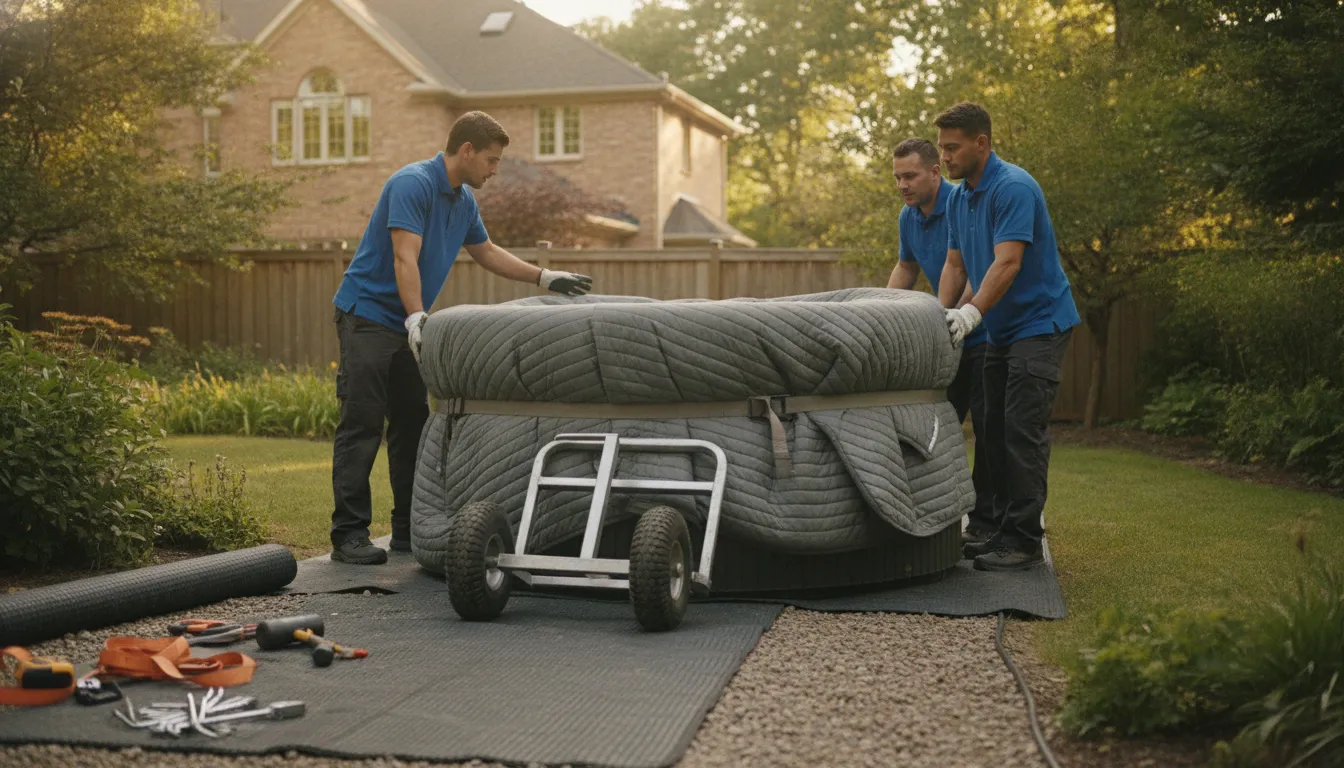
Moving a hot tub requires equipment matched to its weight, dimensions, route, and surface. Planning may include straps, blankets, dollies, pallets, or plywood. Protection also matters, since narrow doors, floors, walls, and outdoor paths can be damaged during handling.
Equipment choices should follow an inspection, not a generic checklist. A hot tub may need a controlled way to support and maneuver it without placing stress on the cabinet, shell, or surrounding property. The crew also needs to understand stairs, gates, turns, slopes, and surface changes before selecting a method.
Examples of equipment used in planning
Some general DIY guidance lists pallets, pallet jacks, moving straps, blankets, and plywood over uneven grass or gravel. That list is an example of one approach, not Delaware Moving & Storage policy or a recommendation for every homeowner.
Pallets or plywood may help create support or a flatter route in some situations. They do not resolve every clearance, slope, weight, or lifting problem. Straps must be used with an appropriate handling plan, and blankets should be secured so they do not slide into the path.
Delaware Moving & Storage documents trucks, hand trucks, four-wheel dollies, and moving pads as equipment included with its local moving service. The company also documents pads, covers, runners, and protection for floors and doors. Those capabilities support careful planning, but they do not confirm a standard hot-tub procedure.
Protect the route as well as the tub
Protection should extend from the starting location to the destination. Covers and moving pads can help protect the tub and nearby surfaces. Runners may help shield floors, while door protection can reduce damage at tight entry points.
Because bulky items may require special handling, share clear photos and access details before the estimate. A physical or virtual survey helps identify the equipment and protection plan required. You can also ask about professional packing services for related household items.
Documented equipment is not a substitute for a job-specific assessment. A professional crew should confirm the route, protection needs, and handling limitations before moving a hot tub.
Is DIY moving a hot tub safe?
DIY moving a hot tub may be possible in limited situations, but it is not automatically safe. Weight, access, equipment, surface conditions, and utility connections all affect the risk. Consider a professional assessment when the route is tight, the tub is bulky, or the destination requires deck or electrical work.
Start by separating relocation from utility work. The King County hot-tub safety guidance recommends licensed workers and appropriate permits for plumbing, gas, and electrical work. Do not disconnect or reconnect utilities unless the qualified professional responsible for that work directs it.
When might DIY be reasonable?
A DIY plan deserves careful review even when the distance is short. You would need enough capable help, suitable equipment, a stable route, and a way to protect the tub, floors, doors, and surrounding property. Slopes, stairs, narrow gates, soft ground, and sharp turns can change the plan quickly.
Stop and reconsider if you would need to improvise lifting points, move through a fragile structure, or control a heavy load without reliable equipment. A mistake can damage the shell, property, or people nearby. The fact ledger supports planning cautions, not a blanket DIY recommendation.
When should you ask a professional?
A professional assessment is sensible when the hot tub is attached to a deck, when access measurements are uncertain, or when the route crosses uneven ground. Delaware Moving & Storage documents professional crews, advance planning, and protection for floors and doors. Its knowledge base does not document hot-tub-specific draining, disconnection, lifting, or transport procedures.
That distinction matters. The company can review whether the item fits its documented specialty-moving scope, but it should not be assumed to perform every tub-related task. You can choose specialty moving services after discussing the tub, route, access, and utility responsibilities in advance.
For either approach, document the tub’s condition and access before work begins. If the plan depends on utility changes, deck alterations, or structural decisions, involve the appropriate licensed trade or engineer separately.
How should you prepare for a moving estimate?
Prepare a clear picture of the hot tub, its route, and its destination. Share dimensions, dry weight or specification details, access measurements, stairs, gates, turns, surfaces, deck conditions, utility plans, and your preferred timing. A physical or virtual survey helps the mover develop an accurate, detailed estimate.
Start with the tub itself. Record its length, width, height, and footprint. If the manufacturer label or specification plate lists dry weight, water capacity, or model information, photograph it for the survey. Do not guess if those details are unavailable. The tub’s size and handling needs can affect planning for a bulky specialty item.
Next, describe the entire route. Measure gates, doorways, narrow passages, stairs, and sharp turns. Note changes in elevation, driveway width, grass, gravel, pavers, or other surfaces. Include overhead obstacles that could affect access. Photos or a short walkthrough video can help show details that measurements alone miss.
Explain how the tub currently sits. Tell the mover whether it is on a patio, beside a house, or attached to a deck. Include deck access and any areas that may need protection. At the destination, identify the planned placement area, surface, slope, and available approach. Mention whether the location is elevated or difficult to reach.
Utility information matters too. Identify electrical connections, disconnect locations, and any planned changes at the destination. A mover needs to know which work is complete and which work may require another qualified professional. The company does not publish hot-tub-specific disconnection or transport instructions, so confirm technical responsibilities during the survey.
Finally, share your target moving date and any timing limits at either property. Bulky items may require special handling and can affect an estimate. Delaware Moving & Storage uses physical or virtual surveys, followed by written estimates that detail services and costs. You can get an accurate moving estimate by providing these details early.
| Estimate detail | Why it matters |
|---|---|
| Tub dimensions and dry weight | Helps the mover understand size, handling needs, and available clearances. |
| Gates, doors, turns, and stairs | Shows where the route may require special planning or protection. |
| Deck, patio, lawn, or gravel | Identifies surfaces, structures, and destination preparation concerns. |
| Utility and timing details | Separates moving logistics from qualified electrical or plumbing work. |
What should happen at the destination?
Before the hot tub arrives, confirm that the destination is level, accessible, structurally suitable, and ready for utilities. The plan may include grading the yard, repairing landscaping, reviewing deck capacity, and arranging licensed electrical or plumbing work before placement.
Prepare the ground and surrounding area
A yard may need grading before the tub is placed. An even destination helps support stable positioning and reduces surprises during installation. Delaware DNREC also notes that the original location may need landscaping after the tub is removed.
Plan for the space around the tub, not only its footprint. Check gates, paths, clearance, drainage, and the surface where equipment will be staged. If the route or placement requires extra coordination, experienced moving services can review those conditions during planning.
Review decks before choosing an elevated location
A deck-attached hot tub may require part of the deck to be removed or renovated before the tub can come out. The same issue applies when reinstalling it on another elevated deck.
Do not assume that an existing deck can support the load. A deck review may need the tub’s dry weight, filled water volume, dimensions, and footprint. A local government worksheet uses these details when assessing spa loads, including water weight calculated at 8.33 pounds per gallon.
For elevated placement, a contractor or design engineer may need to confirm that the deck’s load capacity is sufficient. Some jurisdictions also require engineered plans and supporting structural documents. Requirements vary by location, so ask the appropriate local professional rather than relying on general online guidance.
Coordinate utilities before placement
The new location may need an electrical outlet or panel. It may also require plumbing or other utility changes. Arrange this work before moving day when possible, so the tub does not arrive at an unusable site.
Use licensed workers for utility work and follow permits issued by the applicable local government. This guidance is especially important for electrical connections around water. Movers can plan access and placement, but licensed utility professionals should handle the connection and approval work.
Share the destination’s surface, deck details, utility plans, and measurements during your estimate. That information helps the crew understand the move and identify questions before the hot tub is on the truck.
What are the most common hot tub moving mistakes?
The most common mistakes include moving a filled tub, overlooking existing damage, and treating the route as an afterthought. Homeowners also forget to disclose decks, gates, utility connections, or tight turns. A careful assessment helps match the equipment, protection, crew, and estimate to the actual move.
Moving with water still inside
A filled hot tub adds substantial weight and makes handling more difficult. Delaware DNREC advises draining the tub before movement. Do not assume a partial drain is enough. Confirm the tub is empty before the moving plan begins.
Skipping the damage inspection
After draining, inspect the shell, cabinet, cover, and visible connections for existing damage. DNREC recommends this step because movement could worsen a problem that was already present. Photograph concerns before handling begins, and share them during the planning conversation.
Ignoring pinch points along the route
A route that looks open from the driveway may narrow at a gate, stairway, fence, deck, or sharp turn. Measure these points before moving day. Also disclose slopes, gravel, grass, overhead obstacles, and any surface that could affect equipment movement.
Leaving out deck and utility details
A deck-connected tub may require deck removal or renovation before it can move. The new location may also need grading. If the tub will sit on an elevated deck, appropriate professionals should confirm that the structure can support its weight. Utility work should be handled by licensed workers under applicable permits.
Choosing equipment before assessing the route
Equipment should follow the tub, access conditions, and protection needs, not the other way around. Delaware Moving & Storage documents moving trucks, hand trucks, four-wheel dollies, moving pads, and property protection for its services. However, its published information does not confirm hot-tub-specific disconnection or transport procedures. Discuss the item and route before assuming a standard setup will work. Review the available moving services and ask what planning is appropriate for your situation.
Assuming the price is fixed too early
Bulky items and difficult access can affect an estimate. A physical or virtual survey gives the mover details about dimensions, surfaces, stairs, turns, and deck conditions. Request a written estimate after those details are reviewed instead of relying on a fixed figure based only on the tub itself.
Frequently Asked Questions
How difficult is it to move a hot tub?
The difficulty depends on the tub’s dry weight, dimensions, access route, surface, and destination. Narrow gates, stairs, tight turns, decks, landscaping, and utility connections can significantly change the plan. A physical or virtual survey helps identify handling and protection needs before moving day.
How much does it cost to relocate a hot tub?
There is no reliable flat price because every route and tub is different. The estimate may depend on access measurements, stairs, turns, distance, surface conditions, required protection, and whether the destination needs preparation. Share those details during a survey instead of relying on a generic online figure.
What should I provide for a hot tub moving estimate?
Provide the tub’s dimensions, dry weight or specification plate if available, photos, access measurements, gates, stairs, turns, driveway conditions, and destination surface. Also explain whether it sits on a deck and how disconnection or reconnection will be handled. These details support a more accurate, detailed estimate.
Who should handle hot tub electrical work?
Use a licensed professional for utility work and follow applicable permit requirements. Moving logistics and electrical disconnection are separate responsibilities, so confirm the timing with the mover and the qualified electrician before the appointment. Local guidance emphasizes licensed workers for spa and hot tub utility work: King County hot tub safety guidelines.
Ready to Plan Your Hot Tub Move?
A clear survey helps identify access conditions, protection needs, and destination details before moving a hot tub. Share the information you have so the team can better understand your planned move and prepare a detailed estimate.