
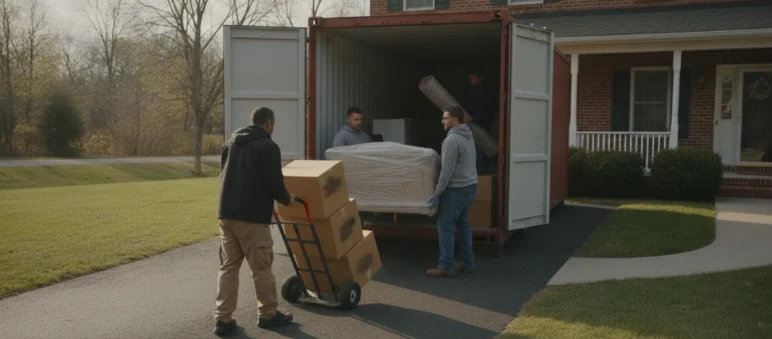
If you are arranging movers to unload a POD or another portable storage container, the main task is coordinating the container, crew, and delivery plan. Confirm what the movers will unload, when the container will be accessible, and how items should be placed inside the home before moving day. Delaware Moving & Storage serves northern Delaware and nearby parts of Pennsylvania and Maryland. This guide explains what to discuss before requesting help.
What does it mean to hire movers to unload a POD?
A portable storage container can be delivered to a home, loaded, and transported or stored by its provider. Unloading help is a separate part of the plan: a moving crew takes the belongings out of the container and carries them to the rooms or areas you specify. The container provider and the moving company may be different businesses, so do not assume one company handles both parts.
Before you book, make clear whether you need labor to unload a container, help carrying items into the home, furniture placement, or additional services such as unpacking. Ask the moving company to confirm which tasks it can provide and which are outside the estimate. Delaware Moving & Storage offers moving services and is a dealer for COWs Mobile Storage Containers of Delaware; availability and the exact scope for a particular container project should be confirmed directly.
For a broader overview of the company’s options, review its moving services and COWs of Delaware information. A portable container unloading request is not automatically the same as a complete household move. The estimate should describe the work you actually need.
What should you confirm before scheduling an unloading crew?
Start with the container provider and the delivery or pickup arrangement. Verify the date and expected access window, where the container will be placed, how long it can remain there, and who will be present to authorize access. If the container is already on site, check its condition and make sure the door can be opened safely. If it has not arrived, avoid booking a crew for a time that depends on an unconfirmed delivery.
- Container timing: Ask the provider when the container will arrive and how long it will be available.
- Location: Confirm the planned placement area and whether the crew can reach it from the home.
- Access: Clarify who will unlock or open the container and whether any access rules apply.
- Unloading scope: List whether the crew is carrying items inside, placing furniture in rooms, or handling only the container unload.
- Building rules: If the home is in an apartment or managed community, check its move-in hours, loading areas, and any reservation requirements.
- Changes: Ask how to report a delivery delay, a changed inventory, or an access issue.
Some container providers set their own placement, access, or collection rules. Get those details from the provider rather than relying on assumptions. If the move crosses state lines, federal consumer information is available from the Federal Motor Carrier Safety Administration (FMCSA). Ask any company you are considering which rules apply to the specific move and service being arranged.
Check whether the container’s location gives the crew enough room to work and carry belongings safely. A narrow driveway, parked cars, landscaping, steps, or a long route to the entrance may affect how the job is approached. You do not need to solve every access issue alone, but you should describe what the crew will encounter. If you are unsure whether a container can be placed where planned, contact its provider before delivery and discuss any site limitations.
For homes with shared entrances, elevators, or loading areas, ask the building manager what must be reserved and when. Some communities require advance notice or limit work to specified hours. Make sure the person who can approve access will be reachable on the scheduled day. These practical checks help prevent a crew from arriving before the location is ready for work.
How can you prepare the container and home for unloading?
A clear plan helps the crew place items where you want them and reduces last-minute decisions. Before unloading day, make a room list and label the destination on boxes in large, readable writing. Use a simple system such as “K” for kitchen or “BR1” for the main bedroom, then give the crew a key. Keep labels consistent with the room names you use in the home.
Draw a basic floor plan or mark where large furniture should go. Identify items that need to stay together, such as a bed frame and its hardware, or a desk and its components. Keep small parts in labeled bags attached to the related item when practical. Tell the crew about fragile, unusually heavy, or awkwardly shaped belongings before work begins, and ask how those items should be handled.

Prepare the home as well as the container. Move loose rugs, shoes, and small objects away from the entry route. Protect floors where needed and identify tight turns, stairs, low ceilings, or narrow doorways. Keep children and pets away from the work area. Do not block exits or leave boxes in a hallway that the crew needs to use.
Consider setting aside the items you will need right away, such as medications, important documents, chargers, basic toiletries, and a change of clothes. Keep them with you rather than placing them in the container. This avoids searching through boxes while the crew is working and helps keep essential belongings out of the traffic path. If you have items that should not be moved, label them clearly and point them out before unloading begins.
Make an inventory that is useful, not elaborate. A room-by-room list can show which furniture and boxes belong in each space and flag anything that should remain in the container. If you notice damage to a box or an item before unloading, take a note and a photo before it is handled further. Share questions about the item with the company representative and follow the company’s process for documenting concerns.
If you want help with packing before the container is loaded, review the company’s packing services and packing guidance, including moving tips. Packing is a separate decision from unloading, so include it only if it is part of the help you are seeking.
What information should you share for an estimate?
A useful estimate starts with a clear description of the work and the conditions at both the container and the home. Be ready to share the container size if known, how full it is, the approximate number and type of belongings, and whether any items need special attention. Photos or a video walk-through may help explain the load, but ask the company what information it needs and how to provide it.
Also describe the route from the container to the rooms. Note stairs, elevators, long carries, narrow access, or parking limitations. Explain whether the container will be at the destination address, at a storage facility, or somewhere else, and identify any distance between the container and the entrance. If you need furniture placed in specific rooms, say so up front.
Delaware Moving & Storage uses physical or virtual surveys to prepare detailed estimates rather than relying on a blind estimate. The company describes local moves as hourly and long-distance moves as based on weight and mileage; the method for a particular unloading request should be confirmed when you ask. You can learn about an in-home estimate or start a moving request with the details of your project.
Use the conversation to confirm what the estimate includes, what it does not include, and how changes are handled. For example, ask whether the crew will carry items only to the first room, place furniture according to your plan, or assemble anything. Do not treat a general description such as “unload the container” as a complete list of services unless the written estimate spells out the work.
When reviewing the estimate, check that the described inventory and access conditions match what you reported. Ask whether the estimate assumes a particular container location, route, or number of stairs. If those details change, ask whether the estimate or schedule needs to be updated before work begins. Confirm how the company communicates any added work or changed conditions, and who will approve a change. Clear expectations are more useful than relying on a verbal shorthand that could mean different things to you and the crew.
If you are requesting estimates from more than one provider, compare the stated tasks rather than looking only at the bottom line. One estimate may cover carrying everything into rooms, while another may describe moving items only to the entrance. Ask about what is excluded, including packing, unpacking, furniture assembly, or disposal. Make notes while you speak with each company so you can compare the same requirements fairly.
How do unloading arrangements compare?
The right setup depends on where the container is, what help you need, and whether the container provider and crew are coordinated separately. This comparison can help you identify the questions to ask; it is not a promise that every option is available for every project.
| Arrangement | Who handles what | What to confirm |
|---|---|---|
| Self-unload | You arrange access and carry the belongings into the home. | Container access period, safe lifting needs, and any provider rules. |
| Hire movers for unloading labor | A moving crew unloads and carries agreed items to the specified areas. | Inventory, stairs or long carries, placement expectations, crew scope, and estimate terms. |
| Request a broader move service | A company may coordinate additional moving tasks if agreed in advance. | Which services are included, how the container provider fits into the schedule, and what is separately arranged. |
These arrangements are not interchangeable. If you are comparing them, describe the same inventory, access conditions, and requested work to each company. That gives you a clearer basis for comparing estimates and reduces the chance that you are comparing labor-only help with a broader service.
How should you coordinate the container and crew schedule?
When two providers are involved, treat the timing as a coordination task. Ask the container company for its delivery and removal expectations, then share that information with the mover. Confirm who will update whom if a delivery time changes. If the container is being held at a facility rather than at your home, ask about the facility’s access rules, appointment process, and any limits on when a crew can work there.
Keep a short contact list with the container provider, the moving company, and the person who can make decisions on site. Save written confirmations of the date, access location, and agreed work. On the day, have one person available to answer placement questions. If a key detail changes, communicate it promptly instead of expecting the crew to infer the new plan after arrival.
Build a little flexibility into your own day when possible. A delivery window and the crew’s work window may be set by different companies, and one provider may not control the other’s schedule. Avoid planning a critical appointment immediately after the expected unload. Ask each provider what to do if the container arrives late, and save the right contact information so you are not searching for it during a disruption.
Decide in advance where the crew should place items if a room is not ready. For example, you may want boxes grouped near the appropriate doorway rather than carried into a room that is still being cleaned or painted. Tell the crew which spaces are off limits and mark any temporary staging area. A backup placement plan can prevent repeated lifting if your preferred room cannot be used that day.
For a household move with several stages, the company’s move preparation guide and moving guide can help organize related tasks. If the container is part of a move to another state, read the interstate moving guide and confirm how the requested unloading work fits the full relocation plan.
What can complicate a POD unloading project?
Several common details can change the work involved. A container may be fuller than expected, larger furniture may be difficult to maneuver, or the walkway may be longer than the initial description suggested. A home may have stairs, a narrow entrance, or a building rule that limits elevator use. A delivery delay can also leave the container unavailable when the crew is scheduled.
Be specific about potential complications when requesting an estimate. Tell the company if some items are unusually heavy, fragile, valuable, or difficult to carry. Identify anything that is not going into the home, such as belongings being placed in a garage or another storage area. Ask which items, if any, the crew cannot handle. If you have a concern about a particular item, resolve it before the work starts.
Do not open or attempt to move a container in a way that conflicts with the provider’s instructions. If its position, door, or surrounding area seems unsafe, contact the container provider and the moving company for direction. A clear work area and a confirmed plan are more useful than rushing to meet an uncertain schedule.
Container loading choices can also affect unloading. Items may have shifted during transport, and boxes that were accessible at the door may not be the first ones needed in the home. If you packed the container yourself, share any notes about the order of loading or fragile items. Do not assume a label alone explains the handling needs; point out special concerns directly. If the container has been stored for some time, check its contents and the condition of its doorway before setting the work plan with the crew.
For a move involving more than one stop, distinguish unloading from transferring belongings between locations. Tell the mover whether items are going to one home, several rooms, or an additional address, and ask whether the estimate covers that arrangement. If anything is being left behind or kept in the container, mark it clearly and confirm the plan with the person coordinating the work.
What should you check before the crew leaves?
Walk through the rooms with the crew lead or the person coordinating the job. Check that boxes have reached the intended areas and that large furniture is placed where you requested. Point out any item that appears to be missing or any placement question while the crew is still present. Keep the inventory or notes you prepared so you can check the delivered belongings against the plan.
Before the container is collected or returned, confirm that it is empty to the extent agreed and that no items have been left inside unintentionally. Check the provider’s process for arranging pickup or return. If you have questions about an item, the work completed, or the next step, raise them directly with the company rather than assuming a later provider will know the details.
Contact Delaware Moving & Storage about your unloading plan
Frequently asked questions
Can movers unload a POD that another company delivered?
Possibly, but you should confirm it with the moving company before scheduling. Explain who supplied the container, where it will be, how access is arranged, and what work you need. Confirm that the company can take on the requested scope and that the estimate accounts for the actual conditions.
Should I book the movers before the container arrives?
You can ask for an estimate and discuss potential dates in advance, but confirm the container delivery and access plan before relying on a crew date. If the delivery changes, contact the moving company promptly and ask how to adjust the schedule.
Do movers unpack boxes after unloading a container?
Unloading and unpacking are different tasks. Some customers want boxes carried into rooms but plan to unpack themselves. If you want unpacking or another service, request it specifically and have the company confirm whether it is available and included in the estimate.
What if the container is located at a storage facility?
Tell the moving company the facility name and address, access hours, appointment rules, and any restrictions you know about. Ask the facility and the container provider what arrangements are required for a crew to reach the unit. Confirm that these details fit the agreed schedule.
Make the unloading plan specific
Before booking movers to unload a POD, write down what is in the container, where it will be, how the crew can access it, and where each category of belongings should go. Then ask the moving company to confirm the available service and estimate details. A specific plan gives you and the crew a practical basis for coordinating the work.