
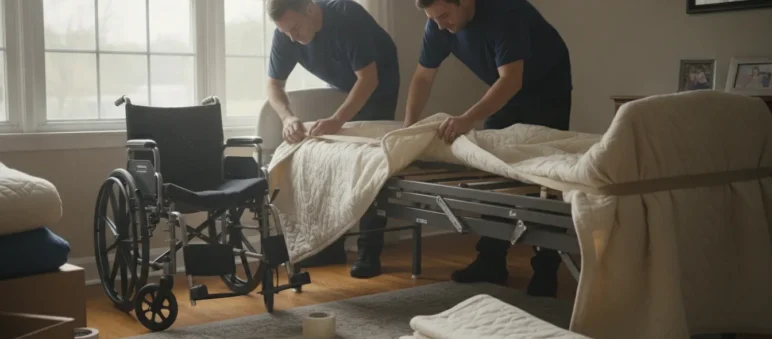
A medical equipment moving cost Delaware budget starts with a simple ownership question. Which pieces are actually yours to move? A hospital bed, wheelchair, or patient lift can add time, padding, and an extra pair of hands. Rented oxygen gear may not belong on the truck at all.
Call (800) 296-0417 to talk through the equipment, the stairs, and a written in-home estimate.
Delaware Moving & Storage has planned moves from northern Delaware since 1984. We are a family-owned Wheaton agent, and we price specialty pieces only after we see the item and the path.
This guide covers household equipment inside a Delaware home. It is not a clinic relocation plan or a published rate sheet, because the bill follows the path, the weight, and the service level you choose.
What changes a medical equipment moving cost in Delaware?
The medical equipment moving cost in Delaware moves with crew time on a local job. On a long-distance job it moves with weight, miles, and bulky-item handling. The equipment itself is rarely a separate mystery fee, but it changes how long the crew stays, how the piece is protected, and whether extra hands are needed.
Local moves are generally billed by the hour, and the truck, pads, dollies, and a crew of two or more are part of that hourly service. A bed that must be broken down in a tight bedroom can add time even when the drive across town is short.
Long-distance moves are priced from shipment weight, mileage, packing, bulky items, and valuation protection. We are a Wheaton agent, so an interstate shipment can travel on that network. A heavy bed or lift can count as a bulky item, so ask us to note it on the written estimate before you compare bids.
| Cost factor. | Why it changes the bill. | What to tell us first. |
|---|---|---|
| Ownership. | A rented piece may stay with the supplier. | Say if it is owned or rented. |
| Stairs and turns. | Slower carries need more labor. | Count steps and tight landings. |
| Disassembly. | Frames and lift bases take setup time. | Say who may take it apart. |
| Protection. | Pads and floor runners use labor. | Note finishes and loose parts. |
| Distance. | Local hours differ from mileage pricing. | Say if the move leaves Delaware. |
| Storage gap. | A held bed needs a second handling. | Share the days between homes. |
General local pricing lives in our local mover cost guide. Use that page for ordinary household labor. Use this page for the equipment that changes the plan.
Which medical pieces can a mover take?
We can move household equipment you own when a mover is allowed to transport it. Typical pieces include a home hospital bed, a manual or power wheelchair, a patient lift, a shower chair, and an overbed table. We do not install clinical devices, and we do not give medical advice about how a device should be used.
Confirm ownership before moving day. Medicare says some equipment is rented and some is purchased. Some items become yours only after a set number of rental payments.
Hospital bed rules are on Medicare’s hospital bed page. Oxygen gear follows a different timeline under CMS oxygen equipment policy. If the supplier still owns the item, call that supplier before you ask us to load it onto the truck.
- Owned bed, wheelchair, lift, or chair: list it for the move crew.
- Rented oxygen or a supplier-owned bed: ask the supplier about transfer or pickup.
- Daily-use chair or walker: plan for the person to keep it with them, not on the truck.
- Loose parts, remotes, and chargers: bag and label them with the parent item.
A clinic or practice move is a different job. Office downtime, equipment coding, and building access belong in our commercial moving cost guide. Do not use a household equipment budget for that project.
How should a family split daily gear from truck gear?
The cost also depends on what stays with the person. A truck is the wrong place for the only chair someone uses to leave the house. Build two lists before you ask for a price.
What stays with the person
- The wheelchair or walker used that day.
- A charged phone, medications, and a one-day supply of supplies.
- The oxygen setup the supplier says must travel with the user.
- Keys, the estimate, and a photo of how the bed is set up.
What can go on the truck
- A spare wheelchair, shower chair, or overbed table.
- An owned hospital bed, once it is released for transport.
- A patient lift base, sling, and labeled hardware.
- Side rails and remotes bagged with the parent piece.
This split keeps someone from being stranded while the truck is in transit. It also stops the crew from padding a chair that belongs in the car. Tell us which list each item is on when you request the written estimate.
How should you prepare equipment before the crew arrives?
Preparation is the cheapest way to control the bill, since a plugged-in bed and a blocked hall waste the first hour. If nobody knows who may disconnect a device, those minutes are still billable labor.
- Write down each piece, whether you own it, and whether it folds or comes apart.
- Ask the supplier or clinician who may disconnect power, oxygen, or a mounted lift.
- Clear a path from the room to the door, including rugs and door swings.
- Bag rails, remotes, slings, and chargers, and tape the bag to the parent item.
- Charge or remove batteries only if the maker or supplier says that is safe.
- Reserve the daily wheelchair or walker for the person, not the truck.
- Photograph the setup so the destination room can be rebuilt the same way.
We do not disconnect medical devices as a clinical service, so schedule any technician visit before our arrival window. A second trip because the lift was still mounted is a cost you can avoid with one phone call.
Book a walkthrough before moving day and we will note the pieces, the path, and who is handling disconnection.
How do stairs and tight rooms change the labor?
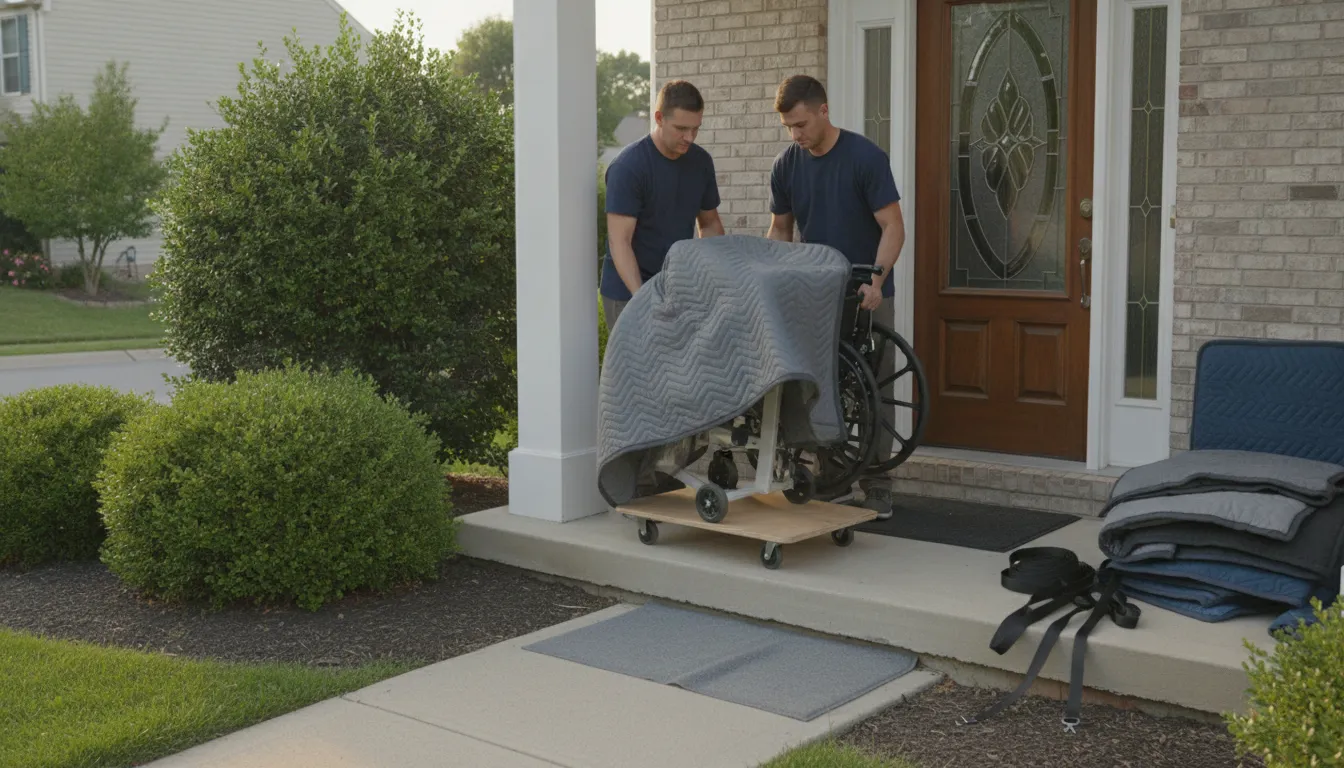
Access is often the largest swing in a medical equipment moving cost Delaware families see. A folding wheelchair on one level is a short carry. A bed on a split-level stair takes more people and more time. A lift in a narrow Newark or Elkton hall does the same.
Tell us about both homes. Count porch steps, inside stairs, and any turn a bed rail cannot clear. Mention elevators and whether the truck can reach the door. A long carry from a far curb adds minutes on every trip.
Floor protection matters on these pieces, because metal frames and lift bases can scar hardwood. Pads and runners are part of careful handling, and they are not a surprise add-on. If one flight needs a third person, we would rather say so on the estimate.
Our crews train for heavy household items, including gun safes, pianos, and machinery, but a hospital bed is not a safe and should not be planned like one. See the gun safe planning guide only if you also have a safe. Keep the medical list separate so each piece is priced for its own path.
How do local hours differ from a long-distance bulky charge?
Use two different scorecards when you compare a local job with a long-distance job. Mixing those scorecards is how people decide a mover invented a fee.
On a local move, time is the meter. That includes Wilmington, Newark, Bear, Hockessin, and New Castle. Nearby Chester County and Cecil County towns work the same way. Extra minutes come from padding, carrying, and reassembly. A short drive does not erase a difficult bedroom.
On a long-distance move, weight and miles lead the price, while packing, storage, and bulky items can change the total. Ask whether the bed or lift is listed as a bulky piece, and ask what valuation option applies to it. Our long-distance moving service is the right page for the interstate shipment itself.
| Question. | Local Delaware move. | Long-distance move. |
|---|---|---|
| Main price driver. | Hours on site. | Weight and miles. |
| How equipment shows up. | Added labor time. | A bulky-item note. |
| Truck and pads. | Part of the hourly service. | In the shipment plan. |
| Best next step. | A look at the path. | An inventory with a bulky note. |
Broad hiring ranges belong on the Delaware mover hiring guide. This article stays on the equipment decision those ranges do not answer.
What protection choices belong on the estimate?
Protection has two meanings, and both belong in the budget talk. Physical protection is pads, wrap, and a controlled carry. Valuation protection is the optional coverage level if something is damaged in transit.
Basic valuation and full-value protection are different products, and we explain both during the estimate. We will not guess a coverage amount for a motor or a custom bed, so bring the model notes with you. Ask the supplier if a warranty survives a move.
Read the options on our valuation protection page before you decide. Then tell us which pieces are high priority. A shower chair and a powered lift should not be treated as the same risk.
Packing labor is separate from valuation. Small parts, slings, and side tables can go in cartons. Our packing services guide explains partial packing if you want those cartons done for you. Mattresses and metal frames are usually padded, not boxed.
When does storage add a second handling charge?
Storage adds cost when the bed or lift cannot go straight into the next home, and every extra handle is another block of labor. It is also another chance for a rail to bend or for a remote to vanish.
Our Bear warehouse has more than 40,000 square feet, five docks, and climate-controlled choices. A short gap between closings may fit container storage. A long gap needs a unit sized to the bed and a date when you need it back. See our storage services page and the moving and storage guide.
Do not store a piece the supplier still owns unless that supplier agrees in writing. Do not store the only wheelchair the person uses every day. If the new room is not ready, ask us to stage the medical pieces for the first unload. They should not be buried behind the rest of the household.
What should you send before you compare estimates?
A useful medical equipment moving cost Delaware quote lists the same facts on every bid. A lower number is not comparable if that company never saw the stairs.
- Origin and destination cities, plus stairs at each door.
- Each medical piece, with owned or rented marked clearly.
- Photos of the bed, lift, and tightest turn.
- Whether a technician must disconnect anything first.
- Pieces the person will keep with them on move day.
- Any storage gap, and how soon the bed must be usable.
- Other heavy items, so the crew size fits the whole home.
We build estimates from an in-home visit or a virtual look, not from a guess over the phone, because that is how we avoid blind numbers. Our estimate comparison guide shows what to line up once you have written quotes. Compare the written scope, not just the bottom line.
Send your equipment list for a written estimate and we will price the path we can actually walk.
Frequently asked questions
Does Medicare pay the mover to transport a hospital bed?
Medicare coverage is about the equipment benefit, not a moving bill. Confirm with Medicare or your supplier whether you own the bed and whether you may transport it. The moving charge is a separate household service.
Can the crew disconnect oxygen or take apart a stair lift?
No. We move household goods. A supplier or technician should disconnect clinical equipment and say when a mounted lift is safe to release. Schedule that step before our crew arrives.
Will a wheelchair make a local move much more expensive?
A folding chair on one floor usually adds little time. A power chair, a bed, or a lift on stairs adds labor. The estimate should say which pieces need extra hands.
Can you hold a hospital bed in storage between homes?
Yes, if you own it and the next home is not ready. We can place it in our Delaware storage and bring it out when the room is clear. Rented equipment needs the supplier’s approval first.
Call (800) 296-0417 to start your estimate with the pieces you own, the stairs at both homes, and the date you need the bed ready. You can also request the in-home visit online.