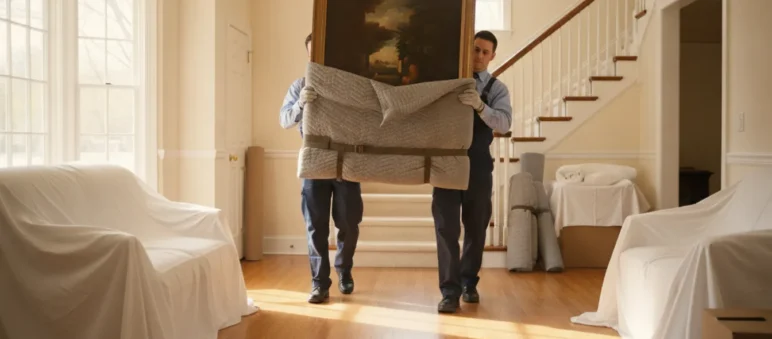
Moving fine art through Lancaster, Pennsylvania, takes more than counting rooms and scheduling a truck. Each piece may need its own condition record, handling plan, packing approach, and access review. Availability and scope should be confirmed for your specific move, especially when the route requires an individual service-area review.
Request a detailed moving estimate
A careful plan from fine-art movers in Lancaster, PA, should begin with a physical or virtual survey. The survey should capture each piece’s condition, measured access points, packing needs, storage questions, and valuation protection choices. Delaware Moving & Storage is a family-owned company serving the tri-state region for more than 42 years. Availability for a particular Lancaster move should be confirmed before booking.
A careful conversation before moving day can reveal which details affect the crew, equipment, timing, and written estimate. Start by asking what the mover needs to know about your collection and the property.
What should fine art movers Lancaster PA ask before a move?
Before booking, a fine-art mover should confirm Lancaster availability, understand each piece, and review the move from pickup through delivery. Ask how the survey will document artwork, what access details affect handling, which services are included, and how storage or valuation questions will be addressed. A written scope helps prevent surprises.
Start by confirming whether the requested origin, destination, and timing fit the crew’s current service capacity. Do not assume that a general regional service reference includes this specialty move. Confirm availability for the specific origin, destination, and date before booking.
What should the survey cover?
Ask whether the mover will complete a physical or virtual survey and how the findings will shape the plan. A room count is not enough for artwork. The conversation should identify framed paintings, sculptures, mirrors, works on paper, oversized pieces, unusual weights, and any item requiring special positioning.
Share measurements, approximate weights when known, photos, current mounting details, and the condition of each piece. Also describe narrow hallways, stairs, elevators, door clearances, loading areas, parking limits, and the route between the room and vehicle. These details help the crew plan handling instead of improvising on moving day.
Which planning questions matter most?
- Who coordinates the specialty items from survey through delivery?
- Which packing, carrying, disassembly, and placement services are included?
- How will the crew document condition before handling?
- What happens if weather, access, or storage timing changes?
- What valuation protection choices and limits should be reviewed?
The company describes its moves as pre-planned and carefully monitored from start to finish. Ask for that planning approach in writing, including responsibilities and exclusions. For a related look at documenting a specialty move, review this fine-art condition and moving plan, then keep your questions specific to the Lancaster route and confirmed scope.
The strongest estimate reflects the actual artwork, access, timing, and services involved. It should explain what the crew knows, what still needs confirmation, and which decisions belong to you before booking.
How do you document artwork before moving day?
Document artwork before moving day with clear photos, condition notes, dimensions, and handling instructions. This record gives you and the mover a shared reference. It also helps identify questions about access, packing, storage, and valuation protection before the crew arrives.
Answer: Photograph each piece from several angles, note existing marks, record dimensions and weight when available, and keep the records with your moving documents. Ask about handling concerns before anyone touches the artwork. A written condition record supports careful planning without presenting an appraisal or promising a particular outcome.
The National Park Service identifies pre-handling considerations as an important part of caring for paintings. Its guidance also explains that faulty handling can affect a painting, so documentation should support a conversation rather than replace one.
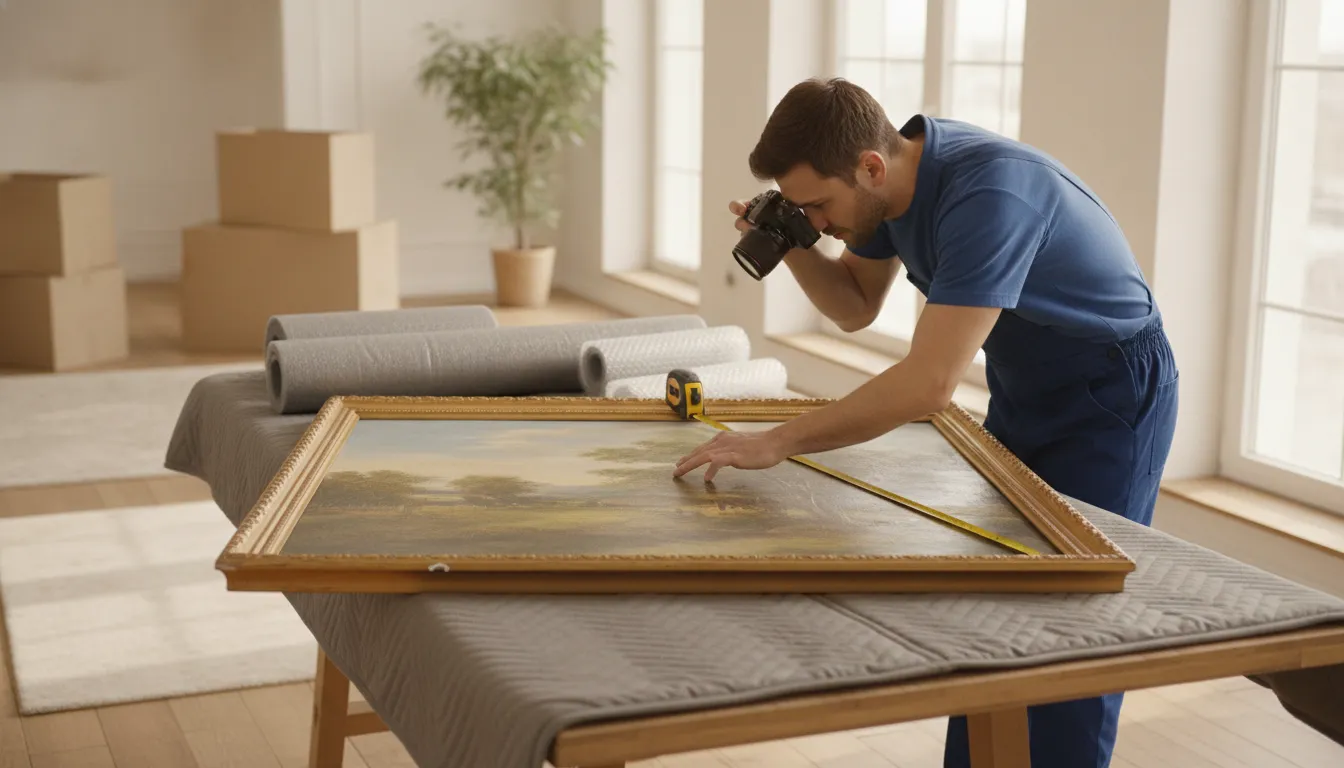
- Photograph the piece. Capture the front, back, sides, frame, hardware, signature area, and any existing marks. Use enough light to show the surface without glare. Keep the original files and label them by item.
- Write condition notes. Describe scratches, chips, loose components, frame separation, stains, or other visible concerns. Do not diagnose damage. If the piece has special handling instructions, record who provided them and share them with the mover.
- Record identifying details. Note the title or personal description, dimensions, approximate weight if known, medium if documented, and current location. Measurements help the crew evaluate doors, stairs, elevators, and packing needs.
- Document access conditions. Photograph narrow turns, stair landings, elevators, gates, loading areas, and any route where the piece may need extra clearance. Tell the mover about restricted parking or weather exposure.
- Organize the records. Keep photos, notes, measurements, and written handling instructions together. Review them during the survey, then confirm what the written moving scope includes. For broader specialty-item protection planning, review the specialty-item protection planning guide.
Share the condition record before moving day, not at the doorway. That timing gives the crew a chance to ask questions and plan the next handling step carefully.
Which packing choices fit each piece?
Answer: Packing should reflect an item’s materials, size, condition, and strongest orientation. Paintings may travel upright on a stable edge, while artwork on paper generally travels flat. Sturdy boxes, suitable protective housing, and limited direct handling can reduce avoidable movement risks. Confirm the proposed method with your mover before booking.
Academic and government collection-care guidance offers useful planning context, but it is not a guarantee from Delaware Moving & Storage. Yale advises considering an object’s inherent strengths and weaknesses, then shipping it in the position where it is sturdiest. For example, paintings may travel upright on their edge, while artwork on paper may need to remain flat. Those choices should be based on the specific piece, its frame, its condition, and the route.
Smaller pieces and works on paper may call for sturdy boxes that fit without excessive movement. Yale also recommends suitable bins or other housing to protect special collections from the elements. A second box around a primary box may be worth discussing when the piece and route justify added protection. Oversized materials need containers that accommodate their dimensions rather than forcing an awkward fit.
Paintings require a different conversation. The National Park Service treats proper shipping as a distinct painting-care topic, with handling decisions made before movement begins. Ask who will handle each piece, how contact with the surface will be limited, and how the item will remain stable during loading and travel.
Smithsonian Museum Conservation Institute research describes a reusable travel-box design that protects painting surfaces, reduces handling, and uses cushioning to absorb shock and vibration. That example illustrates why fragile or oversized paintings may need a carefully considered protective housing. It does not mean every move requires that design or a conservation-grade solution.
Start by listing each piece, noting its dimensions, frame, medium, and known vulnerabilities. Share that information during the survey, then ask what the proposed materials and orientation are intended to address. Delaware Moving & Storage can discuss professional packing services, including whether full or partial packing fits the move. Confirm availability and scope for the requested move before scheduling.
How can Lancaster access details change the move?
Doors, stairs, elevators, loading zones, parking, and weather exposure can change how a fine-art move is planned. Access details help the crew choose a safer route, schedule handling, and reduce avoidable outdoor exposure. Share measurements and restrictions before the estimate, especially for oversized or fragile pieces.
For a fine-art move requested in Lancaster County, confirm availability and scope for your specific origin, destination, and date. Do not treat a broader regional service reference as confirmation that this specialty move is available.
Measure the complete path
Record doorway widths, ceiling heights, stair turns, elevator dimensions, and hallway clearances. Note whether doors open fully and whether artwork can remain upright through each transition.
Stairs may require extra route protection and deliberate positioning. Elevators may need advance coordination, padding, reservations, or limits on dimensions and weight. A narrow turn can matter as much as the front door.
Plan loading, parking, and weather protection
Identify the nearest legal parking area, loading zone, dock, driveway, and building entrance. Ask about permits, time windows, security desks, gate access, and any distance between the truck and the door.
Yale’s collections guidance recommends using loading docks when possible and minimizing outdoor cargo rearrangement during transport. These practices can reduce exposure to rain, wind, heat, and unnecessary handling. Use suitable housing to protect artwork from the elements while it is moved between spaces.
Share route information for both addresses. The company describes its moves as pre-planned and monitored from start to finish, so the crew can account for building conditions before moving day.
Request a detailed moving estimate for your Lancaster access conditions.
If the artwork is traveling beyond the region, review the company’s long-distance moving services and ask how distance, access, added services, and timing affect the written scope. A careful survey should connect the route plan with the handling plan.
When weather is uncertain, ask how arrival and delivery timing will limit outdoor staging. Confirm where the crew can pause safely, how the route will be protected, and who makes changes if conditions shift.
What should you ask about climate and storage?
Ask how temperature, relative humidity, monitoring, security, fire protection, containers, and access will be handled. These questions help you compare storage plans without assuming every warehouse provides a museum environment. Customer storage details confirm available storage services, but they do not prove climate-controlled art storage for paintings or other sensitive works.
| Question | Why it matters | What to confirm |
|---|---|---|
| How are temperature and relative humidity monitored? | Environmental changes can affect different collection materials in different ways. | Ask whether readings are recorded, reviewed, and shared when conditions change. The National Park Service environment guidance treats monitoring as a core collections-care question. |
| Does the space control fluctuations, or only provide shelter? | Protection from weather does not automatically mean stable conditions for artwork. | Request a plain-language explanation of temperature control, humidity control, and known limitations. |
| How is the storage facility secured? | Physical security and fire protection are separate parts of storage planning. | Ask about alarms, access controls, fire protection, and who can enter the storage area. |
| What containers or equipment will hold each piece? | Storage methods should suit the artwork’s size, construction, and handling needs. | Confirm whether pieces remain in their transport housing, use containers, or need another documented method. |
| How long will storage last, and who checks the items? | Longer storage creates more opportunities to review condition and environmental concerns. | Confirm the expected duration, inspection process, access rules, and contact for condition questions. |
The National Park Service identifies temperature fluctuations, relative humidity changes, and environmental monitoring as important collections-environment topics. Those principles support better questions, not a promise that a particular commercial facility meets museum standards.
Delaware Moving & Storage offers storage options for short- and long-term needs. Its documented storage information describes a warehouse larger than 40,000 square feet, a 24-hour central alarm system, and containerized storage systems. Confirm how those general services apply to your artwork before scheduling.
If you are comparing fine art movers Lancaster PA, ask for written answers about climate, security, containers, access, and inspection responsibilities. A detailed conversation can reveal which questions still require a specialist, conservator, or storage provider.
What should an estimate include when hiring fine art movers Lancaster PA?
Answer: A useful fine-art moving estimate should reflect each item’s inventory, dimensions, condition, packing needs, access challenges, storage timing, and selected valuation protection. Ask whether the survey can happen in person or virtually. Then compare written estimates by scope, not by a single total. Availability for the requested Lancaster-area move should also be confirmed before booking.
Start with a complete inventory. List paintings, framed works, sculptures, mirrors, antiques, and other bulky or fragile pieces. Include dimensions, approximate weights when known, frame details, and any item that may require special handling. A detailed inventory helps the mover identify services that a basic room count could miss.
Ask how the estimate will be developed. A physical or virtual survey should review the collection, pickup and delivery locations, stairs, elevators, doorways, loading areas, and route constraints. The estimate should explain how the crew will protect the pieces while moving them through each space. Delaware Moving & Storage describes its moves as pre-planned and monitored from start to finish, but the exact scope still needs to be confirmed for your shipment.
Review packing and access services line by line. Confirm whether full or partial packing is included, who supplies professional materials, and how oversized items will be handled. Note whether disassembly, furniture rearrangement, long carries, stairs, elevator coordination, or limited loading access could add work. If storage falls between pickup and delivery, record the expected storage duration and ask how the timing affects handling and delivery coordination.
For long-distance moves, shipment weight and mileage may help determine the estimate. Added services, bulky items, and the valuation protection option can also affect the documented scope. These factors should appear clearly rather than being left to assumption.
Finally, ask what valuation protection choices are available and what limits or conditions apply. Valuation protection is not an appraisal or an insurance promise. Review the available options with the mover, then read the terms before selecting one. You can also review valuation protection options and use this guide to compare written moving estimates before making a decision.
How do you choose and schedule a specialty art move?
For a Lancaster-area art move, confirm availability before making plans. Ask whether the crew can serve your pickup and delivery addresses, who coordinates the specialty items, and what the proposed timeline includes. The company can review a Lancaster-area request, but each fine-art move still requires individual confirmation of service availability and scope.
Answer: Choose a mover that confirms Lancaster availability, reviews each artwork and access point, and provides written scope before booking. Compare packing, handling, storage timing, bulky-item, mileage, and valuation details. Then request a survey, approve the written plan, and confirm pickup dates, contacts, and next steps.
Questions to ask before booking
- Can you serve both addresses, and is the route handled directly or coordinated through another provider?
- Will someone review artwork dimensions, weight, frames, materials, condition notes, and installation requirements?
- Which packing services are included, and which items require separate approval or planning?
- How will stairs, elevators, narrow doors, parking, loading zones, and weather exposure affect the schedule?
- If storage is needed, what dates, container arrangements, security measures, and environmental conditions should I confirm?
- Which valuation protection options are available, and what limits or exclusions should I review?
Request the answers in writing. A useful scope should identify the inventory, survey method, packing responsibilities, access assumptions, storage timing, added services, bulky items, and valuation selection. For long-distance work, shipment weight and mileage may also affect the estimate. You can use this guide to compare written moving estimates line by line.
The company describes its moves as pre-planned and monitored from start to finish. That does not replace a project-specific plan. Ask who your primary contact will be, when the survey occurs, when the written estimate arrives, and how changes will be documented. If the move involves extended transportation, review the available long-distance moving services alongside the specialty scope.
Request a detailed moving estimate before scheduling your specialty art move.
Frequently Asked Questions
Are fine art movers available for a Lancaster, PA move?
Availability depends on the specific origin, destination, timing, access conditions, and handling needs. Ask whether the company can accept your exact fine-art move, then confirm the written scope before scheduling.
What should I record before the crew handles artwork?
Photograph each piece, note visible condition, record dimensions, and identify special handling concerns. Share those records during the survey so the written plan reflects the artwork, access route, and services required. The National Park Service identifies pre-handling considerations as important for paintings: review its painting-care guidance.
Can the mover pack every type of artwork the same way?
No. Packing should reflect each object’s materials, structure, size, and vulnerabilities. A painting, framed work, sculpture, and artwork on paper may require different orientation and protective housing. Ask whether full or partial packing and professional materials fit your inventory.
What climate questions should I ask about art storage?
Ask how temperature and relative humidity are monitored, how changes are managed, what security and fire protections exist, and how pieces are housed. Storage availability does not automatically mean climate-controlled art storage, so confirm the environment for your specific collection with the mover and facility.
Does valuation protection replace an appraisal or insurance?
No. Valuation protection is a moving-related option, not an appraisal or a promise of insurance coverage. Review available levels, limits, exclusions, and claim procedures with the mover. Options can range from basic to full coverage, depending on the move and selected protection.
Ready to plan your Lancaster-area fine-art move?
A detailed conversation can clarify the artwork involved, access conditions, protection needs, and timing before moving day. Confirm whether the requested Lancaster-area move fits current service availability.
Request a detailed moving estimate to share your plans and confirm availability.