

Document storage solutions can help keep a move organized, but not every paper belongs in a box or storage unit. Start by separating records you may need soon from papers you can pack for later. Keep sensitive originals under your control, and make a simple plan for finding the rest.
Which documents should stay with you during a move?
Make one small, secure group of papers that could be needed before, during, or just after moving day. Keep it in a document case or folder that remains with you, not in a general moving carton. Think through the actual tasks on your calendar: traveling, collecting keys, arranging utilities, attending appointments, enrolling a child, or completing work paperwork.
Depending on your situation, the set may include identification, current insurance details, medication or care information, school and employment paperwork, lease or closing records, and contact information for utility providers. Keep only what is useful for the transition; a large binder can be difficult to manage and easier to misplace.
Some originals, such as passports, birth certificates, legal papers, and property records, may be difficult to replace. Keep them secure and limit who handles them. If you do not know whether a particular process requires an original or certified copy, ask the organization or qualified professional that will receive it before packing it away.
- Carry: identification and papers tied to travel, access, appointments, or urgent administrative tasks.
- Keep separately protected: irreplaceable originals and sensitive records you do not want mixed with household goods.
- Pack for later: records you have confirmed are not needed during the transition.
How do you sort records before packing?
Begin several weeks ahead if possible. Gather papers from desk drawers, filing cabinets, kitchen catchalls, home-office shelves, and boxes. Sort by purpose rather than by room. That makes records easier to retrieve later and can reveal duplicates, expired materials, or documents that need special care.
- Set up a clear work area. Use separate trays or folders for identity and legal records, financial papers, health and insurance documents, home records, and work or school papers. Keep the work area away from food and drinks.
- Identify deadlines. Review upcoming appointments, account changes, school dates, closing tasks, and travel plans. Pull only the paperwork relevant to those events into the carry-with-you set.
- Check retention before discarding. Tax, legal, medical, and financial records can have different retention needs. Consult the applicable guidance or a qualified professional rather than assuming an old paper is unnecessary.
- Handle duplicates carefully. Once you confirm a copy can be discarded, shred papers containing personal information. Do not put sensitive pages in an open recycling or trash container.
- Make a general inventory. Record the folder or box names and where they will go. Keep the detailed inventory in a secure place instead of writing private details on an outside label.
Use broad labels such as “home records,” “insurance,” or “personal papers.” Avoid writing account numbers, full names, policy details, or other private information where passersby can read it. A private inventory can describe the general group without listing sensitive contents line by line.
Which document storage solution fits each kind of paper?
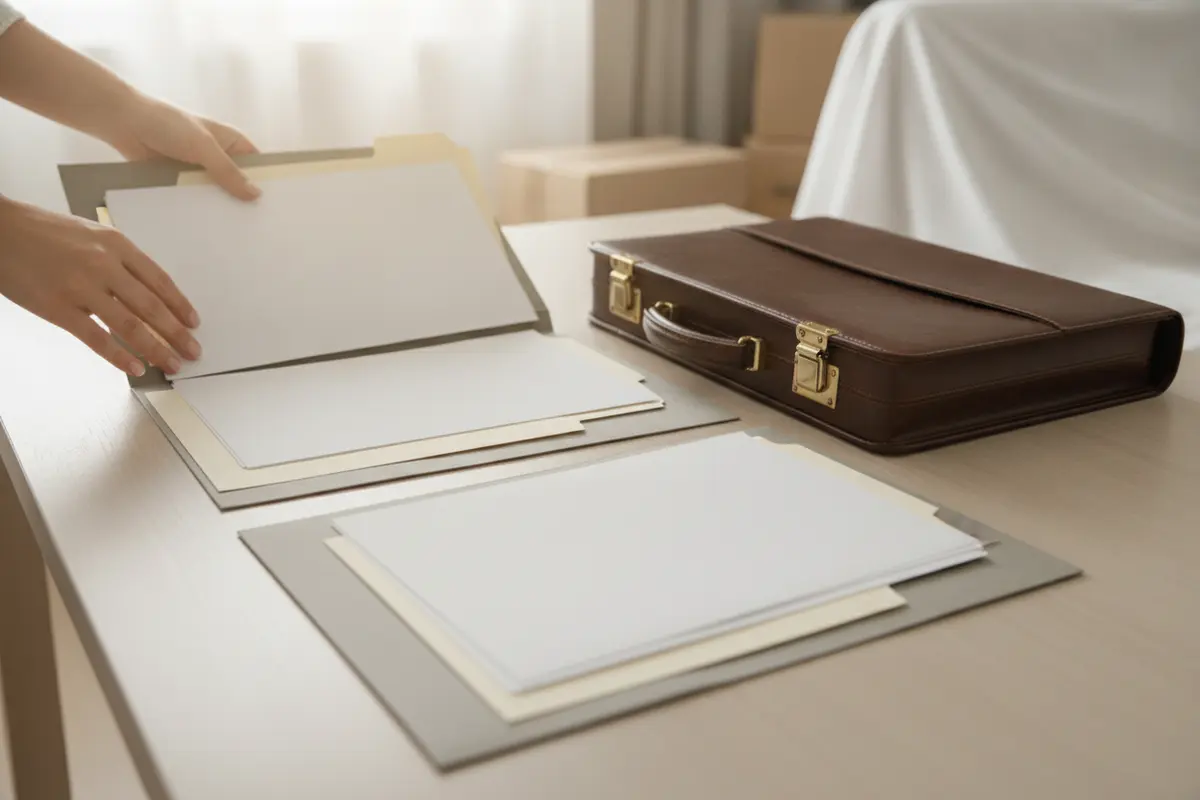
The right option depends on how soon you may need a record, how sensitive it is, and whether it is an original or a reference copy. A small portable case is useful for papers that must stay close. A home file drawer works for records you use regularly once settled. A closed box can keep less-frequently used files together, while a storage facility may suit some packed household goods if the conditions and access arrangements are appropriate.
| Option | Best suited to | Access and protection considerations |
|---|---|---|
| Personal document case | Time-sensitive papers and essential originals | Keep it with you; do not leave it unattended in a vehicle or loading area. |
| Home filing drawer | Frequently used records after arrival | Choose a dry, secure location and return papers after use. |
| Closed file box | Organized records not needed during the move | Use a broad label and keep the detailed inventory private. |
| Storage facility | Selected household records that can remain packed | Ask about access, protection from environmental conditions, and retrieval options. |
| Protected digital copy | Reference copies or backup access to selected information | Use a protected account and retain originals where required. |
Paper can be affected by moisture, heat, pests, and rough handling. Keep boxes off the floor and away from damp walls, leaking items, cleaning products, or liquids. Use a closed container, but do not treat a container alone as protection against every environmental risk. If you are considering storing important paperwork, ask the provider about the actual arrangements before deciding.
Should you scan paperwork before moving?
A scan can make it easier to refer to selected information while a paper file is packed. It does not automatically replace an original. An agency, lender, school, insurer, or legal professional may have a specific requirement, so check before relying on a digital copy for an application or transaction.
Choose the files deliberately. Scanning every page can create additional copies of sensitive information without a clear benefit. For files you do scan, use a password-protected device or account, enable available account protections, and avoid sending sensitive documents through a channel you do not trust. Use general file names if devices or folders are shared.
Plan how you will open the files after the move. A copy stored only on a laptop that is packed away may not help when you need it. Consider whether you can access the account from another trusted device, and avoid leaving copies open on a public or shared computer. Keep the paper original when a process requires it or when you have not confirmed that a scan is accepted.
How should you pack paper records?
Separate files from general household cartons. Put folders or envelopes inside a sturdy, closed case or box, and keep the container dry. Do not overfill it; a heavy container can be awkward to lift and may bend folders or tear papers. Keep it away from items that can crush, leak onto, or stain the contents.
- Take the personal document case with you when practical.
- Tell household members which papers are set aside so they are not packed accidentally.
- Keep the case out of the loading path if it will not travel with the moving crew.
- After arrival, place stored records in a secure, dry location and check your inventory.
- Return frequently used items to their designated folder rather than leaving them on counters.
Before the move, you can also review practical moving tips and consider whether you need help with packing services for household goods. Keep private records separate from items being packed and explain clearly what should remain with you.
What should you ask before storing documents with household goods?
Do not assume every storage arrangement is suitable for sensitive or irreplaceable records. Before placing a box in storage, ask how you can access it, whether a particular box can be retrieved when needed, and what protection is provided against environmental conditions. Be specific about the kind of records, without sharing unnecessary personal details.
Also consider timing. If you may need a document during a gap between homes, putting it away with other goods can create a practical problem even if the paper remains undamaged. Keep records needed for travel, appointments, financial tasks, or access to the new home outside stored belongings. When in doubt about legal or official paperwork, check with the organization that needs it.
Delaware Moving & Storage offers moving and storage services. A conversation about service options is not a substitute for confirming that a particular environment or access plan is suitable for sensitive documents. Review the company’s storage options and ask questions before deciding what to place in storage.
How can you build a document plan into your moving timeline?
Give paperwork its own place on the moving checklist instead of waiting until the final packing days. A simple timeline can reduce last-minute searching:
- Several weeks before: gather records, sort by purpose, check retention questions, and identify what must stay with you.
- About a week before: prepare the carry case, confirm upcoming appointments and deadlines, and create a broad inventory for packed folders.
- Before loading: tell everyone in the household where the case is and confirm it is not included with goods going into storage.
- After arrival: put the case in a secure place, locate records needed for immediate tasks, and return remaining files to a consistent home.
If there will be a gap between leaving one home and entering another, list the paperwork you may need during that period. For a local move, that could be limited to access and household setup documents. For a longer-distance relocation, travel plans and a longer interval before unpacking can make it useful to keep a broader set accessible. Delaware Moving & Storage works as an agent for Wheaton World Wide Moving for long-distance moves; review Wheaton moving information as part of planning that transition.
If you are coordinating a local household move, learn about local moving services. For a broader view of available options, visit the company’s moving services page or company background. A move with both packing and storage needs may call for a conversation about how the household goods portion will be handled; keep document decisions separate from that discussion.
What can a sample document plan look like?
Consider a household leaving a home before the new residence is ready. The family has a closing folder, health records, school forms, insurance paperwork, and older home files. Rather than putting everything into one carton, they identify the closing papers and school forms needed in the next few days, then keep those in a portable case. Health and insurance information needed for appointments goes in the same case, in separate folders. Older home records are inventoried under a general label and packed only after the family checks whether any are needed for an active matter.
If the family wants electronic reference copies, they scan only selected documents and confirm how those files can be accessed. The case travels with a household member, while the packed box is kept apart from the papers needed during the gap. After move-in, frequently used insurance and home records go into a secure file drawer. This plan does not depend on guessing which papers are unimportant; it separates immediate access from longer-term storage and leaves retention decisions to the right source.
A different household may not need a storage facility at all. If the move is direct and the paperwork is limited, a portable case plus a labeled file drawer at the new home can be enough. The useful question is not how many boxes to store, but which records need controlled access and when.
Frequently Asked Questions
Should important documents go in a moving truck?
Keep essential originals and any papers you may need during the move with you when practical. For other paperwork, consider the expected access needs and ask about arrangements before placing it with stored household goods.
How should I label a document box?
Use a general label such as “home records” or “personal papers.” Do not list account numbers or detailed sensitive contents on the outside. Keep any fuller inventory somewhere secure.
Are digital copies enough?
Not always. Some processes require an original or certified copy. Ask the organization that will use the record before relying on a scan.
Can I store family documents with furniture?
It depends on the records, the expected access, and the storage conditions. Keep irreplaceable or time-sensitive papers under your control if you are uncertain, and ask the provider about access and protection for anything you are considering storing.
Contact us to discuss your move
Sorting papers before packing helps protect privacy and keeps essential records within reach. Set aside the documents you may need, then choose a storage plan for everything else based on access, security, and the conditions available.