
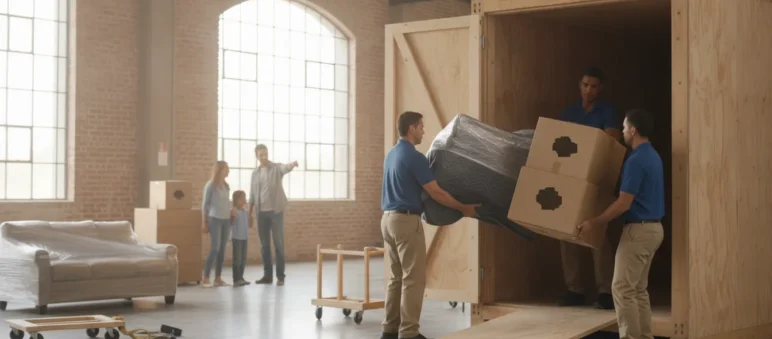
When move-out and move-in dates do not line up, your belongings still need a clear, secure plan. Containerized storage can create that bridge for a household move, office transition, renovation, or phased relocation.
With long distance movers hockessin de customers can have belongings loaded into organized storage containers, held at a managed facility. And coordinated for access or delivery when the next stage of the move is ready. The right process depends on what you are storing, how long it will remain there, and whether the move includes packing, transportation, or unloading.
Delaware Moving & Storage offers containerized storage within a broader moving and storage process. The company operates more than 40,000 square feet of warehouse and office space, with five loading docks and a 24-hour central alarm system. Here is how loading, facility storage, access, and transitions can fit together.
What Does Container Storage in Delaware Mean for a Move?
Answer: Container storage means your household belongings are placed into sturdy storage containers and kept at a professional storage facility while you manage the next stage of your move. It can be useful when your Delaware home is ready before your next home. When a closing date changes, or when you need a temporary holding solution between move-out and move-in.
For a Delaware move, containerized storage is facility-based storage. Delaware Moving & Storage describes its system as an organized storage option using containers in various sizes. The company also offers temporary and long-term storage, so the arrangement can support a short transition or a longer gap between homes. You can learn more about its Delaware storage solutions.
How facility-based containerized storage works
Rather than leaving a container at your property, a moving crew loads your belongings and places them into a container at the company’s storage facility. The facility then manages the stored shipment until it is ready for the next step. Depending on your move plan, that may mean arranging delivery to your new home or coordinating additional moving services when your schedule is settled.
This approach is different from portable storage, including COW-style services. With portable storage, a container is typically delivered to your home so you can load it on site. Facility-based containerized storage keeps the storage process at the warehouse instead. That distinction matters if your property has limited driveway space, neighborhood restrictions, or access conditions that make an on-site container impractical. Review portable storage options if you are comparing the two approaches.
What access should you expect?
Facility-based container storage is designed for organized storage, not unrestricted day-to-day access like a self-storage unit. Ask how access requests are handled, whether belongings must be retrieved by the moving team, and how access affects the move plan before signing an agreement. Also confirm which items should remain with you during the transition, such as medication, important documents, valuables, and everyday essentials.
The best storage choice depends on the gap between homes, your property access, and how often you need to reach your belongings. A moving professional can help match the storage arrangement to the rest of your relocation plan.
How Are Belongings Loaded and Prepared for Containerized Storage?
Answer: A careful containerized-storage process starts with a survey and inventory, then moves through packing, protection, and organized loading. The goal is to document what is being stored and position it so the crew can handle it safely when it is time to move or retrieve the shipment.
- Survey the belongings and the space. Before loading day, discuss the household, the origin address, the destination or storage need, and any access considerations. Delaware Moving & Storage offers in-home and virtual surveys to support an accurate estimate without relying on a blind quote. This is also the right time to identify furniture that may need disassembly and items that require special handling.
- Create a detailed inventory. The crew records the shipment and considers how its contents affect the move. An inventory helps connect each item to the preparation plan, supports weight estimation for long-distance service, and gives everyone a shared record before belongings enter storage. Customers should also identify items they plan to keep with them rather than place in the shipment.
- Pack fully or selectively. Some households choose full packing, while others need help only with fragile items, kitchen contents, artwork, or selected rooms. Professional packers use protective methods and appropriate materials to prepare belongings for handling and storage. For a room-by-room checklist before the crew arrives, review this guide on how to prepare for movers. You can also arrange professional packing services when you want the crew to manage more of this work.
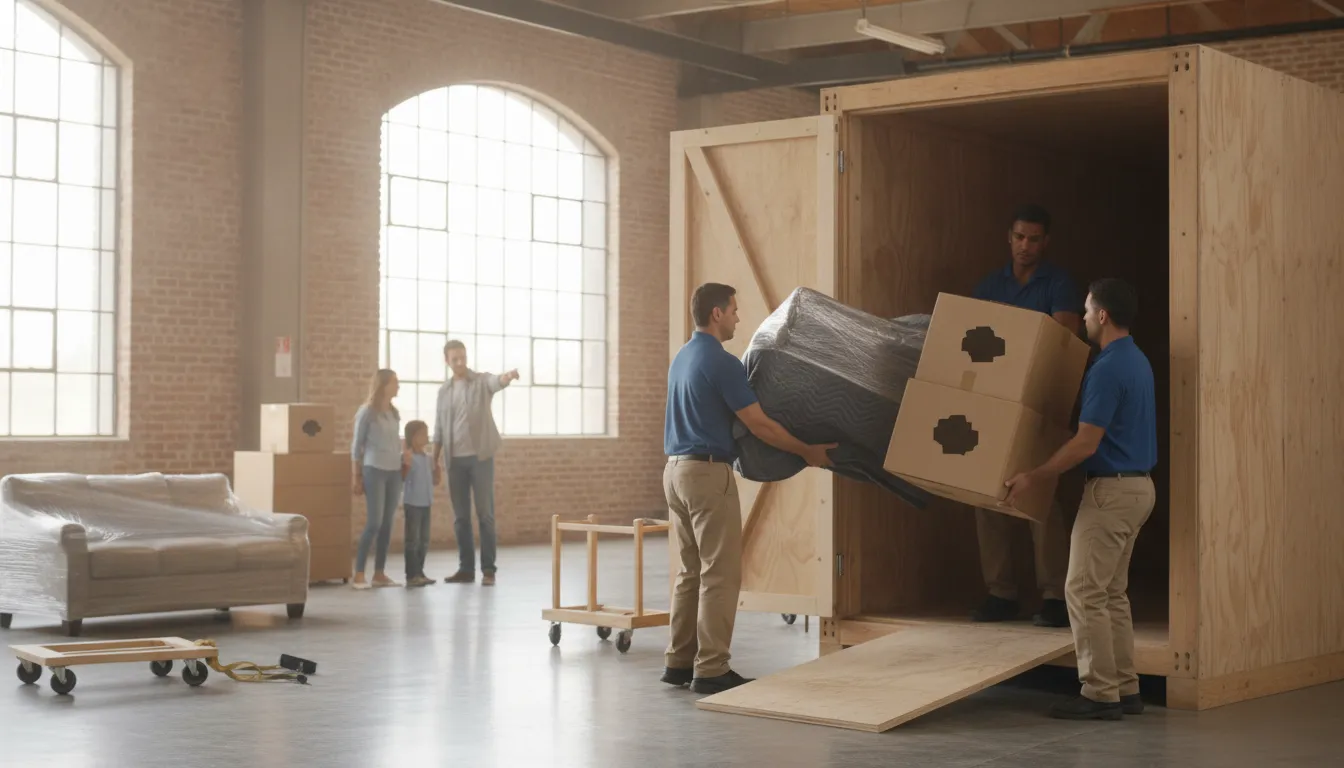
- Protect furniture and the property. Movers use equipment such as hand trucks, four-wheel dollies, furniture pads, and stretch wrap. Door and floor protection helps reduce avoidable scuffs during the path from the home to the loading area. Furniture may be wrapped or disassembled when appropriate, with parts kept organized for later reassembly.
- Load the container in a planned order. The crew places items deliberately rather than treating the container like a loose pile. Heavier and sturdier pieces are positioned to support an orderly load, while wrapped and boxed items are arranged to reduce shifting and make the inventory easier to follow. The exact loading plan depends on the shipment, selected services, and storage arrangement. Before the container is closed, the crew completes a final review of the loaded belongings and paperwork.
For households comparing container storage in Delaware with a broader interstate moving plan, ask which preparation, inventory, loading, and unloading services are included. Service details can vary by shipment and selected options, so a survey is the best starting point for a clear plan.
How Are Stored Items Handled and Protected?
Answer: Stored household goods should be inventoried, packed for the length of the storage period, moved with appropriate equipment, and checked as they progress from pickup to delivery. Good handling is a process, not a single layer of protection.
For a Delaware household preparing for an interstate move, the process can begin with full or partial packing. A crew can organize items for loading, use suitable packing materials, and note the shipment contents as part of the inventory. Delaware Moving & Storage describes its long-distance process as including detailed inventory and weight estimation, professional packing, loading, transit communication, delivery coordination, and unloading. Service details depend on the shipment and the options selected.
Packing and preparing household goods
Packing decisions should reflect the item, not just the size of the box. Fragile pieces need cushioning and a secure carton. Furniture may need disassembly before loading and reassembly at the destination. The crew can also help separate items that will travel from belongings that will remain in storage or be handled later.
Delaware Moving & Storage offers professional packing services and packing materials, including full or partial packing support. Its packing team describes using protective methods and materials, with unpacking receiving careful attention at the destination. Learn more about professional packing services before deciding which parts of the move your household will handle.
Moving and loading with the right equipment
Once items are ready, professional crews use equipment suited to the job. Delaware Moving & Storage lists moving trucks, hand trucks, four-wheel dollies, and furniture pads among its moving equipment. Pads can help separate furniture from contact with other items, while stretch wrap can help hold protective materials in place during handling. Door and floor protection can also help reduce avoidable marks while items move through the home.
These measures do not eliminate every moving risk, and they should not be treated as a guarantee. They create a more controlled process for carrying, positioning, and securing household goods. Clear access information, an accurate inventory, and advance notice of unusually large or delicate items help the crew plan the work appropriately.
Communication during storage and delivery
Protection also includes knowing what is happening after loading. The long-distance process includes transit tracking and communication, delivery coordination, and unloading. If move-out and move-in dates do not align, temporary storage may become part of the plan. Ask how the inventory, storage period, delivery details, and selected valuation protection will be documented before the move begins.
What Security and Access Questions Should You Ask?
Answer capsule: Ask where your belongings will be stored, how the facility is secured, what loading access it provides, and how you will retrieve items. Delaware Moving & Storage operates more than 40,000 square feet of warehouse and office space with a Class A storage rating. Containerized storage systems, and a 24-hour central alarm system. Access arrangements should be confirmed before booking because they depend on the service and handling plan for your move.
For a Delaware household moving between homes, renovating, or waiting for a closing, facility-based storage can provide a controlled bridge between pickup and delivery. The company’s storage facility includes five loading docks and 24-foot clearance, features that support professional receiving and handling. Ask whether your shipment will remain in its storage container, how it will be identified, and who coordinates access when delivery is ready.
| Question | Facility-based storage | Portable COWs |
|---|---|---|
| Where are goods held? | At a managed warehouse with containerized storage systems. | In a container delivered to or near the property, subject to site arrangements. |
| Who handles loading? | Professional crews can coordinate receiving, handling, and later delivery. | The household may load it, or a moving crew may be arranged. |
| What should I confirm? | Access procedures, release instructions, inventory records, and delivery coordination. | Placement, property access, retrieval timing, and who can enter the container. |
Portable COWs can be useful when keeping a container near the home is important, but property access and placement need careful review. Ask about driveway or site conditions, responsibility for loading, protection from weather, and how a long-distance shipment will move onward. Do not assume that storage access is unrestricted or available on demand. Confirm the arrangement, notice requirements, and contact person in writing.
For a fuller overview of Delaware storage solutions, ask how storage fits with your pickup, interstate transportation, and final delivery plan. You can also review the company’s long-distance and interstate moving services before requesting a detailed plan. The right questions help align security, access, and delivery coordination with the realities of your move.
When Does Container Storage Help During a Delaware Move?
Answer: Containerized storage can help when your move-out and move-in dates do not align, when a home is being renovated, or when you need to move in phases. It can also give a household more flexibility during a long-distance or apartment move, without forcing every item into the next home immediately.
A delayed closing is one of the clearest examples. If you need to leave your current Delaware home before the next property is ready, your belongings can be held temporarily while the transaction is completed. The same approach may help when a contractor needs rooms cleared before renovation work begins, or when flooring, painting, or other projects are scheduled in stages.
Containerized storage may also suit a phased move. You might move everyday essentials first, then arrange the remaining furniture and household goods after a family member, room, or new property is ready. For apartment residents, limited space, building access rules, or a gap between leases can make this separation useful. Delaware Moving & Storage also provides apartment moving planning for renters who need to coordinate those details.
How storage fits into a long-distance move
Storage does not have to be a separate project from interstate relocation. Delaware Moving & Storage describes long-distance service as potentially including temporary or long-term storage, along with inventory planning, loading, transit communication, delivery coordination, and unloading. That can be useful when the destination is not ready, the shipment needs to be split, or delivery arrangements change during a cross-state move. Review the company’s long-distance and interstate moving services to see how storage can fit within a broader plan.
The company’s storage facility includes more than 40,000 square feet of warehouse and office space, five loading docks, 24-foot clearance, and a 24-hour central alarm system. Its containerized storage system uses various container sizes for organized storage. Service details depend on the items, access conditions, origin, destination, and selected options. So discuss what should remain accessible and what can be stored before the estimate is prepared.
For a move involving a closing delay, renovation, lease transition, or phased delivery, ask how inventory, storage, access, and final delivery will be documented. A clear plan helps prevent confusion about which items are going to storage and which should continue directly to the new home.
Is Container Storage Delaware the Right Fit for Your Move?
Answer: Container storage Delaware families choose can fit a move when dates, belongings, or access needs do not line up. Review the transition timing, the items involved, the desired access, and who should load and handle everything before selecting a facility-based or portable arrangement.
Start with the transition itself. A delayed closing, renovation, lease change, downsizing project, or phased move may create a gap between pickup and delivery. Temporary storage can provide a planned holding point during that gap. Delaware Moving & Storage also offers long-term storage, so the conversation can account for a longer transition without assuming a fixed timeline.
Use this fit checklist
- What needs to be stored? List furniture, boxes, appliances, seasonal belongings, and unusually bulky items. The amount and type of property affect the handling and storage plan.
- How often will you need access? Ask how access requests, retrieval, and delivery are handled for the exact arrangement. Facility-based containerized storage is not the same as a container kept at your property.
- Who should load and move the items? A full-service crew can coordinate packing, loading, transportation, and unloading. That may help when the shipment includes heavy furniture, fragile items, or several move stages.
- Would facility or portable storage work better? Facility-based storage keeps the process connected to a warehouse operation. Portable COWs may suit a different property access and delivery plan. Compare the practical differences.
- Do you need a clear estimate? Share the inventory, pickup details, access conditions, and expected delivery plan. Delaware Moving & Storage uses an in-home or virtual survey to prepare a detailed estimate instead of a blind quote.
For a closer look at Delaware storage solutions, review the storage service page. Then discuss your timing, belongings, access expectations, and preferred level of handling with a moving professional.
Frequently Asked Questions
What is containerized storage?
Containerized storage places belongings in a designated storage container as part of a managed moving and storage plan. It can help during a closing gap, renovation, lease transition, or phased move. The exact facility, handling, access, and delivery arrangement should be confirmed during planning.
Can I access my belongings whenever I want?
Access depends on the selected arrangement. Facility-based containerized storage is different from keeping a portable container at your home or business. Ask how access requests are scheduled, who handles retrieval, what notice is needed, and whether frequently needed items should remain outside storage.
How are items loaded into containerized storage?
A moving crew can coordinate packing, loading, transportation, and unloading. Equipment may include hand trucks, four-wheel dollies, moving pads, and stretch wrap. Discuss fragile, bulky, or unusually shaped items before loading, and use an inventory to identify what is stored and what should be delivered first.
How is a container storage estimate prepared?
A reliable estimate starts with an in-home or virtual survey rather than a blind quote. The survey reviews the belongings, services, loading needs, storage arrangement, and delivery plan. Delaware Moving & Storage can then outline the selected services and costs for your move.
Is containerized storage useful during a long-distance move?
It can be useful when the destination is not ready, delivery must be staged, or move-out and move-in dates do not align. Ask how storage connects with inventory, transportation, delivery coordination, and unloading. The right plan depends on the shipment and the selected long-distance services.
Ready to Plan Your Storage Transition?
A clear estimate can help match the storage arrangement to your belongings, access needs, and move schedule. Request your in-home or virtual moving estimate to discuss containerized storage, handling, access expectations, and delivery planning for your Delaware move.