

Apartment moves involve more than packing boxes. You must coordinate with property managers, reserve building access, protect shared spaces, and prepare for a smaller footprint. This apartment moving checklist helps Delaware renters plan each step without guessing about property-specific rules.
Request your free estimate today for a move plan based on your apartment, belongings, and access details.
What should an apartment moving checklist cover first?
Start with the tasks that depend on other people. Review your lease, contact both property managers, confirm your dates, and ask about building procedures. Early coordination can protect your move window and prevent surprises involving elevators, parking, loading areas, insurance documents, or key handoffs.
Apartment policies vary by building. Never assume a rule applies because another property used it. Ask your current and future property managers for written instructions.
- Confirm your lease notice period and move-out requirements.
- Ask whether the building requires a move reservation or certificate of insurance.
- Reserve an elevator or loading area if the property uses a booking system.
- Confirm move-in and move-out windows, including weekend restrictions.
- Ask where the moving truck may park and how long it may remain.
- Record the names and phone numbers of building contacts.
Keep these details in one moving folder. Add your lease notes, estimate, building emails, reservation times, keys, and utility confirmations. Keep the folder with you instead of packing it.
How can an apartment moving checklist guide lease and building access?
Read the move-out and move-in sections of both leases before scheduling the crew. Then ask each property manager to confirm the exact process. Written answers help you plan around notice dates, deposits, loading rules, elevator limits, access codes, and required paperwork.
Ask your current property manager how the final inspection works. Clarify cleaning expectations and key-return instructions. Take dated photos after the apartment is empty and clean. Keep copies of any inspection form or written confirmation.
Ask the new property manager when you may collect keys. Confirm whether someone must meet the movers. Ask where the crew should check in. Share the correct entrance, floor, unit number, and access code.
Some buildings require proof of insurance from a moving company. Others limit the size of trucks or ban moves during certain hours. These requirements belong to the property, not the mover. Get them before moving day.
If you hire help, share all access information during the estimate. Delaware Moving & Storage provides apartment moving services for local, state-to-state, and other relocations. Clear details help the team plan the right equipment and crew.
What should an apartment moving checklist measure before moving?
Measure large furniture and the tightest parts of both homes. Check doorways, hallways, stairwells, elevators, turns, and loading paths. Compare those measurements with furniture dimensions. This simple check can reveal which items need disassembly, special handling, a different route, or a new home.
Measure more than the front door. Check the following areas:
- Apartment entry doors and interior doorways.
- Hallway width and sharp turns near your unit.
- Elevator door width, interior depth, and weight limit.
- Stairwell width, landings, and ceiling clearance.
- Parking-to-entry distance and any ramps or curbs.
- Closets, alcoves, and the available wall space.
Measure sofas, bed frames, dressers, desks, and appliances. Note whether legs, doors, or shelves can come off safely. Photograph unusual items and tight turns. Send those details before the estimate.
Apartment layouts often reward careful editing. Decide what will move before you buy more storage furniture. Donate, sell, recycle, or discard items that no longer fit your next home.
| Area | What to check | Plan if access is tight |
|---|---|---|
| Entry door | Width, height, threshold, and door swing | Ask whether the door can stay open safely during the move. |
| Hallway | Width, turns, corners, and wall clearance | Measure the route and identify furniture that needs disassembly. |
| Elevator | Door width, interior depth, weight limit, and reservation | Share dimensions and reservation details with the property manager. |
| Parking route | Truck space, ramps, gates, curbs, and walking distance | Send photos and written directions to your moving coordinator. |
| Destination room | Wall space, corners, outlets, and final placement | Mark placement areas before boxes and furniture arrive. |
Create a simple access sheet for each address. List the entrance, floor, unit, elevator, parking location, reservation time, and building contact. Add a short route description from the truck to the apartment.
Share the sheet during your estimate and again before moving day. If the building changes your reservation, update the mover promptly. A small access change can affect crew timing, equipment, and the safest route.
Ask whether the elevator has a weight limit or padding requirement. Ask whether the loading area allows a box truck. These questions are especially useful in older buildings, converted homes, and properties with underground parking.
Keep measurements factual. Do not assume a piece will fit because it fit in another apartment. When an item is too large, ask about safe disassembly or specialty handling before the crew arrives.
How do you pack efficiently for a smaller space?
Pack by room and use sturdy, manageable cartons. Start with seasonal and rarely used items. Keep daily essentials accessible until the final day. Label every box with its room, contents, and priority so movers can place it correctly.
Use small boxes for books and other dense items. Use larger cartons for linens, pillows, and light clothing. Do not overfill boxes. Close each carton securely and test its weight before moving it.
Create three clear zones before packing:
- Move: Items that belong in the new apartment.
- Personal vehicle: Documents, medication, jewelry, keys, and fragile essentials.
- Leave behind: Items for donation, recycling, disposal, or the next tenant.
Pack an essentials bag for the first night. Include toiletries, medication, chargers, clothes, basic dishes, snacks, pet supplies, and cleaning products. Keep it with you.
Protect fragile pieces with suitable packing materials. Mark delicate cartons clearly, but do not rely on labels alone. Tell the crew about artwork, antiques, electronics, glass, and other items needing special care.
If time is tight, consider professional packing services. You can request help with the whole apartment or selected fragile items.
How can you prepare elevators, parking, and shared spaces?
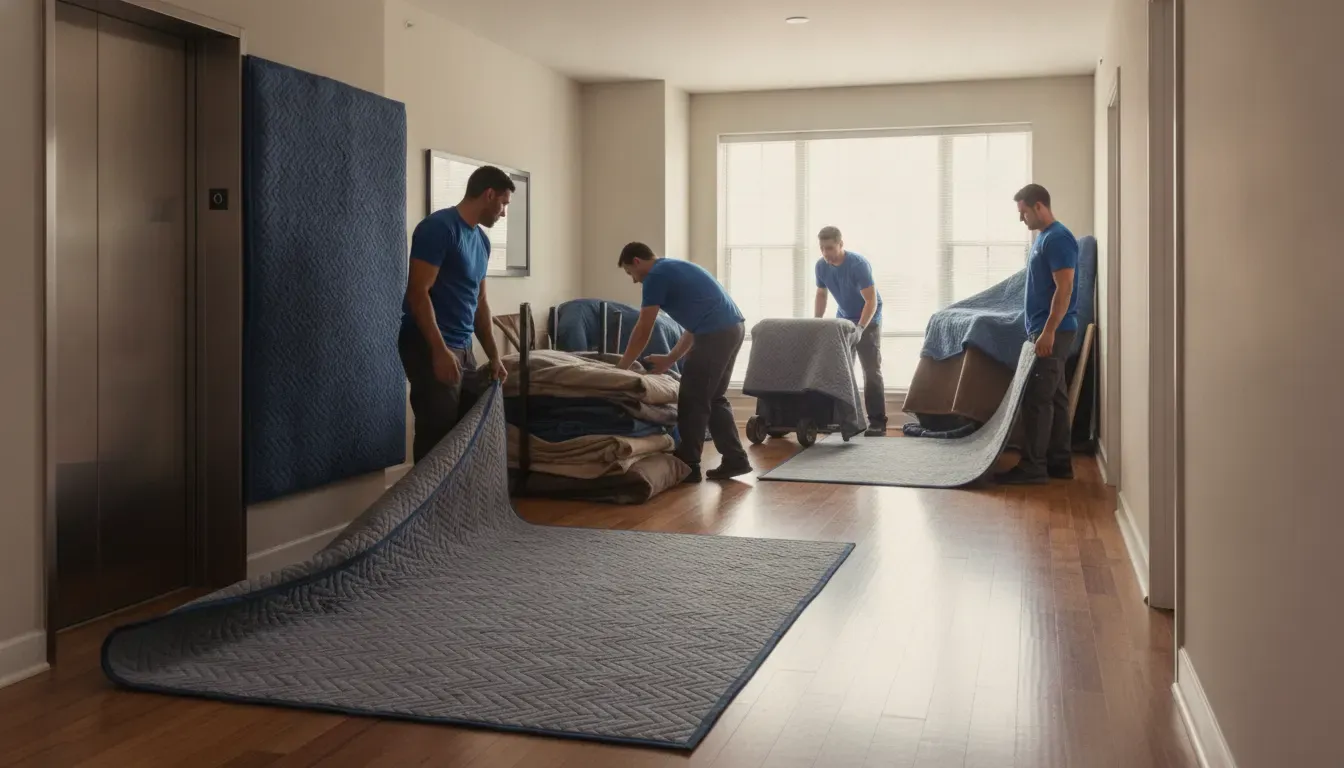
Reserve building resources before the crew arrives. Confirm the elevator time, truck location, loading route, and protection requirements. Tell the property manager and movers about stairs, gates, narrow hallways, security desks, and other conditions that could slow the handoff.
Ask the property manager these practical questions:
- Which elevator should movers use?
- Is a reservation required for each address?
- Where may the truck park during loading and unloading?
- Does the building provide a loading zone or require a permit?
- What floor, wall, door, or elevator protection must be installed?
- Who should the crew contact if the reservation changes?
Send the answers to your moving coordinator. Include photos of the loading area when access is difficult. Mention low branches, underground garages, security gates, steep ramps, or long walking distances.
Shared spaces deserve the same care as your belongings. Clear loose rugs and personal items from the route. Keep pets and children away from active loading areas. Ask the crew to confirm the protection plan before work begins.
Do not reserve parking based only on an online map. A property may have a separate loading entrance or a truck-size restriction. Confirm the arrangement with the building.
Schedule your apartment moving estimate so the crew can review access, inventory, and services before moving day.
What should you complete during the final week?
The final week is for confirmation, not major decisions. Recheck the moving window, elevator, parking, keys, utilities, address changes, and payment arrangements. Finish packing, separate personal essentials, and leave clear paths through every room.
- Confirm the moving appointment. Recheck both addresses, arrival details, crew contact information, and requested services.
- Finish nonessential packing. Leave only daily-use items for the final days.
- Protect personal documents. Keep identification, medication, financial records, keys, and valuables with you.
- Transfer or schedule utilities. Arrange electricity, water, gas, internet, and other services for the correct dates.
- Update your address. Notify the post office, employer, bank, insurer, medical providers, and subscriptions.
- Prepare keys and access details. Set aside old keys and confirm when new keys become available.
- Clean and document the old apartment. Follow the lease instructions and save inspection evidence.
Keep a small cleaning kit available. Include paper towels, disinfectant, trash bags, a broom, and basic supplies. Do not pack those items until the final walkthrough ends.
Review your moving estimate before the crew arrives. Delaware Moving & Storage uses physical or virtual surveys to support accurate, detailed estimates. Ask questions before loading begins.
Prepare a short contact list for moving week. Include both property managers, your mover, utility providers, and anyone meeting you for keys. Add confirmation numbers beside each appointment.
Keep your phone charged and make sure the crew can reach you. If you will be unavailable, name one person who can make access decisions. Share that person’s contact information with the property manager and moving coordinator.
How should you organize apartment move day?
Begin with a short walkthrough and a clear handoff. Confirm the inventory, access route, protection plan, and destination rooms. Keep your essentials with you. Stay available for decisions, but give the crew room to work safely and efficiently.
- Keep the moving folder and essentials bag in your vehicle.
- Make the truck route clear of boxes, rugs, and loose items.
- Show the crew leader the elevator, parking area, and apartment entrance.
- Point out fragile, oversized, or specialty items before loading.
- Keep pets and children away from the work area.
- Check closets, cabinets, storage cages, and appliances before leaving.
- Record meter readings or property notes when your lease requires them.
At the new apartment, direct boxes by room and priority. Keep the essentials bag separate. Photograph any existing damage during the move-in walkthrough. Report concerns through the property manager’s required process.
Take your time with furniture placement. Measure first when possible. A few minutes of planning can prevent unnecessary moves inside a narrow room.
What should you do after moving into the apartment?
Settle the essentials first, then complete the administrative work. Unpack the bathroom, bedroom, and kitchen before less urgent rooms. Confirm utilities, document the apartment condition, update addresses, and store or dispose of packing materials safely.
- Test electricity, water, heating, cooling, and internet connections.
- Check smoke alarms, locks, windows, appliances, and visible fixtures.
- Photograph existing damage and submit the property condition form.
- Unpack medication, toiletries, bedding, basic dishes, and work items.
- Break down cartons and follow the building’s recycling instructions.
- Set up renter’s insurance or update the address on an existing policy.
- Save moving documents, receipts, and valuation protection information.
If the lease and move dates do not align, avoid forcing every item into the apartment. Ask about storage solutions for a short transition or a longer planning period.
Review valuation protection options before the move when you want to understand the available coverage. Keep the selected information with your moving records.
Frequently Asked Questions About an Apartment Moving Checklist
The right checklist depends on your lease, building, belongings, and moving dates. The most useful questions involve notice, access, parking, elevator reservations, measurements, utilities, packing, keys, condition reports, and the first-night essentials you need after arrival.
How early should I start an apartment move?
Start six to eight weeks ahead when possible. Review both leases, choose a moving date, and ask each property manager about procedures. Earlier planning gives you time to measure furniture, reserve building access, schedule utilities, and request a detailed estimate.
Do apartment movers need an elevator reservation?
Some buildings require one, while others do not. Ask the property manager for the current policy at both addresses. Confirm the reservation time, elevator location, protection rules, loading route, and contact person in writing.
What should I keep with me during an apartment move?
Keep identification, keys, medication, valuables, financial records, chargers, basic toiletries, a change of clothes, and important moving documents with you. Pack these items in a personal bag or vehicle instead of the moving truck.
How can I avoid moving items that will not fit?
Measure large furniture and tight access points before moving day. Compare furniture dimensions with doors, hallways, elevators, stairwells, and rooms. Donate or sell pieces that do not fit your next apartment.
Request your apartment moving estimate and start your relocation with a plan built around your home and building requirements.