
How to pack clothes for moving comes down to one choice per garment: hang it, fold it, or roll it. A closet looks simple until shirts crush against a truck wall and shoes scuff a wool coat. Delaware households can sort by wearer, wash what they will keep, and match each piece to a carton that will not collapse.
Request your free in-home estimate so a crew can plan the closet with the rest of the home.
Start with moving and storage services if you want the crew to handle more than the closet. This guide stays on clothing. It does not cover kitchen packing, furniture pads, or how to choose a Bear mover. Those jobs have their own pages. Here you will sort the closet, pick a method, protect shoes, and decide what to leave for a packing crew.
Why Should You Sort Clothes Before You Pack a Box?
Sort the closet before you buy a single carton, because a packed box of clothes you will donate is wasted weight. Local moves are often priced by time, so fewer cartons usually mean a shorter load and a calmer morning.
Work one person at a time. Pull four piles: wear this month, pack for later, donate or sell, and discard. If you have not worn a piece in a year, it rarely earns a box. Seasonal items you still like can go to storage instead of the first truck. Outgrown coats belong in the donate pile, not a wardrobe box. The U.S. EPA estimated that textiles made up 17 million tons of municipal waste in 2018, so a donate pile is a real cut in what you haul.
Count hanging garments before you order cartons. A standard closet rod can look short and still fill two wardrobe boxes. Measure the longest dress or coat so the carton is tall enough. A gown that pools on the cardboard floor will crease at the hem.
Wash and fully dry everything you will keep. Damp fabric mildews inside a sealed carton, especially on a humid Delaware week or in storage. Perfume, lotion stains, and pet hair travel with the clothes if you skip this step. Dry cleaning that is already bagged can stay in its bag for a short local trip.
Make a short list of special pieces: a wedding dress, a uniform, leather, or anything with beads. Those do not go in a mixed sweater box. Note them for the survey so the estimate includes the right carton.
How to Pack Clothes for Moving Without Crushing Them?
How to pack clothes for moving starts with the garment, not the box you happen to have. Hanging clothes stay on hangers, knits get folded, and jeans or tees can be rolled. Mixing all three in one carton is how shoulders crease and zippers snag silk.
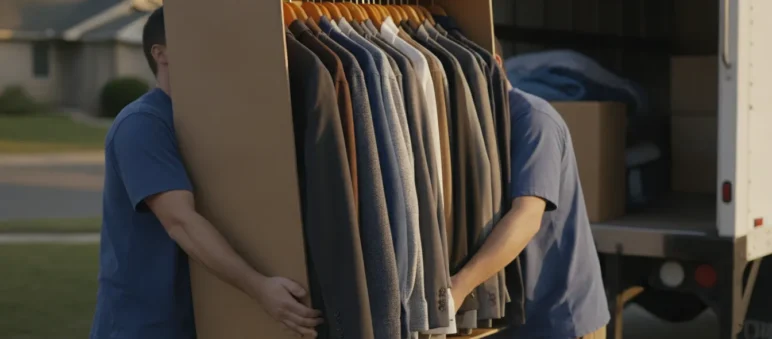
Wardrobe boxes are tall cartons with a metal bar. Transfer hangers straight from the rod. Button the top button so shirts stay on the hanger. Do not overload the bar. A carton that bows will tear at the hand holes. Label each clothing carton with the room and the wearer, and keep a short list of what is inside.
For a short local move, a clean garment bag over a small group of hangers can work. Tie or clip the hangers together so they do not slide. This is a same-day method. It is a poor choice for storage or a multi-day interstate trip, because bags tear and hems drag.
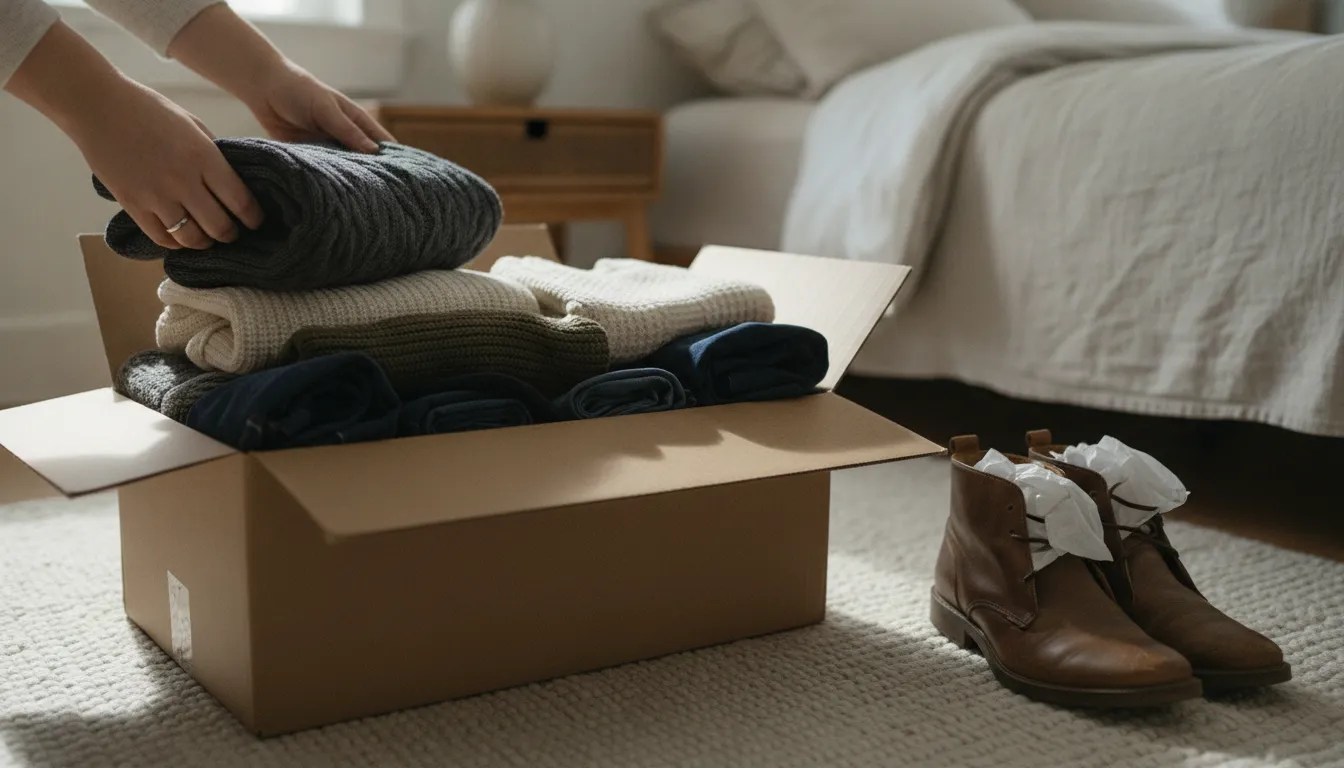
Fold sweaters, hoodies, and structured jackets that should not hang for days. Place heavier folded pieces at the bottom. Keep the carton under a weight you can lift with a partner. A medium box of denim gets heavy fast. Line the bottom with packing paper if the carton will sit on a truck floor. Leave a little room at the top so the flaps close flat.
Roll tees, leggings, and gym clothes. Rolling saves space and cuts hard fold lines. Do not roll linen blazers or anything with sharp creases you want to keep. Stand rolled clothes upright, like files, so you can see each piece without unpacking the box. If a roll pops open, a rubber band around it is enough. Skip tape on fabric.
Do not fill empty corners with shoes, books, or tools. Those dent fabric and make the carton lopsided. Use packing paper or a soft tee to fill a gap. A carton that is full but not bulging rides better than a loose one that shifts on a turn.
Which Clothing Method Fits Each Kind of Move?
The right method changes with time on the truck and time in storage. A Bear townhome move that loads and unloads the same day can use more garment bags. A long-distance shipment, or clothes headed to storage between homes, needs sturdier cartons.
| Clothing type | Best method | Avoid |
|---|---|---|
| Dress shirts, suits, and dresses. | Use a wardrobe box on the hanger. | Do not fold them into a mixed box. |
| Sweaters and knits. | Fold them flat in a medium carton. | Do not hang them for days. |
| Jeans, tees, and activewear. | Roll them and stand them upright. | Do not bulge the flaps. |
| Shoes and boots. | Stuff each pair and box them apart. | Do not set them on blouses. |
| Coats and formal wear. | Use a wardrobe box or garment carton. | Do not use bags for storage. |
| Uniforms and first-week outfits. | Keep them in your own suitcase. | Do not seal them in the last box. |
Use wardrobe boxes when the piece already lives on a hanger and wrinkles would mean an iron on move night. Use folded cartons for bulk and for anything that stretches. Use a suitcase for the outfits you need before the truck is unloaded. Match the method to the trip, not to whatever carton is left in the garage.
A same-day move across New Castle County can be lighter on supplies. You still want a real carton for suits. A multi-day interstate trip needs tape, a closed bar, and no loose hems. Clothes headed to storage need the same care as a long trip, because they may sit for weeks. If you are unsure which services you need, a full-service moving overview shows what a crew can take on. Your closet method stays the same either way.
If clothes will sit in storage between homes, skip thin plastic bags. Breathable cartons and clean, dry fabric matter more than squeezing out every inch. Our storage unit packing guide covers aisles and moisture. This page only covers how the clothing itself should be prepared before it goes in.
How Do You Pack Shoes, Bags, and Small Accessories?
Shoes damage clothes more often than the truck does, because soles leave marks, heels punch holes, and buckles catch knits. Give shoes their own carton, or a clearly separated end of a larger one.
- Wipe soles and let shoes dry fully before they go in a box.
- Stuff each shoe with packing paper or a clean sock so the shape holds.
- Pair them and wrap the pair so they cannot rub.
- Place boots and heavy sneakers at the bottom.
- Keep dress shoes away from work boots.
- Label the carton with the wearer and the room, not just “shoes.”
Handbags and belts do better in a small box with paper between them. Do not hang a heavy purse inside a wardrobe box. The strap can tear, and the weight bends the bar. Empty pockets. A pen or lipstick left in a coat will stain the garment under it. Scarves can roll around a belt so they do not snag a zipper.
Hats and structured caps need a small gap of paper so the brim stays round. Do not set a stack of jeans on a hat box. Boots that are still muddy should stay out of the carton until they are dry. Wet leather can mold, and it smells up every knit beside it.
Jewelry, watches, and small heirlooms should travel with you, not in a clothing carton. If a piece is bulky or high value, ask about valuation protection during the survey. That conversation is separate from the packing method. Our valuation guide explains the coverage choices. Do not treat a clothing inventory as a substitute for it.
What Should You Pack for the First Week?
Pack a suitcase for each person before you touch the closet rod. Include several outfits, sleepwear, one pair of everyday shoes, and any uniform or interview clothes with a fixed date. Medication and documents stay in that bag too, but they are not clothing cartons.
Keep that suitcase in your car or with you, not on the truck. If the delivery window slips, you still have clothes for work and school. Add one extra outfit beyond what you think you need. Laundry is rarely done on night one. Families moving with children can follow the same idea in our family moving guide, then come back here for the closet itself.
Work clothes with a set schedule deserve their own small bag inside the suitcase. Think of scrubs, a chef’s coat, or a suit for a Monday meeting. Do not trust that you will find them in a wardrobe box after a long unload. If the new closet is not ready, that bag is the whole wardrobe for a day.
Label clothing cartons with the person, the room, and the method. “Alex, primary closet, hanging” is more useful than “bedroom.” Write on more than one face. A wardrobe box on a truck shows its side, not its top.
Number the clothing cartons and keep a simple list on your phone. You do not need every tee listed. You do need to know which box holds the suits and which holds the donation pile you meant to drop off. The eight-week moving checklist is the place for the wider timeline. Clothing sort fits best about two to three weeks out, after you know the move date.
Book a free estimate for packing help if the closet is bigger than a weekend.
When Should a Packing Crew Handle the Closet?
Self-packing works when you have time, sturdy cartons, and no fragile formal wear. A packing crew is the better call when the closet is large, the date is close, or the kitchen still needs packing too. Many people do well packing tees and still want help with suits. Professional packing services can take the whole home, selected rooms, or fragile items only.
Tell the packer which clothes are off limits. That includes the suitcase, dry cleaning you will pick up later, and anything going to donation that morning. A clear no-pack list keeps those pieces out of a sealed carton. It also keeps the estimate tied to the work you actually want.
Ask the crew to hang dress clothes in wardrobe boxes and to keep shoes out of those boxes. Tell them which suitcase stays with you. If you are moving in Bear, the Bear packing services guide covers scheduling and access. The Bear moving company guide covers the local move itself. Neither one replaces this clothing method.
On a long-distance move, wardrobe boxes ride better than loose bags. Room-by-room carton rules live in our long-distance packing guide. Glass, art, and electronics belong in the fragile-items guide. Leave those pages to do that work.
A survey is how the closet becomes a real line on the estimate. Walk the packer through hanging volume, shoe count, and anything that cannot be folded. Delaware Moving & Storage builds estimates from a physical or virtual survey rather than a guess from a photo of one closet. Local work is planned around time and crew size. Longer moves factor weight, mileage, and packing.
Move-day clothing is simple if the suitcase is already done. Wear clothes you can work in, and do not plan to iron a shirt from a wardrobe box before the truck leaves. Our moving day guide covers the rest of the morning.
Schedule your in-home estimate before you start sealing wardrobe boxes.
Frequently Asked Questions
What is the best way to pack clothes for a move?
Hang dress clothes in a wardrobe box. Fold knits. Roll tees and jeans. Keep shoes in a separate carton. Carry a suitcase of first-week outfits with you, not on the truck.
Should clothes be washed before you pack them?
Yes. Wash and fully dry anything you will keep. Damp fabric can mildew in a closed box, and stains set while the carton sits on a truck or in storage.
Are trash bags a safe way to move hanging clothes?
Only for a same-day local trip, and only if the bag is strong and the hangers are clipped together. For storage or a long-distance move, use a wardrobe box so hems do not tear.
Can I pack shoes in the same box as shirts?
It is better not to. Shoe soles and heels mark fabric. If you must share a carton, wrap each pair and place shoes at the bottom, never on top of shirts.
Request your closet and moving estimate and we will match the packing plan to your home.