
Putting belongings into storage is easier when you plan the space before the first box is taped shut. A simple inventory, sturdy packing materials, and a clear access plan can help protect your items and make the unit easier to use later.
Request a free moving estimate to discuss your storage plan.
To understand how to pack a storage unit, group similar belongings, use properly sized boxes, place heavier items below lighter ones. Protect furniture and fragile pieces, and leave a safe path to the items you may need first.
Storage arrangements vary by provider. Delaware Moving & Storage offers containerized and warehouse storage for short-term and long-term needs. So your preparation should account for the storage format, facility procedures, and how often you expect to retrieve belongings. Start by deciding what will go into storage, how frequently you will need access, and what the provider requires before packing.
What should you do first when learning how to pack a storage unit?
Start with an inventory before you buy boxes or move furniture. Walk through each room and record what will be stored, where it belongs, and whether it needs special handling. Photos can help document valuable or fragile items. A simple list also makes it easier to find something later.
Decide what you may need first
Separate belongings by access frequency. Items needed soon should stay together and remain near the planned access point. Seasonal decorations, spare furniture, and long-term storage can go deeper into the space. If you are storing items during an apartment transition, keep daily essentials separate from belongings that can remain packed for several months.
Group similar items before packing. Keep kitchenware with kitchenware, office materials with office materials, and each person’s belongings in clearly identified areas. This approach reduces searching and helps you estimate how many boxes, bins, and protective materials each group requires.
Confirm the provider’s storage rules
Storage formats and policies vary. Ask the provider about prohibited items, access procedures, climate-control details, insurance or valuation terms, and any preparation requirements. Do not rely on a generic self-storage checklist when using a company-managed container or warehouse model.
Delaware Moving & Storage offers short-term and long-term storage solutions, including containerized storage systems. Confirm how your belongings will be received, stored, and accessed before loading begins. The company documents systematic packing and inventory when requested, but your own room-by-room list remains useful for planning.
Estimate the space you need
Measure large furniture and count packed boxes before choosing a storage option. Leave room for safe handling and the access plan rather than filling every available inch. Provider-specific container choices may differ, so ask which option suits your volume and storage period.
A physical or virtual survey can support a more accurate, detailed estimate when you need help planning the move and storage volume. Delaware Moving & Storage also offers full and partial professional packing services using professional materials.
Request a free moving estimate to discuss your storage plan.
How should you choose boxes and protect each item?
Good packing starts with matching the container to the item. Use small boxes for books, dishes, tools, and other dense belongings. Reserve medium and large boxes for lighter items such as linens, pillows, lampshades, and seasonal clothing. A box should feel stable when lifted, not strained or loosely filled.
Choose sturdy boxes and pack them fully
Use clean, sturdy cartons with secure bottoms. Reinforce seams with packing tape before adding contents. Fill open spaces with paper, towels, or other clean cushioning so items cannot shift during handling. Avoid overloading cartons, especially when storing books, records, canned goods, or small appliances. Heavy contents belong in smaller boxes that can be carried safely.
Keep similar belongings together when practical. Wrap glassware, ceramics, and framed pieces individually. Add padding around each item, then place more cushioning between layers. Do not let fragile items touch the box walls. Mark fragile cartons clearly, but treat every box as if it may be moved more than once.
Protect furniture and prepare for storage conditions
Clean and dry furniture before covering it. Dirt trapped beneath a cover can rub against finishes during handling. Use furniture pads to protect larger pieces from contact and scratches. Stretch wrap can help secure drawers and loose doors, but avoid sealing damp materials inside plastic. Leave appropriate ventilation around furniture when the storage method and provider instructions call for it.
Clothing, bedding, and upholstered items should be completely dry before packing. Do not place wet, recently cleaned, or damp belongings into sealed cartons. Moisture can create problems when it remains trapped for an extended period. Ask the storage provider about climate-control details, ventilation, and any preparation requirements for wood, leather, electronics, or upholstered pieces.
When professional packing makes sense
Professional help can be useful when you have delicate furnishings, a large household, limited time, or uncertainty about materials. Delaware Moving & Storage offers full and partial packing services using professional materials and specialized packing methods. Explore the company’s professional packing services to compare the available support.
Whether you pack independently or request help, protect the item first, then make the box easy to identify and handle. That approach supports a safer, more organized answer to how to pack a storage unit.
How do you load a storage unit for balance and access?
A well-loaded storage space protects your belongings and makes future retrieval less frustrating. Start with a simple plan, then load in a consistent order. Delaware Moving & Storage documents systematic packing, inventory when requested, and careful loading with proper weight distribution.
- Place heavy items on the bottom. Load appliances, solid furniture, and dense boxes first. Keep weight low and distribute it across the floor instead of concentrating it in one corner. This bottom-heavy approach helps reduce shifting and keeps lighter cartons from being crushed.
- Build stable stacks. Put the largest, strongest boxes underneath smaller cartons. Use boxes with similar footprints when possible, and avoid creating tall stacks that wobble. Keep furniture upright only when its construction allows it, and protect finished surfaces with suitable padding or wrap.
- Load large items before small ones. Place bookcases, tables, mattresses, and other bulky pieces before filling open areas with cartons. Position furniture so it does not block the items you expect to retrieve first. Leave enough room to move each item without forcing it past a fragile stack.
- Keep a safe pathway. Reserve an aisle from the entrance toward the items at the back. The pathway does not need to occupy more space than necessary, but it should remain clear enough for safe movement. Never depend on climbing over boxes to reach stored belongings.
- Plan access around your priorities. Put seasonal items, work materials, or first-night essentials near the front. Place long-term storage farther back, provided it remains stable and protected. Label the visible sides of boxes so you can identify contents without unloading an entire section.
- Record the layout before closing. Create a basic zone map showing furniture, box ranges, and priority items. Photographing each completed zone can also help you remember the arrangement. If a professional crew is handling the load, discuss inventory and placement instructions before work begins.
- Review the provider’s storage rules. Containerized and warehouse storage may use a different handling process than a customer-accessed self-storage unit. Confirm access procedures, item restrictions, and any provider-specific preparation requirements before loading. Delaware Moving & Storage offers storage solutions that can support temporary or long-term needs.
For a large household, an apartment transition, or a tight loading window, professional help can reduce lifting and placement mistakes. Delaware Moving & Storage also offers professional packing services using documented packing materials and methods.
Request a free moving estimate to discuss your storage and loading needs.
How can you reduce moisture and damage risks?
Moisture-aware preparation starts before anything enters storage. Clean and dry every item completely, especially furniture, appliances, outdoor equipment, and anything recently washed.
Residual moisture can become trapped inside wrapped items or closed boxes. Allow fabrics, cushions, and wooden pieces to air out before packing them. Do not store damp clothing, wet towels, or boxes that have softened from humidity.
Prepare belongings for airflow
Use sturdy boxes that close securely, but avoid packing them so tightly that air cannot circulate between items. Place heavier objects in smaller boxes so the containers stay manageable and resist crushing.
Wrap fragile pieces individually with appropriate protective material. For furniture, use moving pads or breathable coverings when your provider recommends them. Stretch wrap can help secure padding during handling, but it should not be treated as a moisture barrier or a substitute for dry contents.
Leave reasonable space around items when the storage format allows it. Avoid pressing belongings tightly against walls, floors, or other surfaces without following the provider’s packing instructions. Ventilation needs can differ between a portable container, a warehouse-managed container, and a traditional self-storage unit.
Confirm the provider’s storage rules
Ask how your specific storage arrangement handles ventilation, temperature, humidity, placement, and access. Do not assume that a storage unit includes climate control or that every provider permits the same materials.
Confirm which items require special preparation or are not accepted. The provider should also explain whether boxes may remain sealed, whether furniture needs protective coverings, and whether you should use pallets or other supports. Follow those instructions instead of relying on general self-storage advice.
Delaware Moving & Storage offers containerized and warehouse storage for short-term and long-term needs. Its documented service model includes packing, loading, unloading, and storage support. Learn more about storage solutions before choosing the preparation method for your belongings.
For extra protection, organize an inspection plan before the storage period begins. Record the condition of valuable items, keep an inventory, and note any provider requirements. If you need help preparing delicate or bulky belongings, professional packers can select materials and methods suited to the move.
How do you label and organize a storage unit?
A clear labeling system saves time when you need one item months after moving. It also helps movers place boxes correctly and reduces unnecessary handling.
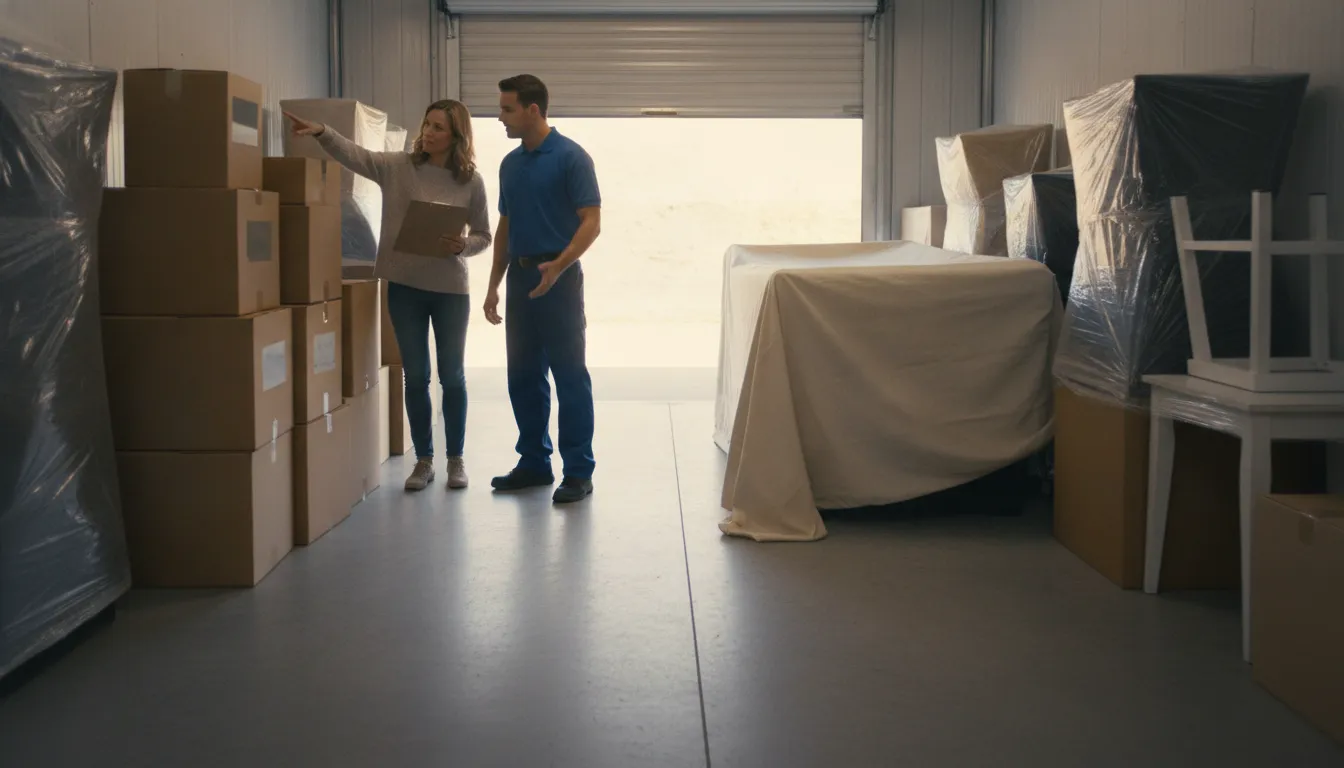
Label more than one side
Write a short description on the top and at least two sides of every box. Side labels remain visible when boxes are stacked. Include the room, contents, and a simple sequence number.
For example. Use labels such as “Kitchen – cookware – 01” or “Bedroom – winter clothes – 02.” Avoid vague descriptions like “miscellaneous.” If a box contains fragile items. Mark that clearly. Keep labels large enough to read in low light.
Create a simple storage map
Before loading, divide the space into practical zones. You might assign one area to kitchen items, another to bedroom furnishings, and another to seasonal belongings. Record each zone in a written list or phone note.
Give every box a matching number in your inventory. A simple entry might read, “B-14, dining room, serving pieces, back-left zone.” Add larger furniture to the same list. Photographing each loaded zone can provide a useful visual reference, but it should supplement your written inventory.
Plan an aisle and priority-access area
Leave a usable aisle wherever the storage format and provider procedures allow it. Place items you may need soon near the front or in a clearly marked access zone. Examples include work supplies, seasonal clothing, children’s items, and documents.
Place long-term items farther back. Keep frequently needed boxes together instead of scattering them across the space. Do not block doors, vents, equipment, or required access points. Your provider may use a containerized or warehouse-storage system rather than a standard self-storage unit, so confirm access procedures before loading.
Delaware Moving & Storage provides storage solutions for temporary and long-term needs. Ask how your belongings will be identified, accessed, and documented within the selected storage arrangement.
Update the inventory after every change
Revise your list whenever you add, remove, or relocate an item. Note the date and the new location. If another household member retrieves a box, ask them to update the record immediately.
Need help packing, labeling, and organizing your belongings? Request a free moving estimate before your storage plan begins.
How does learning how to pack a storage unit shape your storage choice?
Self-storage can work well when you want to transport, load, and retrieve belongings from a rented unit. Company-managed storage follows a different model. The mover coordinates the packing, handling, container choice, and storage plan around your move.
Delaware Moving & Storage documents both containerized storage and warehouse storage. Its documented facility includes more than 40,000 square feet, five loading docks, 24-foot clearance, Class A-rated storage, and a 24-hour central alarm system. These details describe the company’s storage infrastructure, not a promise that every item receives the same access or environmental conditions.
| Planning factor | Company-managed storage | Self-storage |
|---|---|---|
| Handling | The moving company can coordinate packing, loading, unloading, and placement. | You usually arrange transportation, loading, unloading, and placement yourself. |
| Storage format | Options may include wooden boxes, commercial containers, or warehouse storage. | You select an available unit based on the provider’s sizes and features. |
| Access planning | Discuss access needs, timing, and handling procedures with the moving company. | Review the facility’s access procedures, hours, and entry requirements before renting. |
| Packing responsibility | You can pack independently or request full or partial professional packing. | You typically purchase materials and pack the unit yourself. |
The best choice depends on how often you need belongings, how much handling you want, and whether storage is part of a larger move. Ask about access procedures, prohibited items, climate-control details, and valuation terms before committing.
If you are learning how to pack a storage unit, create an inventory before choosing a format. Group items by room, protect fragile pieces, and keep frequently needed boxes easy to identify. Delaware Moving & Storage can also provide professional packing services using documented professional materials.
For temporary or long-term needs, review the company’s storage solutions and ask which container or warehouse approach fits your belongings. A physical or virtual survey can support a more accurate, detailed estimate.
Frequently Asked Questions
How should I pack boxes for storage?
Use sturdy boxes that match the size and weight of their contents. Fill gaps with protective material, keep heavier items in smaller boxes, and avoid overpacking cartons that may be difficult to lift or stack. Professional packing services can provide specialized materials and packing methods when belongings need additional protection.
How do I distribute weight inside a storage unit?
Place heavier, stable items on the bottom and distribute weight evenly rather than creating one heavily loaded corner. Keep fragile belongings away from pressure points, and leave a clear route to items you may need first. A systematic loading plan helps protect contents and makes later access more manageable.
How can I protect stored items from moisture?
Store items clean and completely dry, use suitable protective wrapping, and avoid sealing damp belongings into airtight containers. Leave appropriate ventilation where your storage provider recommends it, and confirm the facility’s climate-control and moisture guidelines before loading. Storage conditions and rules vary by provider.
What is the best way to label storage boxes?
Label at least two sides of every box with its room or category and a short description of the contents. Numbering boxes and keeping a matching inventory can help you find items without opening multiple cartons. Mark boxes needed first and place them where they can be reached safely.
How should I plan access to a storage unit?
Think about how often you will need each item before loading. Put seasonal or rarely used belongings farther back, while priority boxes stay near the front or along an accessible route. Confirm access procedures with the storage provider, since a company-managed container or warehouse system may work differently from a traditional self-storage unit.
Ready to plan your storage move?
A little planning can make packing, loading, and future access much easier. Delaware Moving & Storage can help you think through the right moving and storage approach for your needs.
Request a free moving and storage estimate through the estimate page, and share your plans with the team.