
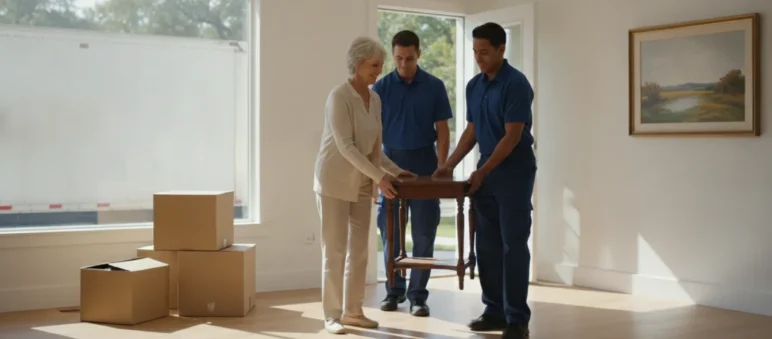
Moving from a larger Delaware home into a smaller one can bring relief, uncertainty, and many decisions. The goal is not to erase your history. It is to create a home that fits the way you want to live next.
The best way to learn how to move to a smaller home delaware is to make manageable choices. Clarify what your new home can hold. Sort one room at a time. Measure key furniture, and set aside storage for items you are not ready to release.
Start early enough for thoughtful decisions. The National Institute on Aging planning guidance supports considering comfort, independence, and future needs before a move.
Request a free moving estimate with a physical or virtual survey.
How do you move to a smaller home in Delaware without feeling overwhelmed?
Downsize through small, shared decisions. Start early, discuss priorities with family, and plan the new home’s comfort before sorting possessions. Give yourself time to choose what belongs with you, what can wait, and what you can release.
Start with a calm plan
Choose one manageable area instead of opening every closet at once. Set a work period, then stop before the process becomes exhausting. Write down why the move matters. Easier access, less maintenance, or a fresh chapter can guide difficult choices.
Make space for emotions
Feeling sad or protective of family belongings is normal. Photograph a meaningful item, share its story, or create a small memory box. Ask a trusted family member to listen without deciding for you.
Tell relatives what support you need before sorting begins. Ask whether they want specific heirlooms, photographs, furniture, or documents. Set a response date so decisions do not remain open indefinitely. For Delaware tri-state moving coverage, review the available planning and relocation support before moving day.
What should you keep, donate, sell, or discard room by room?
Answer: Sort one room at a time into keep, donate or sell, discard or recycle, and decide later. Compare each item with your new home’s space, daily routines, and emotional value. Label each group clearly.
Keep: Choose items that fit your new home, support daily life, or carry lasting meaning. Keep the best version of duplicates and assign furniture a planned location.
Donate or sell: Set aside clean, useful items that no longer fit your space. Donate when convenience matters more than arranging a sale.
Discard or recycle: Remove broken, unsafe, expired, stained, or incomplete items. Check local rules for electronics, batteries, paint, paper, and special materials.
Decide later: Use one labeled box for genuinely difficult choices. Set a review date, but do not let this category spread through every room. Use this decluttering guide for more preparation ideas.
Kitchen and bedrooms
Keep cookware, dishes, clothing, linens, and personal items you use regularly. Donate duplicates, excess mugs, spare bedding, and clothing that no longer fits your routines. Discard cracked dishes, damaged containers, worn textiles, and expired pantry items. Place inherited pieces and keepsakes in the decide-later group.
Living room and garage
Measure sofas, chairs, tables, lamps, shelving, tools, and outdoor equipment before keeping them. Donate oversized furniture and duplicate equipment without a planned place. Discard damaged electronics, leaking containers, and unsafe items. Follow local rules for chemicals, propane, batteries, and electronics.
How can you measure a smaller home in Delaware before moving day?
Measure the smaller home before moving day so every large item has a realistic destination. Record room dimensions, doorway widths, stair turns, elevator limits, and walking paths. Compare those details with each furniture footprint.
- Measure each room. Record length, width, alcoves, closets, doors, windows, vents, and outlets. Note ceiling height for tall furniture.
- Measure access points. Check exterior doors, hallways, tight turns, stairs, landings, and elevator dimensions. Ask an apartment building about reservations and loading access.
- Measure furniture. Record the length, width, and height of sofas, beds, tables, cabinets, and appliances. Include removable legs, handles, and drawers.
- Check clearances. Leave room for doors, drawers, closets, appliances, switches, windows, vents, and walking paths.
- Draw a placement map. Label each planned furniture location. Share the map with family members and movers before moving day.
- Plan safe routes. Keep paths between entrances, bedrooms, bathrooms, kitchens, and living areas open. The CDC guidance on falls supports clear walking paths and practical lighting.
- Review before packing. Mark items for the new home, storage, donation, or later decisions. Use the Delaware moving checklist for broader preparation.
What belongs in storage during a downsizing move?
Store items you may need later but cannot fit or use today. Keep daily essentials, pass along useful belongings, and recycle damaged items. Consider each item’s value, condition, available space, and timing.
| Decision | Use when | Next step |
|---|---|---|
| Keep now | Useful, meaningful, and fits | Label for the new home |
| Store temporarily | Useful later, but does not fit | Set a review date |
| Pass along | Clean and useful to someone else | Arrange a recipient or donation |
| Discard or recycle | Broken, unsafe, or beyond repair | Follow local disposal rules |
Temporary storage works best with a clear review point. Label each container with its contents, the room it came from, and the reason it is stored. Keep an inventory for seasonal decorations, keepsakes, or furniture.
A short-term unit can bridge closing dates, renovations, or uncertain furniture placement. Long-term storage can preserve belongings while you settle into new routines. Avoid storing anything damp, hazardous, perishable, or already damaged.
Delaware Moving & Storage provides short-term and long-term storage solutions, including containerized systems and a 24-hour central alarm system. Read what to put in storage when downsizing before choosing what stays in your home.
How can professional movers make a Delaware downsizing move easier?
Professional movers can turn a transition into a coordinated plan. A physical or virtual survey documents what is moving, supports an accurate detailed estimate, and helps match services to your needs.
Discuss what is staying, what may go to storage, and what you will handle yourself. Optional packing can cover the full household or only fragile decor, artwork, dishes, and selected furniture. This flexible support helps you stay involved in meaningful decisions.
Crews can use furniture pads, stretch wrap, door protection, and floor protection materials during loading and delivery. Tell the team where major pieces should go before everything is inside. Clear placement decisions reduce unnecessary lifting.
Delaware Moving & Storage serves communities across Delaware and the surrounding tri-state area. Its full-service moving in Delaware can combine local moving, packing, storage, and related support around one plan.
Before the crew leaves, request a final walkthrough. Confirm furniture placement, check that nothing important remains behind, and ask for protection materials and packing debris to be removed.
Request a physical or virtual moving survey and accurate estimate.
What should you do during the final week and on moving day?
Answer: Prepare essentials, label every box, confirm access, assign roles, and decide priority placement before unloading. A final walkthrough helps the crew place furniture correctly.
- Pack medications, toiletries, chargers, basic tools, cleaning supplies, snacks, and documents in an essentials box. Keep it with you.
- Label each box on the top and one side. Include the destination room and mark essentials, open first, fragile, or storage.
- Confirm door, driveway, elevator, parking, gate, and building-entry requirements at both addresses.
- Assign roles. One person can greet the crew, one can protect children or pets, and one can track labels and essentials.
- Identify priority placement for beds, medical equipment, seating, and kitchen essentials before loading begins.
- Keep walkways clear. Protect floors and doorways, and tell the crew about narrow turns or delicate surfaces.
- Walk through the smaller home before unloading. Check lights, doors, room access, and questionable passages. Review the moving checklist for final reminders.
Request a free moving estimate with a physical or virtual survey.
These answers cover planning, sentimental belongings, measuring, storage, and estimates.
Frequently asked questions about moving to a smaller home in Delaware
Quick answers: Start early and sort by room. Measure the new space and use storage intentionally. Request a physical or virtual survey for a detailed estimate.
When should I start preparing for a move to a smaller home?
Start several weeks or months before moving day, depending on your household size and schedule. Begin with low-emotion areas, then allow extra time for keepsakes and family decisions.
How should I handle sentimental belongings when downsizing?
Keep the items that support your memories and fit your new life. Photograph other pieces, record their stories, share them with family, or place a small group in labeled storage.
What should I measure before moving furniture into a smaller home?
Measure rooms, doors, hallways, stairs, elevator access, furniture, and clearance around fixed features. A placement map helps identify problems before the truck arrives.
Can storage help during a downsizing move?
Yes. Short-term storage can help during renovations, closing-date gaps, or uncertain furniture decisions. Long-term storage can hold meaningful seasonal or family belongings while you settle in.
How does the moving estimate process work?
A physical or virtual survey reviews belongings, access points, services, and destination needs. That information supports a detailed estimate instead of a blind guess.
Request a free estimate for your Delaware downsizing move.