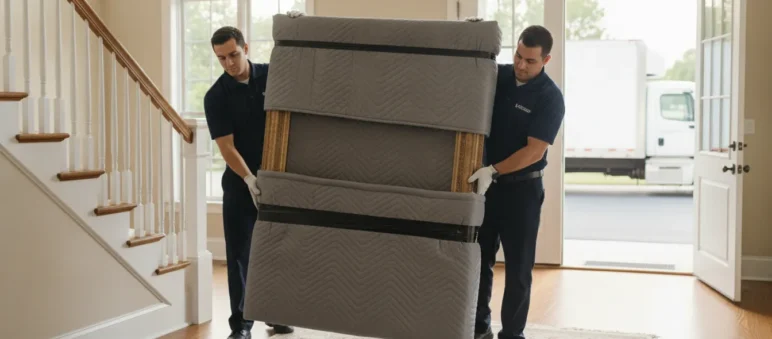
Searching for fine art movers delaware county pa usually means you have more to protect than a standard household shipment. Paintings, framed works, sculpture, antiques, and family collections each need a deliberate plan before moving day.
Request your free estimate today for a careful discussion of your artwork and move.
A careful fine art move starts with documentation, access planning, protective packing, and clear communication. A physical or virtual survey lets the moving team discuss each item’s size, condition, route, storage needs, and valuation questions before the estimate is prepared. The process should focus on safe moving decisions without treating the mover as an appraiser or conservator.
Delaware County includes older homes, suburban neighborhoods, apartments, townhomes, and buildings with different access conditions. A painting may need protection from stairs, tight turns, elevator limits, narrow doors, or a long path to the truck. Planning those details early can reduce last-minute decisions.
How should fine art movers in Delaware County, PA plan the move?
Fine art movers in Delaware County, PA should begin by understanding the collection, the properties, and the route between them. The plan should identify items needing special attention, record their visible condition, review access at both addresses, and match packing and handling decisions to the actual move.
Start with an item list rather than a room count. List each painting, framed work, sculpture, mirror, antique, or collectible that may need special handling. Add the room where it is located, the destination room, approximate dimensions, and any known access concern.
Do not guess at an object’s value. A moving plan needs practical information about size, weight, fragility, materials, and handling concerns. A separate appraisal may be appropriate for your records, insurance, estate planning, or personal reasons. That is different from asking a mover to assess moving requirements.
Which belongings need an early handling conversation?
Some items need a closer look because they are fragile, unusually shaped, heavy, difficult to replace, or vulnerable to contact. Examples can include glass-fronted artwork, large framed pieces, sculpture, antique furniture, delicate electronics, and collections with many separate components.
Note whether a piece has a loose frame, projecting elements, exposed glass, a delicate finish, or a base that could shift. Mention prior repairs or visible marks without trying to diagnose the cause. Photographs taken before packing can support a shared condition record.
Keep personal papers, jewelry, cash, irreplaceable documents, and other items you prefer to carry yourself separate from the moving inventory. Discuss any uncertain item with the moving company before the estimate. The goal is to make a clear decision rather than discover an exception during loading.
What should your artwork documentation include before packing?
Documentation should identify each piece and record its visible condition before handling. Take clear photographs from several angles, note existing marks, record dimensions, and identify removable parts. Keep copies with your move records. Share the information during the survey so the estimate reflects the collection’s real handling requirements.
A useful record does not need complicated art terminology. Use plain descriptions that another person can understand. Record the artist or title only when you already know it. Do not invent attribution, age, medium, or provenance.
- Assign an item number to each piece.
- Record height, width, depth, and approximate weight when known.
- Photograph the front, back, frame, corners, and mounting hardware.
- Note visible scratches, chips, cracks, loose parts, or frame separation.
- Record whether glass, plexiglass, shelves, bases, or other parts can be removed.
- Identify the room, access route, and destination for each item.
Photographs are most useful when they show the whole piece and close views of existing marks. Take them before movers begin wrapping. Store copies in more than one secure location, especially when the move involves storage or a delayed delivery.
When is custom protection or crating worth discussing?
Custom protection may be worth discussing when a standard carton cannot keep an item stable, when the shape leaves unprotected gaps, or when the piece needs separation from other belongings. The decision should consider the item, route, access, storage timing, and delivery plan rather than price alone.
Custom crating is not automatically required for every artwork. A professional should review the item’s dimensions, shape, surfaces, and route before recommending a protection method. The best approach may involve professional packing, protective corners, cushioning, a fitted container, or another controlled method.
Ask what the proposed protection is designed to control. Useful questions include whether it limits movement, protects projecting features, separates the piece from other cargo, and supports the way the item will be carried. Ask who will handle the piece after packing and how it will be secured in transit.
Delaware Moving & Storage documents custom crating and specialty handling for fragile, oversized, heavy, and high-value belongings. Its specialty item moving guide provides broader context. This fine art planning guide keeps the focus on artwork and household relocation decisions in Delaware County.
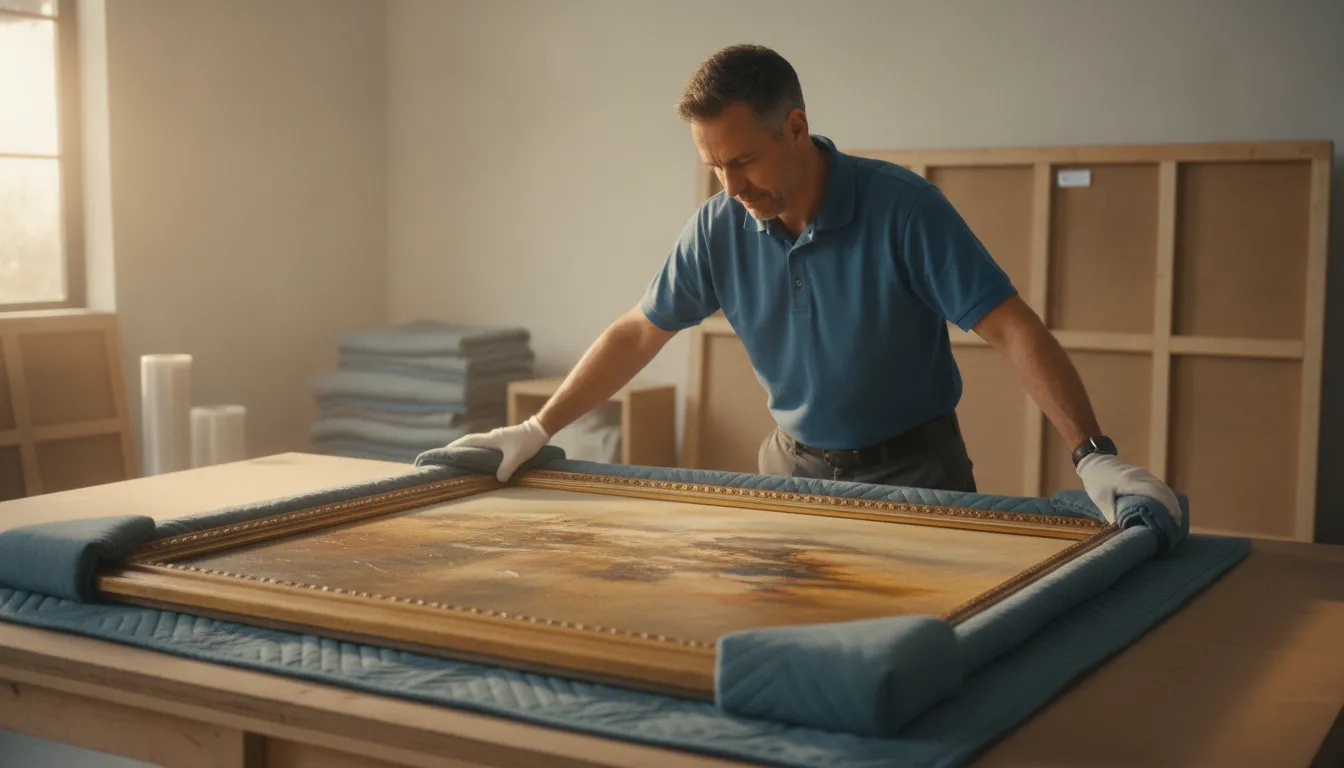
Do not tape directly across a finished surface or improvise a rigid enclosure without understanding the item. Ask the moving team what materials will touch the frame, glazing, or artwork. If an item has conservation concerns, consult a qualified conservator for that advice rather than assuming a moving crew provides conservation services.
How can fine art movers in Delaware County, PA manage access?
Access planning covers the path from the current location to the truck and from the truck to the destination. Review doors, stairs, elevators, hallways, turns, parking, loading zones, and building rules. Photos and measurements can help the crew prepare before an item is lifted.
Walk the route at both properties. Measure the narrowest doorway and hallway. Note stair turns, low ceilings, railings, floor transitions, and elevators. Identify where a truck can park and how far the crew must carry the piece.
Apartment and condominium moves may require advance coordination with property management. Ask about elevator reservations, loading hours, move-in rules, parking permits, certificates of insurance, and restrictions on hallway protection. Include those requirements in the estimate conversation.
Older Delaware County homes may have narrow stairwells or rooms that do not align with the most direct exit. A virtual survey can help when the moving team receives clear photos, measurements, and a description of the route. A physical survey may be more useful when an item is large, heavy, or difficult to assess remotely.
Protect the home as well as the artwork. Discuss floor coverings, door protection, wall clearance, staging areas, and a safe place for packed items. Clear loose rugs, toys, plants, and other obstacles before the crew arrives.
What should the transport and delivery plan cover?
The transport plan should identify how packed items will be staged, secured, loaded, carried, and placed at delivery. Confirm the origin and destination, timing, access requirements, storage stops, contact people, and requested placement. Good communication keeps the move organized when the collection includes different sizes and handling needs.
Ask how the artwork will be separated from ordinary household items. Discuss whether pieces will travel in fitted protection, grouped by size, or handled as individual items. The answer depends on the packing plan and the collection.
Confirm who will be present at pickup and delivery. Decide where each piece should go at the destination. If the new home will not be ready, discuss whether storage is needed, how long it may last, and what must happen before final delivery.
Do not assume a delivery appointment solves every access issue. Recheck parking, building hours, elevator reservations, and the availability of a responsible contact person. A changed access condition can affect the handling plan even when the distance stays the same.
Request a detailed moving estimate after you have gathered your item list, photos, measurements, and access notes.
How should you discuss storage for artwork between homes?
Storage planning should address packing, handling, inventory, access, timing, and delivery. Ask what protection remains in place while items are stored, how access requests are arranged, and how the collection will be checked before release. Confirm any environmental requirements with the provider before making assumptions.
Storage can be part of a move between home sales, a renovation, a delayed closing, downsizing, or a change in occupancy. The storage period may change the way items are packed and labeled. Tell the moving team whether you expect short-term holding or a longer transition.
Ask how packed artwork will be identified. An item number, condition record, destination room, and storage note can make later delivery easier. Keep your own copy of the inventory and photographs.
Discuss the facility, access process, security procedures, and delivery coordination. Ask direct questions about temperature and humidity requirements if they matter for a particular piece. Do not assume a general storage service provides museum-level environmental control.
For broader facility and move-transition information, review the company’s storage solutions. The service page can help you prepare questions, while the estimate conversation should address the actual collection and timing.
What should valuation protection conversations clarify?
Valuation protection explains the mover’s responsibility under the selected moving agreement. It is not the same as an appraisal, conservation assessment, or separate insurance policy. Ask which options apply, what paperwork is required, what limits or exclusions exist, and how valuable items should be documented before the move.
Read the valuation paperwork before moving day. Ask how the selected option applies to artwork, antiques, frames, glass, and items packed by the owner. Ask which details belong in the inventory and which records should be retained.
Do not use a moving estimate as an appraisal. If you need a current value for insurance, estate, donation, or tax purposes, obtain that information from an appropriate qualified professional. Share only the moving information needed to plan packing, handling, transport, storage, and delivery.
Delaware Moving & Storage offers valuation protection options and explains them through its valuation protection service page. Use that page as a starting point, then ask for clarification about your planned shipment and selected protection.
How can you prepare for an accurate fine art moving estimate?
Prepare an item list, photographs, measurements, condition notes, origin and destination addresses, access details, storage timing, and requested services. A physical or virtual survey can then focus on the real work. Clear information helps replace a blind estimate with a more useful moving plan.
- Separate artwork and other high-value items from ordinary household goods.
- Photograph each piece and record visible condition before packing.
- Measure large or unusual pieces, doorways, hallways, stairs, and elevators.
- Share building rules, parking restrictions, loading times, and access photos.
- Explain whether you need packing, custom protection, storage, placement, or unpacking.
- Ask valuation questions before signing the moving paperwork.
- Request a written estimate that identifies the planned services and assumptions.
Use the company’s packing services information to compare full packing, partial packing, and self-packing questions. If the move also includes furniture or household goods, the Delaware County moving guide covers broader local access and relocation planning.
As a family-owned company serving the tri-state area from northern Delaware for more than 42 years, Delaware Moving & Storage approaches each move through planning and communication. It is also an official Wheaton World Wide Moving agent, supporting long-distance, interstate, and international relocation when a Delaware County move extends beyond the region.
Frequently asked questions about fine art moves
Should I get an appraisal before moving artwork?
An appraisal is separate from moving preparation. Obtain one when you need an opinion of value for insurance, estate, tax, or personal records. Give the mover practical information about size, condition, access, packing, and handling needs.
Does every painting need a custom crate?
No. The right protection depends on the piece, its frame or glazing, its shape, the route, storage timing, and delivery conditions. Ask for an item-specific recommendation instead of assuming that every piece needs a crate.
Can artwork be stored during a Delaware County move?
Storage may fit a move between homes, renovation, downsizing, or delayed occupancy. Discuss packing, inventory, access, security, timing, and delivery. Ask about any environmental requirements that apply to your particular collection.
What should I show the movers during a survey?
Show the artwork, frame, mounting hardware, rooms, stairs, elevators, doors, hallways, loading area, and destination access. Provide photographs, measurements, condition notes, building rules, and storage details when applicable.
Do movers provide conservation or museum services?
Do not assume those services are included. This guide addresses household moving, packing, protection, transport, and storage planning. Consult an appropriate conservator or museum-services provider for conservation or institutional collection requirements.
Start planning your Delaware County fine art move with a physical or virtual survey and a clear estimate.