
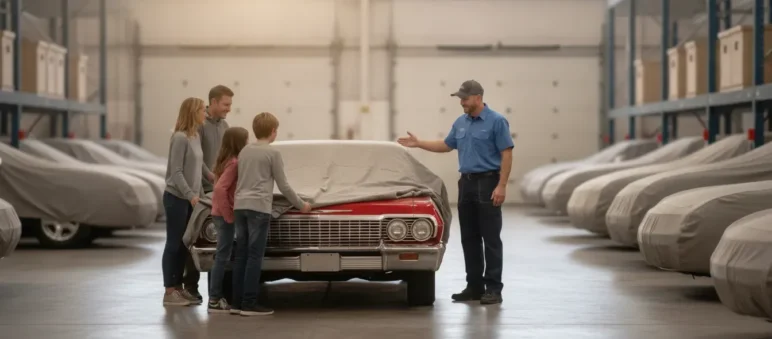
Vehicle storage can make a Delaware move, renovation, or seasonal change easier to manage. The right option protects your car, RV, boat, or specialty vehicle while you solve a timing or space problem.
Request your free estimate today to discuss vehicle storage and moving support with Delaware Moving & Storage.
What is vehicle storage in Delaware?
Vehicle storage is a planned space and service arrangement for keeping a car, recreational vehicle, boat, trailer, or specialty vehicle off the road. In Delaware, it can support seasonal ownership, a home transition, travel, renovation, relocation, or temporary space constraints.
Vehicle storage is not one universal product. A commuter car may need a different setup from a large RV or a boat. Access needs also vary. Some owners need occasional retrieval, while others want the vehicle stored until a move or project ends.
Start by defining three things:
- How long the vehicle will be stored.
- How often you may need access.
- What preparation, protection, and loading support the vehicle requires.
That short assessment helps you ask better questions before choosing a storage provider. It also prevents a mismatch between the vehicle’s size and the available space.
Which vehicle storage options fit seasonal needs?
Seasonal vehicle storage works best when the storage plan matches the vehicle, weather exposure, and expected retrieval date. A Delaware owner may store a classic car during winter, an RV between trips, or a boat after the boating season.
Common seasonal scenarios include:
| Seasonal need | Planning priority | Useful question |
|---|---|---|
| Classic or specialty car | Clean, secure placement and careful handling | How will the vehicle be protected during storage? |
| RV or camper | Size, clearance, and retrieval timing | Can the facility accommodate the vehicle’s dimensions? |
| Boat or trailer | Access, equipment, and seasonal scheduling | What must be prepared before the vehicle is stored? |
| Extra household vehicle | Flexible timing during a busy season | How much notice is needed for access or release? |
Seasonal storage planning should begin before the vehicle is needed again. Confirm the expected release window, the contact process, and any preparation checklist. If your plans change, ask how the provider handles a longer or shorter storage period.
When does vehicle storage help during a home transition?
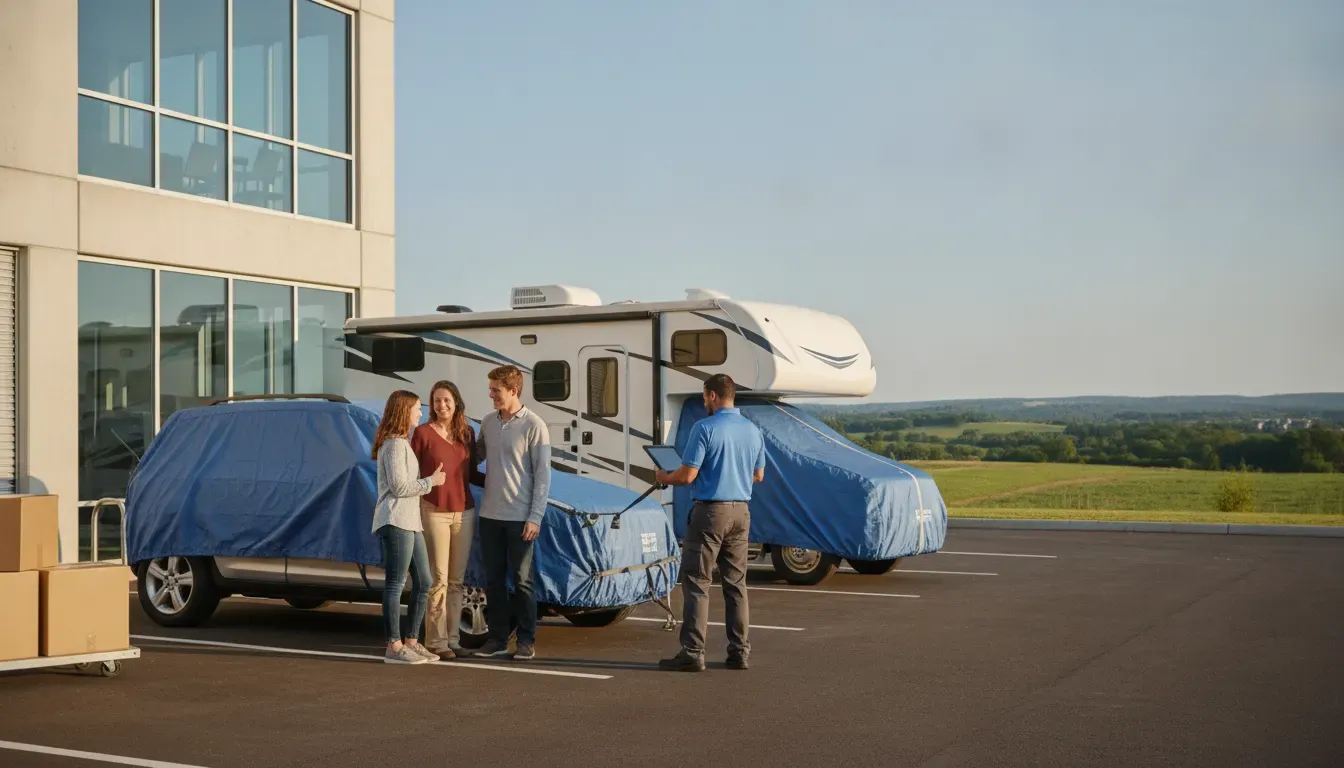
Vehicle storage can help when a home sale, closing date, renovation, or delayed move creates a gap between where a vehicle is now and where it will go next. It keeps the vehicle out of a crowded driveway or temporary residence while other logistics are resolved.
Consider storage during a transition when:
- Your closing date and move-in date do not align.
- A renovation limits driveway or garage space.
- You are relocating and need to stage household items and vehicles separately.
- You are helping a family member move into a smaller home.
- You are temporarily living in an apartment without suitable vehicle space.
- You need room for contractors, moving equipment, or household deliveries.
Storage can also reduce the pressure to make a rushed decision. You can coordinate the vehicle with the move instead of arranging a last-minute sale, transport, or parking solution. For broader transition planning, see this complete guide to moving and storage in Delaware.
How should you compare vehicle storage services?
Compare vehicle storage services by looking beyond the word storage. The best fit depends on the facility, vehicle handling process, access plan, security, move coordination, and communication. A clear comparison helps you understand what the service includes before you schedule delivery or retrieval.
| Factor | Why it matters | What to confirm |
|---|---|---|
| Vehicle dimensions | Large vehicles need suitable clearance and placement | Length, height, width, and turning requirements |
| Storage duration | Short transitions differ from seasonal plans | Expected start date, release date, and extension process |
| Access | Some owners need a planned retrieval during storage | Notice requirements, hours, and contact method |
| Security | Vehicles need a controlled and well-managed environment | Alarm, facility controls, and staff procedures |
| Handling | Moving a vehicle or related items requires coordination | Who receives, positions, and releases the vehicle |
| Estimate process | Clear scope reduces surprises | Whether a physical or virtual survey is available |
Ask for a detailed explanation of the service. A reputable provider should be able to describe the facility, the steps, the access process, and the information needed to prepare an estimate. Avoid choosing from a vague promise that does not address your vehicle’s actual needs.
Get a detailed moving and storage estimate before your vehicle or household transition becomes urgent.
What should you do before placing a vehicle in storage?
Vehicle preparation protects the vehicle and makes the storage handoff easier. The exact checklist depends on the vehicle type and the provider’s requirements. Confirm the final instructions with the storage team instead of relying on a generic checklist.
- Remove personal items, food, and valuables from the vehicle.
- Clean the interior and exterior so existing conditions are easier to document.
- Record the vehicle identification number and current mileage.
- Photograph the vehicle from several angles before handoff.
- Check fluid levels, tire condition, battery needs, and any known mechanical issue.
- Secure loose equipment, accessories, covers, and removable parts.
- Share keys, access instructions, and emergency contact details as requested.
- Confirm insurance, valuation, and release requirements before storage begins.
Do not leave documents, medication, electronics, or irreplaceable items in the vehicle. If a vehicle has a leak, damaged tire, dead battery, or other condition that affects handling, disclose it in advance.
Does the vehicle type change the storage plan?
Yes. Vehicle type affects space, handling, preparation, and access. A compact car may be straightforward to position, while an RV, boat, trailer, or specialty vehicle may require different measurements and scheduling.
Cars and specialty vehicles
Cars and specialty vehicles may need careful placement, condition documentation, and an agreed release process. Classic, collector, and modified vehicles deserve extra discussion about covers, battery maintenance, fluid concerns, and authorized access.
RVs and campers
RVs and campers require accurate height and length information. Include awnings, ladders, mirrors, spare tires, and attached equipment when measuring. Ask about turning space and how the vehicle will be moved for release.
Boats and trailers
Boats and trailers may involve a separate trailer, hitch, cover, or accessory list. Confirm how the vehicle will arrive, whether equipment travels with it, and what access timing applies before the next season.
Commercial and specialty equipment
Business owners may need to store work vehicles or specialty equipment during a relocation, renovation, or contract gap. Coordinate the vehicle plan with business continuity, access needs, and any related storage for tools or records.
These categories provide a starting point. A provider should review the actual dimensions and circumstances before promising a storage arrangement. Detailed car, RV, and boat guides can address narrower preparation questions without replacing this broad overview.
Can moving and storage be coordinated together?
Yes. Coordinating moving and storage can simplify a transition when household items, vehicles, and delivery dates must be managed together. One planning conversation can clarify what moves directly, what enters storage, and what should be released later.
This approach can be useful when:
- A home is sold before the next home is ready.
- A long-distance move requires temporary holding.
- A business needs space during an office relocation.
- A household is downsizing in stages.
- A vehicle and household contents need different delivery timing.
Delaware Moving & Storage provides local and long-distance relocation services with storage solutions for household and business needs. The company has served the tri-state area from northern Delaware for more than 42 years. It is also an official Wheaton World Wide Moving agent for interstate and international relocation support.
For a more specific transition, review short-term storage between moves. For a longer holding period, compare the planning considerations in this guide to long-term storage in Delaware.
What storage questions should you ask a Delaware provider?
Ask questions that reveal how the provider will handle your vehicle and your timeline. Clear answers are more useful than a generic storage label. Use the conversation to confirm fit, responsibilities, and the steps required before the vehicle arrives.
- What vehicle sizes and types can the facility accommodate?
- Is the storage area clean, secure, and appropriate for the vehicle?
- How are arrival condition and existing damage documented?
- How much notice is needed for retrieval or access?
- Who handles placement, movement, and release?
- What preparation does the owner need to complete?
- How are estimates created for moving and storage services?
- What valuation or protection options should be discussed?
- How will schedule changes be communicated?
Delaware Moving & Storage uses physical or virtual surveys to create accurate, detailed estimates rather than relying on a blind estimate. Ask the team to review the vehicle, access conditions, and timing for your situation.
How does vehicle storage fit with other storage needs?
Vehicle storage may be one part of a larger storage plan. Household goods, business records, furniture, seasonal items, and vehicles can have different space and access requirements. Separating those needs helps you choose a plan that is practical and easy to manage.
For household goods that may be sensitive to temperature changes, review climate-controlled storage in Delaware. For portable loading and delivery questions, see portable storage options in Delaware. The Delaware storage facilities page explains the company’s broader storage service and facility capabilities.
Keep the vehicle plan specific. Do not assume that a household storage unit, portable container, parking area, or general self-storage space provides the same handling or protection. Confirm the fit before you commit.
Vehicle storage in Delaware: frequently asked questions
What vehicles can be placed in storage?
Possible vehicle types include cars, specialty vehicles, RVs, campers, boats, trailers, and some commercial equipment. Acceptance depends on facility capacity, dimensions, condition, preparation, and the provider’s policies. Share accurate measurements and vehicle details before scheduling.
Is vehicle storage useful between home closings?
Yes. Vehicle storage can help when a closing date, move-in date, renovation, or temporary residence creates a gap. It may reduce driveway congestion and give you more time to coordinate the next stage of the move.
How far in advance should I arrange vehicle storage?
Start as soon as you know the likely storage window. Early planning gives the provider time to review dimensions, access, preparation, and the desired retrieval date. It also leaves room to adjust the plan if your move schedule changes.
Can a moving company help coordinate vehicle storage?
A full-service moving company may coordinate storage with a local or long-distance move. Ask what the team handles, which items move directly, what enters storage, and how release timing affects the estimate.
Request a vehicle storage and moving estimate from Delaware Moving & Storage for a clear plan built around your timing, vehicle, and space needs.