
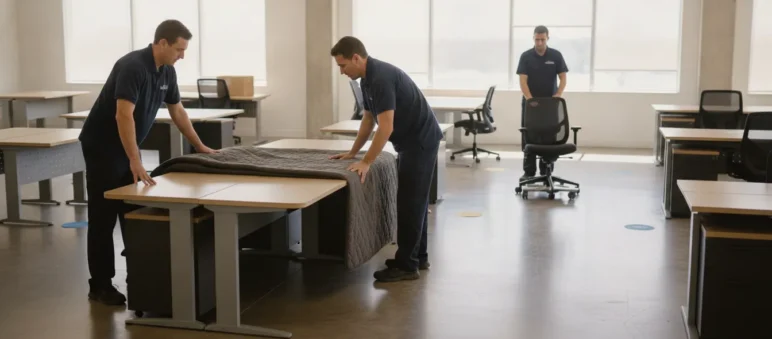
An office moving company delaware search should start with two practical questions. Where does each desk land, and how long can the team stop working? We answer both before a truck is reserved.
A floor that reopens with furniture in the wrong rooms is not a finished move. People lose a second morning hunting for files, monitors, and chairs that never reached the marked spot.
Request your free office estimate today or call (800) 296-0417 to plan the placement.
Delaware Moving & Storage is family-owned in Bear. We have moved offices across the tri-state area since 1984. Drew Hopkins, our general manager, treats the first visit as a placement review.
Our Delaware office movers code furniture with your managers, then set it on the new floor. For a vendor-fit review, use the commercial movers guide. For the full task list, use the office moving checklist.
What should an office moving company Delaware project map before move day?
Map the destination before you pack the origin. A useful plan names every workstation, every shared room, and every item that should not move. It also names the person who confirms the spot.
Without that map, crews can only unload by memory, and memory fails when the dock is busy and the labels do not match the rooms.
Start with a current floor plan, even a marked sketch. Number each desk, office, and shared table. Match that number to the person or team who sits there.
Add the copier, the mail station, the reception desk, and any file row that more than one team uses. Those shared pieces cause more reopen delays than a single private office.
Then mark what stays behind, what is surplus, and what must be first at the new site. A surplus desk that rides just in case fills the truck and blocks a hallway.
A first-day piece that arrives last keeps a whole team idle. Write those choices down before packing starts. Do not leave them for the morning of the move.
| Placement mark | What it tells the crew | Who confirms it |
|---|---|---|
| Workstation number. | Which desk and chair stay together. | Office manager. |
| Room or zone name. | Where that set lands. | Department lead. |
| First-day tag. | Items people need on return. | Operations lead. |
| Do-not-move tag. | Pieces left for the landlord. | Move owner. |
| Hold tag. | Pieces that wait in storage. | Facilities lead. |
We walk that map with you in person or on a video survey. We do not price a commercial floor from a blind phone guess. The walk shows elevator size, dock rules, and which rooms are too tight for a set of panels.
Those facts change both the crew hours and the order of the load, which is why the survey happens before anyone reserves the truck.
Which sequence keeps the most people working?
Downtime is a sequence problem, not only a truck problem. The goal is a short dark window for the people who cannot work elsewhere. Everyone else should keep a usable desk, a phone path, and a place for customers.
Pick the sequence before you pick the clock time, because a reserved truck cannot fix a floor that reopens in the wrong order.
A single-night move fits a small office with one floor and a reserved elevator. A phased move fits a larger floor. Move the teams that can share a temporary room first.
Move the public desk and the managers who approve the reopen last, or give them a tested desk first. Air-ride equipment helps electronics make that trip without a second repair day.
| Sequence | Best fit | Downtime risk | Confirm before booking |
|---|---|---|---|
| One night. | Small floor and a reserved elevator. | The whole office is dark until placement ends. | After-hours rules and crew window. |
| Phased teams. | Several groups that can share space. | Hallways stay crowded for more than one day. | Which team can work short-handed. |
| Critical rooms first. | Reception or a service counter. | Back offices wait while the public side reopens. | Who must be live first. |
| Storage hold. | A lease gap or an unfinished build-out. | You need a second delivery and placement. | What must stay out for daily work. |
Tell us which hours the building will allow a truck. Many northern Delaware offices can load only on a booked dock. A dock that closes at midafternoon can force a second day even when the furniture would fit in one truck.
That limit is a building rule, not a crew delay, and it belongs in the plan before the date is promised to staff.
- Name the move owner and the first morning the office must serve customers.
- Mark first-day rooms, then the teams that can wait one more day.
- Reserve the dock, the freight elevator, and any after-hours engineer.
- Code every desk to a room number before anything is wrapped.
- Load last the items that must come off first.
- Walk the new floor with the lead before the crew leaves.
Book a placement walkthrough before you set the date.
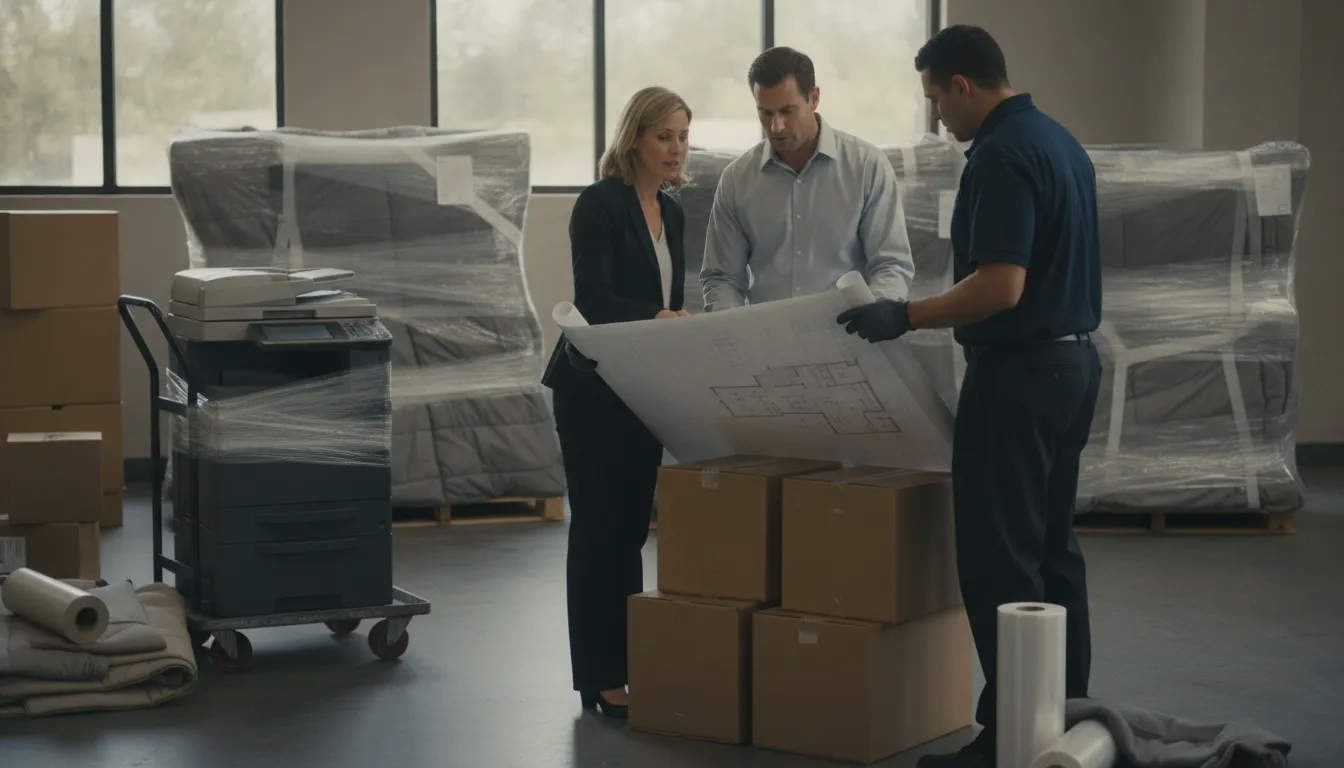
The photo shows the conversation that should happen before wrap starts. A floor plan on the dock is more useful than a stack of labels with no room names. If the new layout changed last week, update the codes. Old labels send a desk to a room that no longer exists.
How do building rules change placement day?
Placement day fails when the truck is ready and the building is not. Ask both properties about the loading door, the elevator, and floor protection.
Ask whether a guard or an engineer must be present, and whether you need a certificate of insurance. Weekend work can shorten the dark window and still add a building fee. Put that fee beside the moving plan, not after the invoice.
Measure the path, not just the desk. Panel systems, glass boards, and a reception counter need a turn radius. A 36-inch door can still fail if a closer or a threshold steals two inches.
We would rather change the route in the survey than tip a panel in a stairwell. Floor runners matter on lobby stone and on raised office floors.
Our local work is centered on northern Delaware. That includes Wilmington, Newark, Middletown, Hockessin, New Castle, Bear, and Townsend.
We also serve Elkton and nearby Chester County and Delaware County stops when the building access works. Lancaster is not a routine local run. Ask us to confirm that site before you promise a date.
Personal items are the other delay. Ask each person to clear a desk top into one labeled carton the day before. A crew should not sort family photos at 7 a.m.
Shared files and the reception drawer need an owner too. If you want that carton work done for you, say so in the survey so it is on the same clock.
How should you compare an office moving company Delaware estimate?
Compare the work listed, not the first dollar. Two bids can both say office move and still omit placement, after-hours labor, or floor protection. A lower number that stops at the dock is not lower once people spend a morning sliding desks.
Read each line, then ask what happens if a room is not ready when the truck arrives.
Local commercial jobs are billed by the hour. The clock includes the truck, basic equipment, and the crew size the floor needs. Long-distance office moves are priced by weight and mileage, plus packing and bulky pieces.
We have been a Wheaton agent since 1999, so a farther office can move through that network. See the pricing on our long-distance moving page. Use the commercial cost guide for budget lines, and compare moving estimates on scope.
Ask for placement in writing. The bid should say that coded furniture is set in the marked rooms, not left in a pile. It should say whether the crew levels desks or stops at the doorway.
Separate valuation from labor. Basic coverage and full protection are different. Match the limit to the furniture and equipment, using our valuation protection options.
Protection is part of the same conversation. We use pads, stretch wrap, dollies, and air-ride equipment built for office work. Tell us which surfaces cannot take tape, and which electronics must stay upright. A copier, a plotter, or a glass board needs that note before the wrap goes on. The survey is where those notes become crew instructions.
When should furniture wait in storage instead of blocking the floor?
Storage is a downtime tool when the dates do not line up. If the old lease ends before the new rooms are painted, finished furniture cannot sit in a hallway. A short hold is cleaner than a second emergency move.
It also keeps the build-out crew from working around desks that are not supposed to be in the rooms yet.
Our Bear warehouse has more than 40,000 square feet, 24-foot clearance, five loading docks, and a 24-hour central alarm. That space can hold panel crates, file runs, and extra desks between sites.
The office storage guide covers records and longer holds. Storage services cover the warehouse itself. Tell us which pieces must come out first when the new floor opens.
Do not store the first-day set. Reception, a working conference table, and the desks for the team that answers customers should go straight to the new rooms.
Extra chairs, old lateral files, and seasonal displays can wait. Label the hold pieces in a different color from the first-day pieces so they are not unloaded onto the new floor by mistake.
A storage hold adds a second placement day. Budget the crew time for delivery, not only for the first load-out. Walk the rooms again if the builder moved a wall.
Codes from the first survey can be wrong after a layout change. We would rather recode twenty desks than place them twice.
What should employees move, and what should the crew move?
Employees can box personal items, label a chair, and confirm a room number. They should not team-lift loaded lateral files, panel walls, or copiers between meetings.
Heavy handling is a work injury risk, and it is slower than a crewed dolly path. OSHA expects employers to keep the workplace free of serious recognized hazards. Read that duty on the OSHA employer responsibilities page before you ask staff to help lift.
Split the specialist work too. Your IT vendor should shut down computers, bag cables, and say which machines must stay in service. We move the furniture and the packed equipment.
We are not the electrician, the low-voltage tech, or the copier dealer. Name those vendors on the same timeline so a placed desk is not useless for lack of a cable.
Give people a simple personal plan. One carton, one chair label, and a note for anything locked. Ask them not to leave loose plants, heaters, or open food in pedestals.
Those items slow the floor and can leak in a truck. A clear desk the night before is the easiest way to shorten the dark window.
On move morning, keep a small decision group on site. The move owner, one facilities person, and a department lead can answer room questions. A full staff in the halls blocks dollies and creates new last-minute seating changes.
Save the tour until the lead has checked the first-day rooms and confirmed the desks match the codes.
Before the crew leaves, walk every first-day room. Look for the right desk number, a chair, and a clear path to the door. Note any piece on hold or any scuff while the team is still there.
That closeout is part of placement. It is how the office actually reopens, not just how the truck empties.
Write the reopen standard in one sentence. Name the rooms that must have a desk, a chair, and a clear aisle before people return. Everything else can wait for the next delivery. That sentence keeps the crew from chasing last-minute seating changes while the dock clock runs.
Get a surveyed estimate for your office floor plan.
Frequently asked questions
How early should we map desk placement?
Map it as soon as the new layout is stable, and before anything is wrapped. A small office may need a few weeks. A phased floor with a build-out needs longer. Update the codes if a wall or a team assignment changes. Old labels create the wrong rooms on move day.
Can one weekend move include full placement?
Yes, when the floor is small, the elevator is reserved, and every desk is coded. The crew should set furniture in the marked rooms, not in a lobby pile. Larger floors often need phases so some teams keep working. The survey is what shows which plan fits the building.
What if the new office is not ready on moving day?
Move the first-day set only if those rooms are finished. Hold the rest in the Bear warehouse until the builder is done. That avoids a hallway full of desks and a second emergency shuffle. Plan a delivery day now so the hold is not open-ended.
Do you need a floor plan to price an office move?
A plan, a sketch, or a video walk is enough to start. We still need room counts, bulky pieces, dock rules, and the hours the building allows. Local work is hourly, so those facts set the crew size. We will not lock a firm scope from a street address alone.
Schedule your commercial placement review or call (800) 296-0417 to walk the floor plan.