
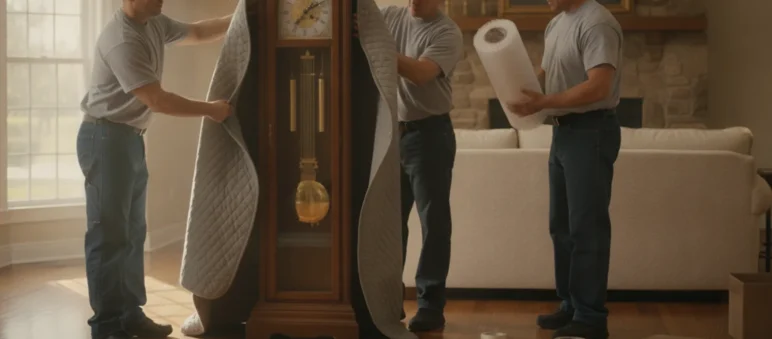
Grandfather clock moving cost depends on more than the distance between homes. The clock’s size, construction, condition, access at both addresses, and the handling steps it needs all affect the work involved. Before setting a budget, identify what makes your clock unusual and ask for an estimate based on the actual move rather than a generic price range.
What affects grandfather clock moving cost?
A tall-case clock can be bulky, delicate, and difficult to maneuver through ordinary doorways. A useful estimate accounts for the clock itself as well as the path between the room and the moving vehicle. These are the main factors to discuss.
- Clock dimensions and weight: Height, width, depth, cabinet construction, and the clock’s overall weight affect how many people may be needed and how it can be carried. A narrow-looking case can still be tall and awkward to turn.
- Design and materials: Wood species, glass panels, carved details, decorative trim, and fragile finishes may call for additional protection. A clock with more than one glass panel or a delicate bonnet may require extra attention during packing and loading.
- Condition and operation: Let the mover know if the case is loose, damaged, unusually old, or not currently running. A mover transports household goods; do not assume that moving service includes clock repair, calibration, or restoration.
- Internal components: Many traditional clocks have a pendulum and weights that should be removed and secured separately before transport. Cable-driven and chain-driven movements can differ, so the correct preparation depends on the clock’s construction and its maker’s instructions.
- Pickup and delivery access: Stairs, tight landings, narrow halls, long carries, elevators, and limited parking can add time or change the equipment and crew plan. Describe access at both locations, not just the destination.
- Distance and route: A move across town and a move across state lines are priced differently. Delaware Moving & Storage describes local moves as hourly and long-distance moves as based on weight and mileage; ask how the clock will be included in the overall estimate.
- Additional services: Packing help, crating, temporary storage, or moving other household goods can change the scope. Request each service only if it fits your plan, and ask what is included.
There is no reliable single amount to use for every grandfather clock move. Two clocks of similar height may differ in construction and condition, while two homes on the same route can have very different stairs and access. Give the estimator the facts that change the work instead of relying on a rough number from a clock’s age or appearance.
Which details should you gather before asking for an estimate?
Good information makes it easier to discuss the move clearly and reduces the chance that an important access issue is missed. If possible, have these details ready before requesting an estimate:
- Measure the case. Record its height, width, and depth. Measure the narrowest doorway, hallway, stair turn, and elevator opening on the route out and in. Do not try to tilt or force a clock through a space to test the fit.
- Take clear photos. Photograph the front, sides, back if accessible, base, and any existing damage. Include images of tight turns, stairs, and the route to the vehicle. Photos help explain the situation, but they do not replace a survey when one is needed.
- Describe the clock’s construction. Share the maker or model if known, whether the case has glass panels or decorative features, and whether the mechanism is weight-driven or cable-driven if you know. Do not guess if you are unsure.
- List its current condition. Note cracked glass, loose trim, an unstable base, a stopped movement, or previous repairs. Photograph existing marks before packing so you have a record for your own inventory.
- Explain the route at both homes. Count flights of stairs, mention narrow landings or sharp turns, and note gates, steep walkways, or long distances from parking. If the building has elevator rules or reserved loading hours, mention those too.
- State whether the clock is moving alone. Tell the estimator whether it is part of a larger household move or a separate pickup. Include the route, planned storage period if any, and any other services you are considering.
Delaware Moving & Storage uses physical or virtual surveys to prepare detailed estimates rather than relying on a blind estimate. Share the clock information during that conversation, and ask if the survey needs additional photographs or measurements. To learn about moving options, review the company’s moving services in Delaware before you discuss the scope.
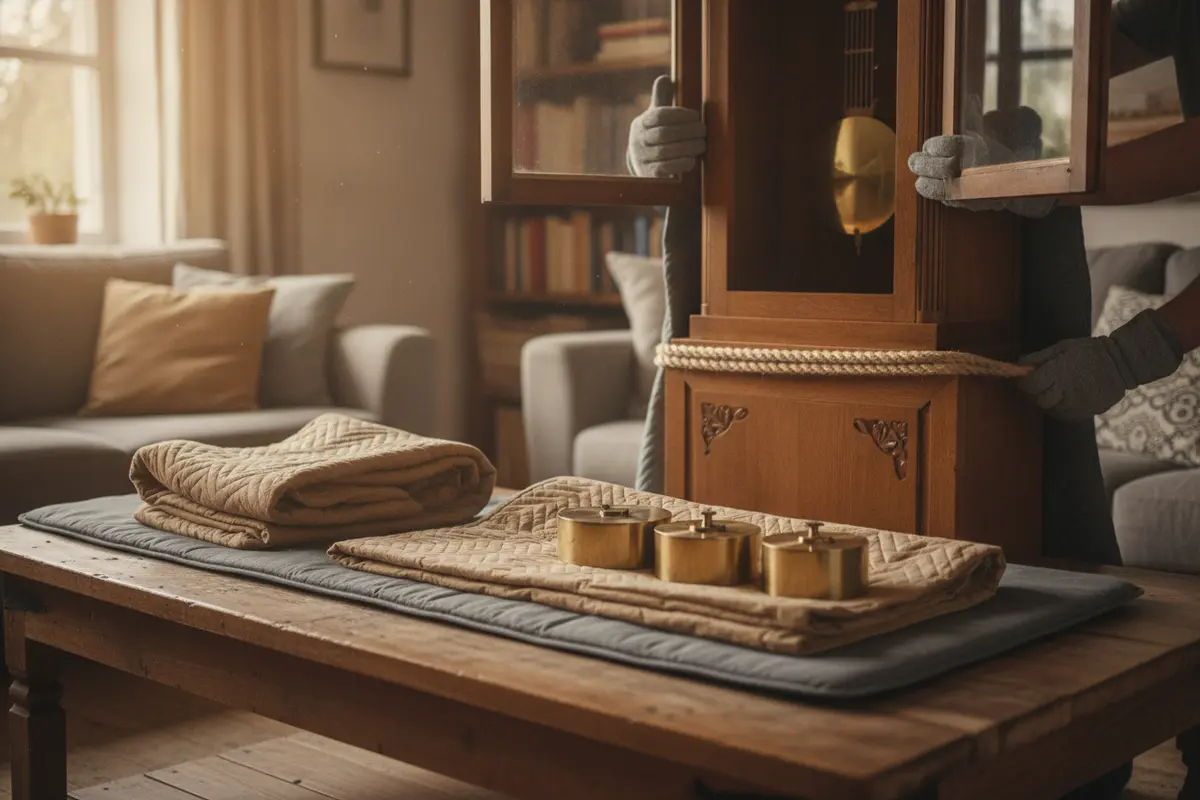
How should a grandfather clock be prepared?
Preparation depends on the specific clock. Start by consulting the manufacturer’s instructions or a qualified clock professional, especially if the mechanism is unfamiliar, fragile, or already in poor condition. A mover should not be expected to diagnose or repair the movement during loading.
- Photograph the clock before disassembly. Take pictures of the face, hands, pendulum, weights, chains or cables, and any visible assembly points. These images can help you remember how pieces were arranged, but use the manufacturer’s instructions or a clock professional for reassembly guidance.
- Remove the pendulum and weights only when appropriate. If the clock’s instructions call for removing them, follow the sequence carefully. Mark and wrap each item separately so it does not strike the case or another component. Ask a clock professional if you do not know how to disengage a part safely.
- Secure loose components. Place removable pieces in padded, labeled containers and keep small hardware together. Do not leave weights hanging or the pendulum swinging during transport. Avoid putting heavy parts in an unsecured position inside the cabinet.
- Protect glass and finish. Tell the mover about delicate panels and decorative details. Protective materials should be selected and applied to avoid rubbing or pressure on the finish. Do not apply adhesive directly to wood or glass unless the product and clock maker’s guidance make that safe.
- Keep the case upright unless a qualified plan says otherwise. A tall case is not a regular carton. Discuss lifting, carrying, vehicle placement, and securing with the moving crew rather than trying to move it alone.
- Keep accessories with the clock, but separate. Label a container with the clock’s name or room and keep it with your move inventory. Do not place small components loose in a drawer or cabinet that could open in transit.
These steps are general planning guidance, not a substitute for instructions for a particular movement. If the clock is a family heirloom, has significant value, or has a complicated mechanism, consult a clockmaker about disassembly and setup. A move may transport the case and its parts, but it should not be treated as a service adjustment unless that work is explicitly arranged with a qualified specialist.
How do access and route change the moving plan?
The route can matter as much as the clock’s dimensions. A tall case might clear a doorway but still be difficult to turn at a landing. Share a complete route description with the estimator rather than describing the home only as “one flight” or “easy access.”
At the pickup, identify the room where the clock stands, the path to the exit, and any obstacles that cannot be moved. At delivery, check the intended room and the path to it. If the clock is going upstairs, consider whether the final spot allows access for assembly and servicing later. Do not leave the intended location undecided until the clock is at the door.
For an apartment, confirm elevator size, padding or reservation rules, loading access, and any building time restrictions. For a house, describe narrow staircases, basement steps, porch turns, or a long route from the driveway. In either case, do not remove doors or handrails without permission and a safe plan. If a doorway or stairwell appears too small, tell the estimator before moving day.
Moves within the company’s primary local territory may have different logistics from a longer route. Delaware Moving & Storage serves New Castle County as its primary area, with coverage also described in nearby Chester and Delaware Counties in Pennsylvania and Cecil County, Maryland. Confirm that the pickup and destination are within the requested service area by contacting the company or checking its service area information.
What should a grandfather clock moving estimate explain?
Ask for an estimate based on the actual move details and make sure you understand what the scope covers. A clear conversation can help you compare estimates without focusing on a single total that may not include the same work.
| Estimate detail | What to check | Why it matters |
|---|---|---|
| Clock description | Dimensions, condition, construction, and removable components | Confirms the estimator has considered the actual item and handling needs. |
| Pickup and delivery access | Stairs, turns, elevators, carry distance, and parking | Access may change the crew plan and amount of labor involved. |
| Included work | Whether the estimate covers loading, transport, protective materials, and unloading | Helps you understand what is and is not part of the quoted scope. |
| Other services | Packing, storage, crating, or additional household goods if requested | Separates optional services from the clock’s basic transport plan. |
| Estimate basis | How local or long-distance charges are calculated and which details can change them | Lets you understand how the move is priced rather than assuming one method applies to every route. |
| Valuation and paperwork | Available valuation protection information, inventory documentation, and the process for noting pre-existing condition | Clarifies the paperwork and protection options before the move begins. |
For a local move, ask how the expected hours and the work around a large, delicate item are reflected in the estimate. For a longer move, ask how weight and mileage are considered and how the clock is represented in the household inventory. The company’s in-home estimate information can help you understand the survey option. The aim is to understand the scope and assumptions, not to expect a price before the mover has the necessary details.
How can you compare moving options?
When reviewing options, compare the work promised, the handling plan, and the estimate basis. A low initial figure may exclude services or depend on assumptions that do not match your home. A higher figure may include a different scope. Ask each mover the same questions so the answers are easier to compare.
- Will the clock be included in a household move, or is the estimate for the clock alone?
- What information has the mover used to assess dimensions, condition, and access?
- Who is responsible for removing and packing the pendulum and weights?
- Does the estimate include protective materials or any special packing that has been discussed?
- What is outside the quoted scope, including clock disassembly, servicing, or setup?
- How are existing condition and the clock’s components recorded?
- If access or the inventory changes, how should you contact the mover and confirm any effect on the estimate?
Moving delicate household items safely calls for an honest description of the object and the route. A moving company’s standard household-goods work is not automatically a clock-repair service. If you want a clock professional to prepare or restart the mechanism, plan that separately and coordinate when the case will be accessible.
Should you move a grandfather clock yourself?
A do-it-yourself move may appear to avoid a moving charge, but it also puts the lifting, disassembly, packing, vehicle choice, and route decisions on you. A tall cabinet can be hard to control, especially on stairs or while turning through a narrow doorway. The mechanism and glass also need protection from impacts and shifting.
Before deciding, consider who can safely lift and guide the case, whether the route is clear, whether suitable padding and securement are available, and how the clock will be kept upright. Do not attempt to carry a clock alone or improvise with an unsuitable vehicle. If you cannot confidently describe how each component will be protected, ask a mover or clock professional about the work before you commit to a plan.
For a professional move, Delaware Moving & Storage offers residential moving and packing services. Read about local moving and packing services to see how those offerings may fit into a larger move. The estimate should make clear which tasks are included and which need a separate specialist.
What if the clock needs to go into storage?
If you cannot place the clock at the destination right away, ask how storage would be handled as part of the move. Consider how long it may remain stored, whether the clock’s components will be packaged separately, and how the inventory will identify the case and its parts. Do not store it with loose weights or components that can shift against the cabinet.
Ask about the conditions and handling process for the storage option being discussed. Delaware Moving & Storage lists storage as one of its services; its storage information is a place to start, but confirm that the proposed arrangement suits your clock. For planning ideas on putting household items away, see the company’s moving guide.
If the clock is stored, keep the maker’s instructions, component photographs, and any service records together. When it comes out of storage, allow the clock professional to advise on setup and operation rather than winding or adjusting an unfamiliar mechanism immediately.
How do you plan a clock move step by step?
- Choose the intended destination room. Check its dimensions and determine where the clock can stand without blocking a walkway, door, or heat source.
- Document the clock. Take photographs, record dimensions, note existing marks, and gather manufacturer information if available.
- Describe the move. Give the estimator both addresses, the route details, stairs or elevator restrictions, and the clock’s condition.
- Review the estimate. Confirm what is included, how the cost is determined, and which preparation or specialist services are not included.
- Coordinate preparation. Follow the clock maker’s instructions or arrange a qualified clock professional for movement components that require specialist handling.
- Keep parts together. Label, protect, and inventory each removable component separately from the case.
- Review at delivery. Check the case and components against your documentation, place the clock in its planned spot, and arrange specialist setup if needed.
For a household move, the company’s move preparation guidance can help with other tasks that need to happen around the clock’s handling plan. Keep the clock’s needs visible in your overall schedule so it does not become an unplanned item on moving day.
Frequently asked questions
Can I get a grandfather clock moving cost without a survey?
You can ask what information the mover needs for an initial discussion, but a dependable estimate should reflect the clock, route, access, and requested services. Delaware Moving & Storage uses physical or virtual surveys to create detailed estimates. Photos and measurements are useful context, but the estimator may need to review the move more fully.
Does the moving estimate include clock disassembly or setup?
Do not assume it does. Ask whether any removal of the pendulum or weights is included, and confirm that clock repair, adjustment, and setup are outside the scope unless specifically arranged. A clockmaker can advise on the movement itself.
Is moving a clock with the rest of my household usually simpler?
It may be possible to include a clock in a larger household move, but the route, access, clock condition, and handling still need to be described. Ask how it will be itemized and protected within the overall move plan.
What information should I have ready when I call?
Have the pickup and destination, clock measurements, photos, condition notes, stair and doorway details, and any known information about its mechanism. Also explain whether it is moving alone, with a household, or into storage.
Can I move the clock to any Delaware address?
Service availability depends on the route. Delaware Moving & Storage’s primary service area is New Castle County, with nearby Pennsylvania and Maryland areas also described. Contact the company to confirm specific locations; do not assume every destination is covered.
Request an estimate for your move
For interstate household moves, the Federal Motor Carrier Safety Administration provides information about moving household goods at FMCSA. Share your grandfather clock’s dimensions, condition, and access details when requesting an estimate so the proposed plan reflects the move you actually need.