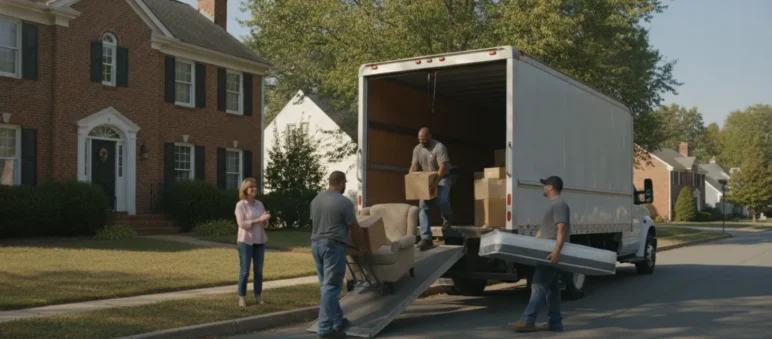
A Delaware moving parking permit may be needed when a moving truck will occupy a public street, reserve curb space, or use a loading area with local restrictions. The answer depends on the exact town, street, property, and move plan. Checking before moving day helps you find out whether you need permission, where the truck can stand, and whom to contact if a space must be reserved.
Does a Delaware move always require a parking permit?
No single statewide rule in this guide determines whether every moving truck needs a permit. Parking authority is often local, and requirements can differ by municipality, street, time of day, and type of parking. A truck parked in a private driveway or a designated loading area may raise different questions from a truck taking curb space on a public street.
It also helps to separate two different things people call a “parking permit.” A residential parking permit is generally about a resident’s vehicle parking in a regulated zone. A temporary moving arrangement may instead involve reserving curb space, using a loading area, or getting approval for a large vehicle to stand on a street. One permission does not automatically cover the other. Ask the local authority which rule applies to your exact situation.
Municipal rules can be specific to a community. For example, the City of Wilmington’s residential parking information describes its own residential permit program. Newark also explains that permits or passes apply to certain residential streets in that city on its Residential Parking Permit Program page. Those local programs are examples, not a statewide moving-truck rule. Confirm current requirements with the municipality where the truck will park.
Who should you contact about moving-truck parking?
Start with the local government for the address where the truck will load or unload. Depending on the town, the right contact may be parking services, the police department’s non-emergency line, public works, or a permit office. If you are not sure which department handles it, use the municipality’s official website or main phone number and ask to be directed to the office that handles temporary moving-truck parking or curb reservations.
If the move is in an apartment, condominium, managed community, or commercial building, contact the property manager as well. A building may have its own loading dock, elevator, service entrance, parking lot, or move-in reservation procedure. Building permission does not necessarily replace any public-street approval, and a city permit does not reserve a private loading area.
- Public street: Ask the municipal authority whether parking restrictions, curb reservations, or a temporary permit apply.
- Apartment or condominium: Ask management about move scheduling, loading areas, elevator protection, and truck-height or vehicle-size limits.
- Private community: Check with the association or property manager about guest parking, gates, and truck access.
- Business property: Confirm access and loading arrangements with the building contact, and check any street restrictions separately.
For a move in Wilmington, Newark, Middletown, Hockessin, New Castle, Bear, or another community, do not assume a nearby town’s instructions apply. Use the address of the truck’s stopping point, not only the destination’s mailing city, when you ask for guidance.
What details should you have ready when you ask?
Local staff can give a more useful answer if they understand the move setup. Before contacting them, write down the address, move date, approximate arrival window, and the type and size of vehicle if you know it. Explain whether the truck will use a driveway, private lot, marked loading bay, or public curb.
You do not need to guess whether a permit is required. Give the details and ask what process applies. If the truck dimensions or arrival time are not final, say so and ask which information must be confirmed before applying. Keep a note of the office you spoke with, the date, instructions, and any application or reference number.
| Parking situation | Who to ask | What to confirm |
|---|---|---|
| Truck will use a public curb or street | Municipal parking or permit office; ask the main municipal contact if unsure | Whether a temporary permit, curb reservation, or other approval is required; restrictions and application timing |
| Truck will use a building’s loading dock or lot | Property manager or building management | Reservation window, access route, vehicle limits, and any move-in rules |
| Home has a private driveway | Property owner or manager; municipality if truck may extend into public space | Whether the vehicle can fit without blocking a sidewalk, travel lane, or neighboring access |
| Street has signs, meters, or restricted hours | Municipal authority responsible for that street | What the signs mean for a moving truck and whether an exception or temporary arrangement exists |
| Move involves a gate, shared road, or private community | Association, community manager, or property owner | Gate access, vehicle clearance, guest rules, and where the truck may wait or park |
How do you check whether a curb reservation is available?
Describe the place the truck needs and why. Ask whether the municipality handles temporary curb use, whether the street is eligible, what application materials are needed, and how far ahead to apply. Also ask whether approval covers a specific space, a time window, or only a particular vehicle. Do not treat an informal conversation as a confirmed reservation unless the responsible office tells you it is approved.
Ask how the approved area is identified and whether you are responsible for placing signs or following another notice procedure. Requirements can vary, so follow the directions you receive rather than copying a process from another town. If the authority says the street cannot be reserved, ask what legal alternative it recommends, such as using a designated loading area or arranging access from the property.
Keep written confirmation if the office provides it. Share relevant instructions with everyone coordinating the move, including building management and the moving crew. If your moving date, vehicle, or expected arrival changes, contact the authority or property manager to learn whether the approval needs to be updated.
What should apartment and condominium residents check?
For a multi-unit building, parking is only one part of move access. Find out whether the building has a service entrance, a loading dock, a freight elevator, or a set move-in period. Some properties ask residents to reserve an elevator or protect shared hallways. Others may limit the size or height of vehicles that can enter a garage or private drive.
Ask management whether the truck can wait on the property or must remain on a public street. Confirm the loading location, route from the truck to the unit, and how long the space may be used. If your building requires a certificate, move form, or proof of insurance, ask for the requirement in writing and send it to the appropriate person with enough time for review. The building’s rules and the municipality’s parking rules are separate questions.
Renters can also check their lease or move-in materials for notice requirements. If a landlord or manager must approve a move, obtain that approval before arranging a truck. A practical apartment moving checklist can help organize the building and household tasks alongside parking arrangements.
How can you plan the truck’s route and arrival?
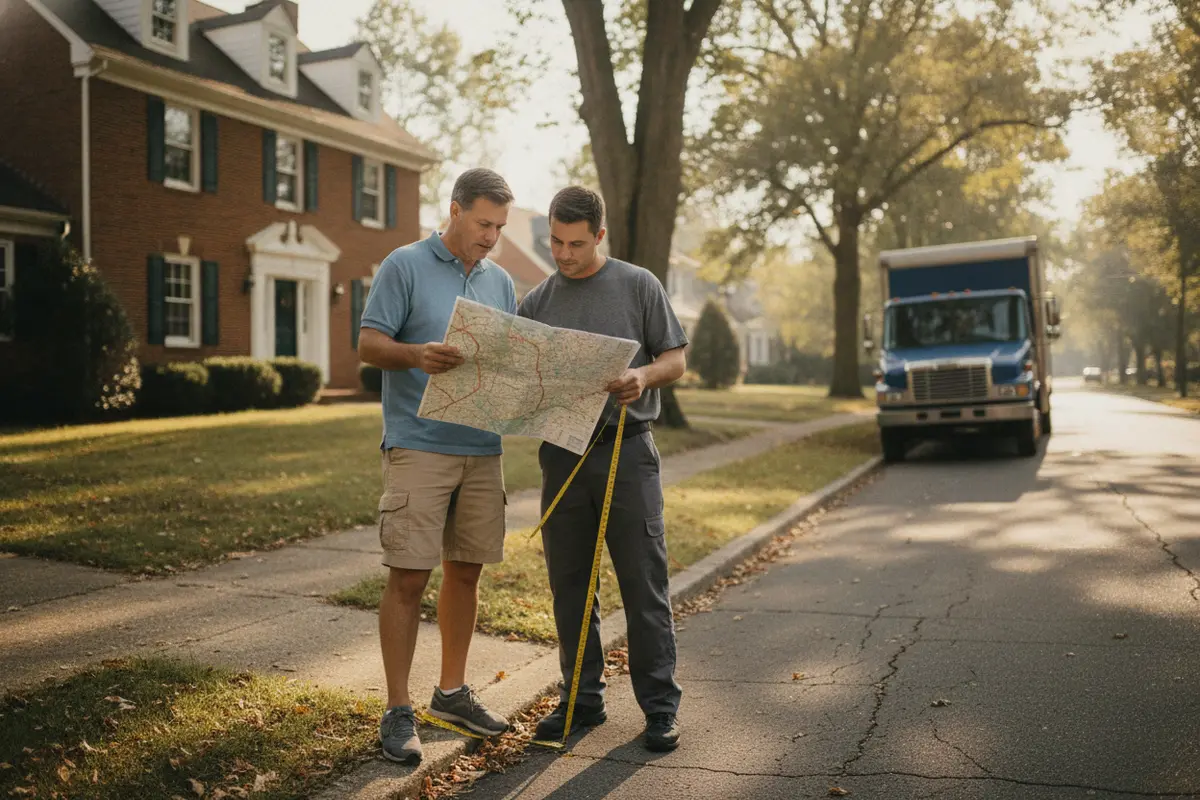
Parking approval is useful only if the truck can reach the approved location. Look at the full approach: street width, turns, low branches, overhead wires, gates, driveways, construction, and any posted vehicle restrictions. If the destination is in a townhouse development or older neighborhood, ask the property contact or local authority about access concerns rather than assuming the truck can pull directly to the entrance.
Think through where the truck will stop and how movers will carry items from the home. A long walk, stairs, a narrow entrance, or a shared hallway can affect the plan. Point out these conditions when arranging the move so the estimate reflects the actual access details. Delaware Moving & Storage uses physical or virtual surveys to prepare detailed estimates rather than relying on a blind estimate.
On the day before the move, review any permission or reservation, posted signs, building instructions, and the planned contact person. Make sure someone can meet the crew and direct them to the agreed location. Avoid placing household items, cones, or signs in a public space unless the authority has instructed you to do so.
For other preparation steps, see the company’s guide to preparing for movers and broader moving tips. If you need help describing access and services for a local relocation, review local moving services and the company’s service areas.
What if there is no private driveway or loading area?
Ask the municipality or property manager what options are permitted before moving day. Depending on the location, there may be a designated loading space, a curbside process, or a suitable legal place nearby. Do not assume that a hazard light, a short stop, or a note in the windshield makes a restricted parking space available. Follow posted signs and direct instructions from the authority responsible for the street.
If the first location is not workable, discuss an alternate stopping point and carrying route with the property contact and mover. Consider whether the alternate spot is legal, safe for loading, and accessible to the home. If it changes the distance or access conditions, tell the moving company because that may affect the move plan and estimate.
When should you start checking parking requirements?
Start once you know the move address and a likely date, especially if the truck may need public curb space or the property has scheduled move windows. The point is not to apply for a permit before you know what is required. It is to identify the responsible office, learn its process, and leave time to respond if you need to provide more information. Ask about lead time directly because the process differs by municipality and property.
For a move involving more than one location, check both ends. The origin may have one set of street restrictions and the destination another. If the truck will stop at a storage facility, loading dock, or temporary staging location, check that site’s arrangements too. A plan for the destination does not resolve access at the pickup address.
As the move date approaches, confirm that the address, date, arrival window, vehicle, and parking location still match what you discussed. If a manager or municipal office gave you instructions, reread them and keep the contact information available. Make sure the person meeting the crew knows where the truck is expected to stop and what to do if that space is occupied. Do not wait until the moving crew is on the street to find the person authorized to answer.
What should a simple parking plan include?
A brief written plan can keep the household, property manager, and moving crew working from the same information. It does not replace official approval. It is a way to record what you have asked, what was confirmed, and what remains unresolved.
- Record the locations. Write down each complete street address and identify whether the truck is expected to use a driveway, private lot, loading dock, or public curb.
- List your contacts. Include the municipal office or department, property manager, and the person who will be present at the home. Note the best way to reach each one on moving day.
- Save instructions. Keep written permission, application status, building rules, access codes, and directions together. If you receive verbal guidance, note the date and the office or person who gave it.
- Mark constraints. Record posted restrictions, gate or clearance concerns, loading hours, elevator reservations, and the route from the truck to the entrance.
- Set a backup question. Ask in advance what to do if the assigned area is blocked or unavailable. Use only an alternate location the authority or property allows.
Share only the details the crew needs to carry out the move safely and efficiently. If an instruction is unclear, ask the person who issued it to explain it rather than interpreting a permit or sign on your own. Use the company’s move preparation guidance as you organize household tasks and access details.
How should you handle an application or an unclear answer?
If the town directs you to an application, read the instructions for the exact permit or curb-use request they identify. Check what information is needed, how to submit it, and whether the office will provide a confirmation. Ask how you will know the request is approved, whether there are conditions, and what to do if you do not receive an answer before the move. Do not assume that submitting a request means it has been granted.
When you call or email, keep the question narrow and specific: “A moving truck is expected at this address on this date. It may need to use this part of the street. Which office handles permission, and what should I do next?” Then provide any details the staff requests. If you are transferred, repeat the address and situation so the new contact can give guidance for the right location.
If instructions appear to conflict, pause and verify them with the office or property contact responsible for that space. A building manager may approve use of the loading dock while a separate street rule governs the approach. Likewise, a local parking office can explain public curb restrictions but may not control a private lot. Ask each party to clarify only the part within its responsibility, and keep the answers together.
If you cannot get a definitive answer, ask who can make the decision and whether there is a permitted alternative. Share the unresolved access issue with the mover while there is still time to discuss options. Do not treat silence, a general residential permit, or another person’s past experience as approval for your particular move.
How can different move situations change the parking questions?
A house with a driveway: Check whether the truck can enter and turn around without striking branches or blocking a sidewalk. If the vehicle will stand partly on the street, ask the municipality whether that changes the parking requirements. Do not assume a driveway’s presence means the truck can fit.
A home on a narrow or busy street: Explain the street conditions when asking about parking. Ask whether there is a permitted alternative location and what restrictions apply. The authority can clarify local rules; the moving company can discuss the carrying distance and access information relevant to the estimate.
An apartment with a loading dock: Confirm the dock reservation with management, including the allowed time and entrance. Separately ask whether the vehicle needs to stop on a public road to reach it, or whether there are height and weight limits on the private approach.
A move between two towns: Make two checks, one for pickup and one for delivery. Even nearby municipalities can handle parking differently. Keep each location’s instructions separate so a permit or property arrangement for one address is not mistakenly treated as approval at the other.
Which common parking mistakes can you avoid?
- Assuming the rules are the same everywhere. Check the municipality and property for the specific address. Wilmington, Newark, and smaller communities may have different procedures.
- Confusing a resident permit with moving-truck approval. Ask specifically about the truck, curb use, and intended date rather than only asking about residential parking.
- Waiting until the truck arrives. Ask early enough to learn whether an application or building reservation is needed. Follow the timing provided by the responsible office.
- Checking only with the city or only with the building. A public parking approval does not necessarily reserve a private dock, and building permission does not necessarily authorize use of a public street.
- Leaving out key details. Give the exact address, move date, vehicle information if available, and expected parking location.
- Failing to report a change. If the date, truck, or location changes, ask whether the approval still applies.
- Blocking access while loading. Follow posted rules and avoid obstructing sidewalks, driveways, fire access, or travel lanes.
Frequently Asked Questions
Do I need a permit to park a moving truck in Wilmington?
Check with the City of Wilmington using the exact street address and explain that a moving truck will be loading or unloading. Its residential permit information describes a local residential program, but that alone does not answer whether a temporary truck or curb arrangement is needed for your move. Ask the city which rule or office applies to the truck’s planned location.
Does a residential parking permit let a moving truck use the space?
Do not assume so. A residential permit and temporary use of curb space may be handled under different rules. Ask the local parking authority whether the permit covers the vehicle and purpose you have in mind.
Should I ask my landlord or the municipality first?
If you live in a managed property, contact both when the truck may use a public street or the building has move-in rules. The property manager can explain private access and scheduling. The municipality can answer questions about public streets, signs, and local permits.
What if the town says I do not need a permit?
Ask whether any other restrictions apply to that block and time, such as signs, meters, loading hours, or vehicle limits. Note who provided the guidance and follow the posted rules on moving day. Requirements can change, so confirm close to the move if a long time has passed since you first asked.
What is the next step?
Before moving day, confirm parking and access with the authority and property contact responsible for each location, then share the instructions with your moving team. Delaware Moving & Storage serves customers from northern Delaware and coordinates local, interstate, and other relocation services through its moving network; visit the moving services page or contact the company to discuss your move details.
A little advance checking can make the truck’s arrival easier to coordinate, even when the final answer is simply that no special permit is needed.