
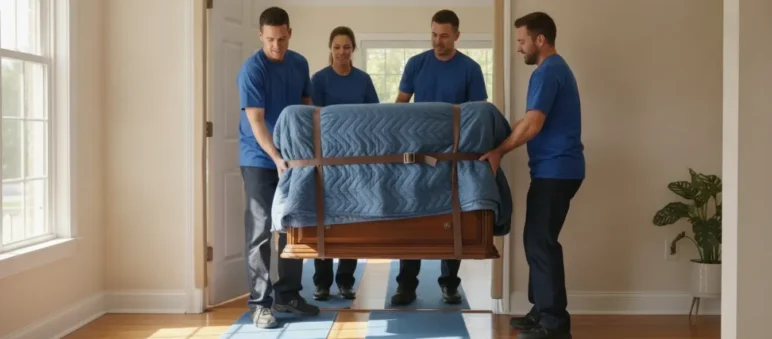
Large furniture can turn a household move into a series of tight turns, heavy lifts, and avoidable surprises. Furniture movers Delaware homeowners choose should assess each piece, plan the route, and protect both the item and the home.
Request your free furniture moving estimate for a careful plan before moving day.
This guide explains what a professional crew should review before moving day. It also shows how you can prepare your furniture, rooms, doorways, stairs, and storage decisions.
How do furniture movers in Delaware assess a household move?
Furniture movers in Delaware assess the inventory, dimensions, condition, weight, access routes, and destination placement before loading begins. A physical or virtual survey helps create a detailed plan instead of relying on a blind estimate.
A useful assessment starts with the furniture itself. The crew should note oversized sofas, solid-wood pieces, glass panels, marble tops, adjustable beds, and items with unusual shapes.
Condition matters as much as size. Existing scratches, loose joints, delicate finishes, and weak drawer slides should be documented before handling.
For a local move, ask what equipment and protection are included in the plan. A hand truck, four-wheel dolly, moving pads, and the right packing materials can change how a crew approaches a heavy piece. Review the company’s local moving equipment and protection and professional packing options when deciding what help you need.
The survey should also consider the path through both homes. Door widths, hallway turns, stair angles, elevators, parking areas, and exterior steps can change the moving plan.
Delaware Moving & Storage uses physical or virtual surveys to prepare accurate, detailed estimates. That approach gives the crew better information before the truck arrives.
What should you decide before the crew arrives?
Before the crew arrives, decide which furniture is moving, which pieces need disassembly, where each item will go, and which belongings need storage. Clear decisions reduce delays and help the crew protect the right items.
- Choose what stays: Separate furniture that will be donated, sold, recycled, or left for the next resident.
- Measure key pieces: Record the height, width, depth, and approximate weight of large furniture.
- Identify fragile surfaces: Point out glass, mirrors, stone, veneers, antiques, and recently repaired pieces.
- Mark destination rooms: Use a simple room plan or verbal list for bedrooms, offices, dining rooms, and storage.
- Share access details: Explain narrow drives, gates, stairs, elevators, loading zones, and building rules.
- Confirm storage needs: Separate items moving directly to the new home from items entering temporary or long-term storage.
Do not guess about an item that may require special handling. Show the crew its location during the survey, even if you are unsure whether it will move.
Give the estimator a destination plan, not only a room count. Note where the sofa, bed, bookcase, or dining set should sit. A simple floor plan can prevent repeated handling after delivery.
When should furniture be disassembled?
Furniture should be disassembled when removing parts makes the item safer to carry, protects the home, or allows it to pass through the planned route. The decision depends on construction, condition, size, and destination access.
Common candidates include bed frames, dining tables, modular shelving, desks, sectional sofas, and certain entertainment units. Some pieces should remain assembled when taking them apart could weaken joints or damage the finish.
A professional crew should use the right tools and protect hardware during disassembly. Small parts can go into labeled bags that stay with the matching furniture.
Ask whether the crew will reassemble the item at delivery. The answer can depend on the service scope, item design, and condition of the hardware.
Do not force glued joints, remove structural fasteners, or dismantle antique furniture without guidance. A mistake can create damage before the move even starts.
For an interstate move, confirm which assembly services are included and how parts will be tracked between addresses. The interstate moving and disassembly service page can help you prepare questions about larger or multi-stage relocations.
How do furniture movers protect wood, upholstery, and glass?
Furniture protection combines padding, wrapping, securing, and careful placement. Crews should protect the item from contact with walls, floors, door frames, other furniture, and shifting loads inside the truck.
Moving pads help cushion finished wood, upholstered pieces, and cabinet corners. Stretch wrap can hold pads in place, but it should not trap moisture against sensitive surfaces.
Glass shelves, doors, and tabletops need separate attention. They should be removed when appropriate, wrapped securely, labeled, and positioned to reduce pressure during transport.
Drawers should be evaluated rather than automatically taped shut. Removing them can reduce weight, while leaving them in place may protect the cabinet structure.
Floor and door protection also matter. Clean runners, corner guards, and padded contact points can reduce scuffs during a long carry.
Protection planning should also include what happens if an item is damaged. Ask the estimator to explain available valuation protection options and any limits that apply to your move. For practical lifting guidance, OSHA notes that repeated manual lifting of heavy objects can cause back injuries. So homeowners should leave difficult carries to trained movers rather than attempt them alone. See the OSHA ergonomics guidance for the safety principle.
| Furniture concern | Planning question | Protection focus |
|---|---|---|
| Finished wood | Are joints and surfaces stable? | Padded wrapping and controlled carrying |
| Upholstery | Will the piece fit through each turn? | Clean furniture pads and route protection |
| Glass or stone | Can removable panels travel separately? | Individual wrapping and stable placement |
| Cabinets and drawers | Will parts shift during handling? | Secured doors, drawers, and hardware |
Plan your furniture move with a detailed estimate before you commit to a moving date.
What access problems can affect a furniture move?
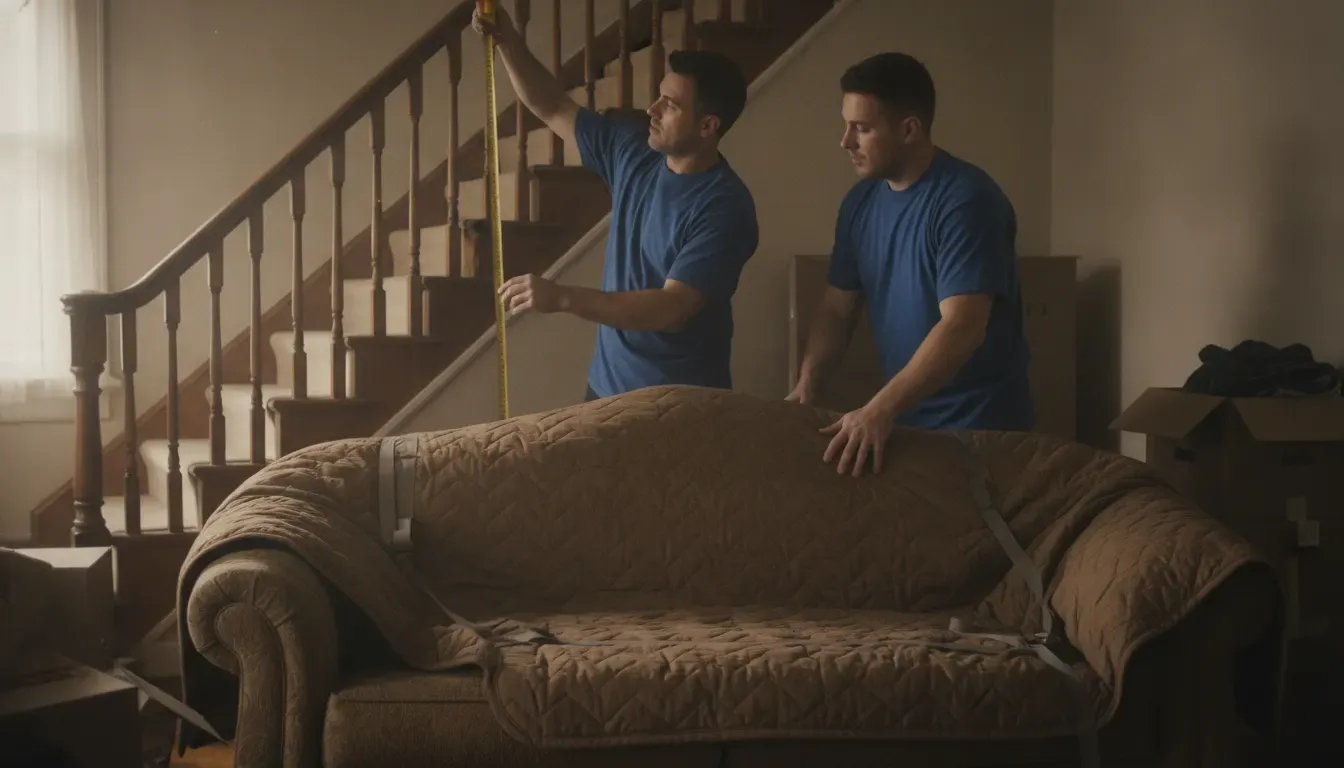
Access problems include narrow doorways, sharp hallway turns, steep stairs, low ceilings, small elevators, limited parking, and restricted loading zones. Finding these issues early helps the crew select safer methods.
Measure the tightest points rather than only the front door. A sofa may clear the entrance but fail at a hallway turn or stair landing.
Tell the mover about stairs at both addresses. Include basement stairs, split-level landings, attic access, exterior steps, and uneven walkways.
Apartment and condominium moves may require reserved elevators, certificates, loading windows, or building approval. Share those rules during the estimate process.
Parking can affect the distance between the truck and the door. A long carry may require more protection, planning, and crew coordination.
Never ask a crew to improvise around a blocked route. Move planters, rugs, toys, pet items, and small boxes before the scheduled arrival.
Apartment residents should also confirm elevator reservations, loading windows, and hallway rules in writing. Review these apartment moving considerations before the survey so the crew can plan the carry from truck to room.
Which specialty items need extra planning?
Specialty items need additional planning because their weight, value, construction, or balance creates different handling requirements. Examples include pianos, gun safes, antiques, artwork, exercise equipment, and large appliances.
General furniture planning should identify these items without repeating the full specialty-moving process. Tell the mover about them during the survey so the estimate reflects the work involved.
Antiques may require condition notes, custom protection, or a slower handling plan. Artwork and mirrors need suitable wrapping and a stable position during transportation.
Heavy safes and exercise equipment may need specialized equipment, extra crew members, or a route review. The safest method depends on the item and the property. Tell the estimator about these pieces early, because a general furniture plan may not cover specialty handling.
If you are comparing professional help with a do-it-yourself carry, use the company’s guide to moving heavy furniture safely as background. This article focuses on coordinating a professional crew, not repeating every DIY technique.
For detailed coverage of pianos, artwork, and antiques, review moving antiques and specialty items. Keep the full item list available for the estimator.
How does storage change a furniture move plan?
Storage changes the move plan because furniture may be handled twice, stored for an unknown period, or delivered in a different order. The best plan separates direct-delivery items from storage-bound pieces before loading.
Ask whether storage is short term or long term. The answer can affect labeling, access expectations, delivery timing, and how often the furniture must be handled.
Use clear inventory labels for each storage-bound item. Include the room, item name, and destination priority when possible.
Furniture entering storage should be clean and dry. Do not pack damp cushions, wet rugs, or items with active mold or pest concerns.
Delaware Moving & Storage offers storage solutions for transitions between homes and other relocation needs. The company operates a large warehouse facility with containerized storage options.
When storage is part of the move, ask how the crew will protect furniture during loading, warehouse handling, and final delivery. A single coordinated plan is easier to track than separate arrangements.
Ask about short- or long-term storage before the truck is loaded. Label each storage-bound piece on more than one visible side, record its destination room, and keep an essentials box separate from furniture headed to the warehouse.
What should you do on furniture move day?
On move day, keep access paths clear, make one person available for decisions, and show the crew every item that needs special attention. A calm handoff lets the team work from the agreed plan.
- Keep children and pets away from active carrying paths.
- Leave doors, gates, and elevators unlocked or scheduled as required.
- Keep important documents, medications, valuables, and personal essentials separate.
- Show the crew the designated rooms before loading begins.
- Confirm which items are going to storage and which are going directly to the new home.
- Point out existing damage before the first item moves.
- Walk through the home after placement to confirm furniture locations.
Stay available without directing every lift. The crew can manage the physical work while you answer questions about placement and priorities.
Before the truck leaves, compare the inventory with your room plan and photograph any condition notes you want to retain. Keep personal essentials separate, and use the company’s packing guidance when deciding what should travel outside furniture drawers or cabinets.
How can furniture movers Delaware homeowners trust make the move easier?
Furniture movers Delaware homeowners trust make the move easier through early assessment, route planning, protective materials, clear inventory decisions, and communication. The goal is controlled handling from the first survey through final placement.
Delaware Moving & Storage is family-owned and has served the tri-state area from northern Delaware for more than 42 years. The company provides local, long-distance, packing, storage, and specialty moving services.
For interstate relocations, Delaware Moving & Storage has been an official Wheaton World Wide Moving agent since 1999. That relationship supports moves beyond the local service area.
Local moves may use an hourly structure. Long-distance moves can consider shipment weight, mileage, packing, storage, bulky items, and selected valuation protection.
Accurate planning starts with the actual furniture and the actual property. A survey gives the moving team better information than a quick list of rooms alone. It also gives you a chance to ask about placement, timing, storage, protection, and service boundaries before the schedule is final.
Request a furniture moving estimate and discuss your inventory, access, protection, and storage needs with Delaware Moving & Storage.
Frequently Asked Questions About Furniture Movers Delaware
Do furniture movers disassemble beds and tables?
Furniture movers may disassemble beds, tables, shelving, desks, and other pieces when it improves safety or access. The crew should assess the construction first and protect all hardware during the process.
How do I prepare large furniture for movers?
Remove personal items, identify fragile surfaces, measure tight access points, and decide where each piece will go. Leave major disassembly and protective wrapping to the crew when the service includes those tasks.
Can furniture go into storage between homes?
Furniture can be stored between homes when the storage plan, inventory, protection, and delivery timing are clear. Label storage-bound pieces and ask how they will be handled during warehouse storage and final delivery.
What furniture needs special moving arrangements?
Pianos, gun safes, antiques, artwork, exercise equipment, large appliances, and unusually heavy pieces may need extra planning. Tell the estimator about these items before the move date.
Should I get an estimate before choosing a moving date?
Yes, an estimate should come before choosing a final moving plan. A physical or virtual survey can identify furniture volume, access issues, protection needs, storage, and other services that affect scheduling.
Get your careful move plan started with a detailed estimate from Delaware Moving & Storage.