
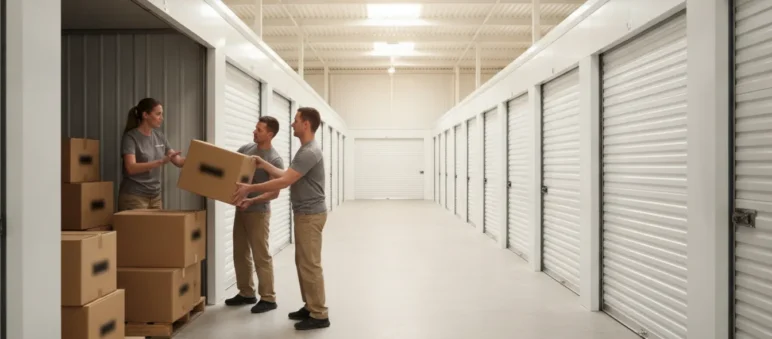
Belongings stored for months or years need more than a padlock and an empty corner. Delaware’s seasonal humidity and temperature swings can affect wood furniture, electronics, paperwork, and other household items, while poor access planning can make retrieval unnecessarily difficult. The right facility combines documented security, suitable storage methods, and clear communication about how your belongings will be handled.
For long term storage units delaware, choose a secure, professionally managed facility that uses monitored alarm protection, appropriate containers or units, and storage guidance for climate-sensitive belongings. Before committing, confirm access procedures, available sizes, pricing, and how the facility protects items beyond the lock on the door.
Delaware Moving & Storage operates a 40,000+ square foot warehouse in northern Delaware with 24-hour central alarm systems and containerized storage options. You can review the company’s secure long-term storage services before comparing the features that matter most in a long-term storage facility.
Request your free estimate today
What to Look for in Long Term Storage Units in Delaware
Choosing a facility for months or years involves more than comparing the monthly rate. The right location should make it easy to place belongings into storage, protect them while they are there, and retrieve them when your plans change. Before signing an agreement, ask how the property is secured, where it is located, what unit sizes are available, and how often you can access your items.
Security and monitoring
A sturdy lock is useful, but it should not be the only layer of protection. Ask whether the property has controlled entry, alarm monitoring, lighting, and procedures for responding to unusual activity. Secure facilities may use integrated systems beyond individual locks, including central alarms and surveillance measures. Delaware Moving & Storage, for example, lists 24-hour central alarm security systems as a warehouse feature (Delaware Moving & Storage).
Location, size, and access
A convenient northern-Delaware location can reduce the time and effort involved in dropping off or retrieving belongings, especially when storage is part of a move. Look beyond the city listed in an advertisement. Confirm that the entrance, loading area, elevators, and driveways can accommodate your vehicle and the items you plan to store.
Unit sizes should match the volume of your belongings rather than leaving you with excessive unused space or a crowded arrangement. Facilities commonly offer options from compact 5×5 units through larger 10×30 spaces, allowing customers to store anything from a few boxes to a full household. Ask how the size is measured and whether staff can help estimate the space required before you reserve it (storage size guidance for Delaware facilities).
Also confirm the access hours in writing. A facility may be convenient geographically but difficult to use if its operating schedule conflicts with your work or moving plans. Ask whether access is appointment-based, whether advance notice is required, and who will help with loading or retrieval.
Climate control for sensitive belongings
Climate control is worth considering for electronics, wooden furniture, paperwork, photographs, and other items that can react to humidity or temperature changes. Delaware’s seasonal conditions make environmental stability especially relevant for belongings that will remain packed for a long period. Ask how temperature and humidity are managed, rather than assuming every indoor unit offers the same protection. The storage choice should reflect the materials you are storing, not simply the lowest advertised price.
How Delaware Moving and Storage’s Warehouse Protects Your Belongings
Long-term storage should give you confidence that your furniture, boxes, and personal possessions are being cared for throughout the entire storage period. Delaware Moving & Storage operates a secured 40,000+ square foot Class A warehouse in northern Delaware. Giving customers a professional setting for household and commercial storage rather than an improvised space. The facility supports organized storage for belongings that may need to remain protected for months or longer.
Security that goes beyond a padlock
A lock is only one part of a responsible storage plan. The warehouse features 24-hour central alarm security systems, providing ongoing monitoring beyond the protection of individual locks. That additional layer is important when belongings are stored out of sight and you cannot check on them every day. A professional warehouse environment also allows the moving and storage team to plan where items are placed. How they are handled, and how they can be retrieved when needed.
Containerized storage for organized handling
Containerized storage options help keep belongings grouped and organized during the storage process. Instead of treating every item as a loose object in a large room, the team can manage your shipment as a defined collection. This approach can make loading, transportation, and eventual delivery more orderly, especially when you are storing the contents of an entire home or coordinating storage between two moves.
Before recommending a storage plan, Delaware Moving & Storage uses a physical or virtual survey to prepare an accurate, no-blind estimate. The survey helps account for the volume and type of items involved. While available valuation protection provides an additional safeguard for eligible belongings during professional moving and storage services.
Learn more about secure long term storage units in Delaware and the options available for your situation.
Request your free estimate today
Climate-Sensitive Items and How to Store Them for Months or Years
Delaware’s humidity and temperature changes can affect belongings that seem durable at first glance. Over months or years, uncontrolled conditions may contribute to warping, material stress, corrosion, or gradual deterioration. Climate-controlled storage is especially worth considering for electronics, wood furniture, paperwork, and photographs. The goal is not simply to place items in a unit, but to prepare them so they remain stable, identifiable, and usable when you need them again.
Prepare electronics before packing
Back up important data, remove batteries when appropriate, and allow devices to reach room temperature before boxing them. Use clean, dry packing materials and keep electronics elevated rather than directly on a floor. Avoid wrapping devices while they are warm or damp. Climate-controlled storage can reduce exposure to the humidity and temperature extremes that may damage sensitive electronics over time. A facility should also be able to explain how environmental conditions are monitored. Continuous temperature monitoring is a useful model for protecting temperature-sensitive contents because it helps verify that conditions remain within a safe range. Rather than relying on a one-time reading.
Protect wooden furniture from moisture and pressure
Clean and dry each piece before storage. Disassemble larger furniture when practical, cover surfaces with breathable materials, and avoid sealing wood in plastic that can trap moisture. Do not stack heavy boxes on tables, chairs, or upholstered pieces. Leave room for airflow around furniture and keep it off the ground. These precautions matter because wood can swell, warp, or finish unevenly when humidity changes. Choose climate-controlled storage for valuable, antique, or finished wood items, particularly when they will remain stored through several Delaware seasons.
Pack paper documents and photographs for preservation
Sort documents and photos before packing, remove metal clips or rubber bands that may deteriorate, and use archival-quality folders or boxes when the material is irreplaceable. Label containers clearly so you do not repeatedly open and disturb them. The Smithsonian’s storage, archiving, and preservation best practices recommend planning around suitable environmental conditions, dry storage, and careful organization. Keep boxes upright when appropriate, avoid overpacking them, and leave enough space to retrieve contents without crushing edges.
Schedule a condition check
Record where each climate-sensitive box is placed and inspect the contents at a sensible interval. Look for moisture, odors, warped materials, pests, or changes in finishes. If an item shows a problem, address the cause before returning it to storage. This simple review helps catch deterioration early, especially when belongings will remain in long term storage units Delaware families may not visit often.
Long-Term Storage Costs: What You Are Paying For
The monthly price for long-term storage is shaped by more than the amount of floor space your belongings occupy. Unit size is usually the starting point. A few labeled boxes may fit in a smaller space, while household furniture, appliances, seasonal items, or business equipment may require a larger unit or containerized storage. Choosing enough room to protect and retrieve your belongings matters, but paying for unused capacity does not.
Duration also affects the total cost. A storage plan for several months may have different terms from an arrangement that lasts a year or longer. Ask how billing works when your timeline changes, whether moving items in or out creates additional charges, and what access arrangements are included. Reviewing Delaware storage unit costs can help you compare the factors that influence a quote before committing.
Climate control can add to the price, but it may be worthwhile for belongings that are sensitive to humidity and temperature changes. Electronics, wooden furniture, paperwork, photographs, and other delicate items can warp or deteriorate in uncontrolled conditions. The right choice depends on what you are storing, how long it will remain in storage, and the conditions recommended for those items.
| Cost factor | What it covers | When it matters most |
|---|---|---|
| Unit size | The floor space and ceiling height your belongings occupy | Household furniture, appliances, and business equipment |
| Duration | How long your storage plan runs and how billing adjusts when it changes | Plans lasting a year or longer, or timelines that shift |
| Climate control | Managed temperature and humidity for sensitive items | Electronics, wood furniture, paperwork, and photographs |
| Valuation protection | Additional coverage during professional moving and storage | Valuable, heirloom, or hard-to-replace belongings |
| Access and handling | Loading areas, retrieval help, and facility operating hours | Frequent visits or large, heavy, or oddly shaped items |
Valuation protection is another cost consideration. It provides an additional way to safeguard belongings during professional moving and storage, so ask what protection options are available and what each option covers. A low monthly rate is not necessarily the best value if it leaves important possessions insufficiently protected.
Delaware Moving & Storage does not provide blind estimates. A physical or virtual survey reviews the volume and type of items before the company prepares a detailed estimate. That approach helps match your needs to the appropriate space and services while supporting transparent pricing with no hidden fees. It also gives you an opportunity to discuss climate-sensitive items, access needs, packing, and valuation protection before storage begins.
Request your free storage estimate
How to Inventory Your Belongings Before Long-Term Storage
A careful inventory turns a packed storage space into an organized record you can use months or years later. It helps you confirm what went into storage, find specific items without opening every box, and notice anything missing or damaged when you retrieve your belongings. Preservation guidance from the Smithsonian also recommends identifying and documenting stored materials before placing them away for an extended period.
Set aside enough time to work room by room rather than trying to remember everything after the move. Use a spreadsheet, notes app, or printed checklist, and give each box a simple identification number. Your inventory does not need to describe every individual dish, but it should be specific enough to answer, “Which box contains this item?”
- Record the box number and location. Note where each box is stored, such as “Living room, shelf two” or “Container B. Rear section.” If the facility or moving crew creates a placement plan, keep a copy with your inventory.
- List the contents clearly. Write useful descriptions such as “winter coats, scarves, and boots” instead of “clothes.” For mixed boxes. List the major items and identify anything you may need to retrieve quickly.
- Add the packing date. Label every box with the month and year it entered storage. This creates a basic timeline and helps you recognize older boxes that may deserve an earlier inspection.
- Mark priority items. Identify boxes containing legal records, family photographs, heirlooms, electronics, or other belongings that require careful handling or quick access.
- Photograph high-value belongings. Take clear photographs before packing valuable furniture, artwork, jewelry, collectibles, and electronics. Capture identifying details, existing marks, model or serial information, and the item’s overall condition. Store the images with your digital inventory.
Keep one copy of the inventory at home and another in a secure digital location. Review it when you retrieve items and update the record if boxes are opened, repacked, or moved. A detailed inventory is one of the simplest ways to make long-term storage more manageable and accountable.
For additional preservation guidance, see the Smithsonian’s storage and preservation best practices.
Request your free storage estimate today
Frequently Asked Questions
What size long-term storage units are available in Delaware?
Storage options vary by facility and may range from compact spaces for boxes to larger units that hold furniture for an entire home. Some Delaware facilities advertise sizes from 5×5 to 10×30, but the right choice depends on your inventory, packing method, and whether you need room to access items later. Ask about unit dimensions, ceiling height, loading areas, and whether containerized storage is available.
Is climate-controlled storage worth it for long-term storage in Delaware?
For belongings that may react to humidity or temperature changes, climate control is often a sensible long-term safeguard. Electronics, wooden furniture, paperwork, photographs, and other moisture-sensitive items can warp, degrade, or develop damage in uncontrolled conditions. Use clean, dry packing materials, keep boxes off the floor when possible, and ask how the facility maintains and monitors its storage environment.
What should I look for in a long-term storage facility?
Prioritize security, suitable environmental conditions, clear access policies, convenient retrieval arrangements, and transparent pricing. Ask whether the property uses monitoring beyond individual locks, what hours you can access belongings. How items are handled during loading and unloading, and whether valuation protection is available. A detailed inventory and labeled boxes will also make future retrieval much easier.
Can I use a self-storage unit for residential purposes in Delaware?
No. Delaware’s Self-Service Storage Facility Act prohibits using a storage facility for residential purposes. A storage unit is intended for storing possessions, not for living, sleeping, cooking, or using as a residence. Review the facility agreement carefully and ask the operator about any prohibited uses before moving belongings in. Read the Delaware Self-Service Storage Facility Act for the governing language.
Ready to Request a Free Storage Estimate?
Long-term storage works best when the plan matches the belongings you need to protect and the time you expect to store them. A personalized estimate can help you understand the recommended storage solution and expected price before you make arrangements.
Request your free storage estimate to get started with the next step.