
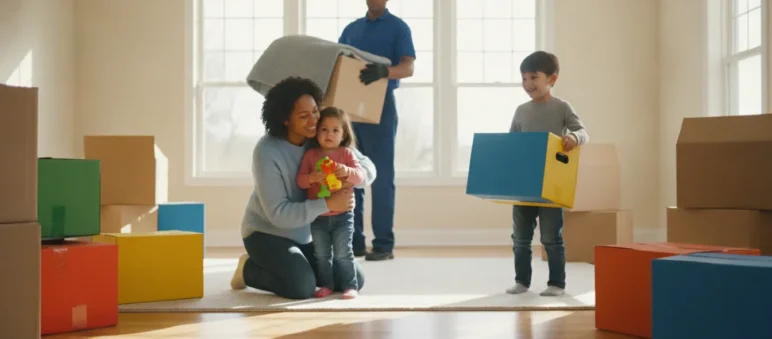
Moving with kids in Delaware is also a school transition. Families may need to transfer records, confirm enrollment, plan transportation, and keep children steady during a change of home. The right preparation turns those tasks into a manageable sequence.
When moving with kids in Delaware, begin with the destination school and the dates that affect your child. Confirm enrollment requirements, protect school and medical records, keep daily essentials with the family, and build a first-week routine before the moving truck arrives.
This guide focuses on school continuity and the practical household decisions around it. It covers records, district questions, packing, move-day safety, storage, and the first weeks after arrival.
Request a moving estimate for your Delaware family transition.
How Can Moving With Kids in Delaware Stay Connected to School?
Start with a timeline that connects the move date to school dates. List the last day at the current school, the first possible day at the new school, and any deadlines between them.
Then separate confirmed details from open questions. A family may know the new address but not the bus route. The district may need records before it can confirm placement. Writing down each unknown prevents missed calls during packing.
Keep the child involved without making the child responsible for adult decisions. Explain what is changing and what will stay familiar. A child can choose a backpack, help mark a calendar, or select a few bedroom items.
Protect ordinary anchors during the planning period. Keep breakfast, bedtime, reading, activities, and regular check-ins as consistent as practical. A predictable rhythm can matter more than a perfect moving schedule.
Use a shared calendar with separate colors for school, moving, health, and transportation. Add packing sessions after school rather than during every free hour. Children need time to rest and participate in normal activities.
What should families put on the first planning page?
- Current school contact information and the destination district or school.
- Enrollment, records, transportation, childcare, and activity questions.
- Move dates, lease or closing dates, and any temporary housing period.
- Medication, support-plan, language-service, or accessibility information to transfer.
- A short list of belongings that must remain with the family.
For a broader household timeline, keep the Delaware local moving checklist nearby. Use it to place school tasks beside packing and travel tasks.
What Should Delaware Families Confirm Before Enrolling a Child?
Contact the destination school or district as soon as the address and likely move date are known. Ask which office handles enrollment and whether the school needs an appointment.
Requirements vary by district, grade, living arrangement, and student situation. Confirm the current list directly instead of relying on a general checklist. Ask about proof of address, identity documents, health records, prior school records, and custody documentation when applicable.
Ask how the school handles a midyear arrival. A child may need a start date, class schedule, orientation, meal information, or a temporary plan while records transfer. Older students may also need course placement guidance.
Transportation deserves its own conversation. Ask whether the address is within the bus area, when the route becomes available, where the stop is located, and what an adult should do during the first pickup.
Families should also ask about before-school care, after-school care, athletics, clubs, special education services, gifted services, language support, and counseling. Not every program uses the same registration process.
For general orientation, the Delaware new-resident moving guide includes school-related resources. Treat it as a starting point. Confirm eligibility, deadlines, placement, and services with the school or district.
| Question for the school | Why it matters |
|---|---|
| What documents are required? | Parents can keep the correct records accessible instead of packing them. |
| When can the child start? | The family can coordinate housing, transportation, and childcare. |
| How does transportation work? | The child can practice the route and pickup routine before the first day. |
| Who handles support services? | Existing plans and accommodations can transfer with fewer surprises. |
| What should happen on day one? | The child can arrive knowing where to go and whom to ask. |
How Can Parents Move School Records and Support Plans Safely?
Make one records folder for each child. Keep a paper copy with an adult and a secure digital backup when appropriate. Do not put essential documents in the moving truck or a storage unit.
Useful records may include report cards, withdrawal information, individualized education program documents, 504 plans, evaluation reports, health forms, immunization records, medication instructions, and emergency contacts. The exact list depends on the child and the school.
Ask the current school how it releases records. Some schools send records directly to the new school. Others require a signed request or provide a parent copy. Write down the request date, contact person, and expected transfer date.
Use the same approach for medical and care information. Keep prescriptions, insurance cards, provider contacts, and care instructions with the family. Refill essential medication before travel when appropriate, and follow the prescribing provider’s directions.
Older students may need additional planning. Ask about credits, course sequences, graduation requirements, transportation, and activities. A counselor can help identify classes that do not transfer automatically.
Keep copies of correspondence in the records folder. A short note can show which questions were answered and which still need follow-up. This reduces repeated calls during the final packing week.
Request a moving estimate before school and housing dates get crowded.
How Should Families Plan Packing Around the School Calendar?
Pack by access priority, not only by room. School materials and daily supplies may be needed until the final day. They should not disappear into an early box.
Create one personal bag for each child. Include clothing, pajamas, toiletries, a water bottle, snacks, a charger, and one comfort item. Add school supplies that the child will need immediately.
Prepare a shared first-night box with towels, basic food, cleaning wipes, toilet paper, simple utensils, and phone chargers. Mark it clearly and keep it separate from items that can wait.
What belongs in a child’s travel bag?
- Two changes of clothes and sleepwear.
- School materials, headphones, and a favorite book or activity.
- Comfort items that help the child settle in an unfamiliar room.
- Snacks, water, medication, and any written care instructions.
- Contact details for the school, caregiver, and family members.
Label boxes with the child’s name, destination room, and opening priority. Color coding can help younger children recognize their belongings. Keep labels simple enough to read during a busy arrival.
Pack school artwork, projects, instruments, uniforms, and activity equipment with care. Photograph a complicated setup before packing it. That record can help rebuild a desk, shelf, or technology station later.
Families with limited time may compare a do-it-yourself plan with professional packing services for Delaware moves. A hybrid plan can leave personal items with parents while a crew handles selected household areas.
How Can Moving With Kids in Delaware Feel Predictable on Move Day?
Move day should have one clear child-safety plan. Choose a trusted adult to supervise children away from truck paths, open doors, ramps, and active loading areas.
The supervisor should carry the children’s bags, records, medication, snacks, and emergency contacts. Children should know where they can stay and which adult answers questions.
Explain the basic sequence before the crew arrives. Tell children which rooms will change first and when the family will travel. Avoid promising an exact arrival time if traffic or building access may change.
Ask the crew leader to confirm the safest route through the home. Keep children away from driveways, stairs, dollies, moving pads, and doorways. Adults should handle heavy, sharp, fragile, or chemical items.
At the destination, identify each child’s room before unloading starts. Point out school supplies, furniture placement, and boxes that should open first. A room-by-room walkthrough helps the crew place belongings in a useful order.
Professional protection materials can support an orderly work area. Floor protection, door protection, furniture pads, and careful loading help protect the home. The family still needs an adult-managed child zone throughout the work.
Use what to expect on moving day in Delaware as a family briefing. Add your own school, childcare, parking, and travel details.
What Can Children Do During the First Week at a New School?
Plan the first week around orientation, transportation, and one familiar routine. Visit the route before the first morning when possible. Identify the entrance, office, bus stop, classroom area, and a place to ask for help.
Give the child a short introduction script. It might include a name, grade, former school, and one interest. A script can make the first conversation easier without forcing a child to perform.
Ask the teacher or counselor how the child can find lunch, bathrooms, transportation help, and missed assignments. Older students may need a schedule review and a way to locate classrooms.
Keep the after-school period calm. New information can be tiring, even when the day went well. Offer food, rest, and a familiar activity before asking for a detailed report.
Watch for sustained changes in sleep, appetite, mood, attendance, or social behavior. A short adjustment period is common, but ongoing concerns deserve a conversation with the school and the child’s care team.
Help the child build one local connection at a time. A library visit, playground trip, club meeting, or neighborhood walk can make the new area feel less abstract. Let the child choose among a few low-pressure options.
Keep the old connection where it is healthy and practical. A call with a former friend or teacher can provide continuity. The goal is not to erase the previous home. It is to add familiar points to the new one.
Can Storage and Moving Help Protect School Routines?
Storage can help when a lease, closing, renovation, or temporary home creates a gap between addresses. It allows families to keep school and daily essentials close while less-used furniture waits elsewhere.
Keep school supplies, uniforms, records, medication, bedding, and comfort items with the family. Store seasonal items, extra furniture, decor, and belongings that the child will not need during the transition.
A staged arrival can make a temporary home easier to use. Children can have clear sleeping, homework, and play areas before every box is opened. Parents can then focus on transportation, meals, and school communication.
Ask how storage access, handling, protection, and timing work before choosing a plan. The company’s storage solutions page explains the available service. Families with a closing gap can also review storage between Delaware homes.
For a survey-based plan, provide the mover with both addresses, access details, school timing, and items that must remain available. Delaware Moving & Storage uses physical or video-based virtual surveys to prepare detailed estimates. This helps the estimate reflect the household rather than a blind assumption.
Request a detailed estimate for your family’s move and school transition.
What Are the Most Important Questions Before a School-Related Move?
Families should confirm the destination school’s enrollment process, record-transfer steps, transportation plan, first-day instructions, and support contacts. They should also keep records, medication, school supplies, and personal essentials with the family. A shared calendar makes school deadlines visible while adults coordinate housing, packing, travel, and moving help.
When should we contact the new school?
Contact the school when the destination and likely move date are known. Ask about enrollment, records, transportation, health forms, support services, and the first possible start date.
Should school records travel with the moving truck?
No. Keep school, medical, medication, and support-plan documents with an adult. Carry paper copies and secure digital backups when appropriate.
How can we protect routines during a housing gap?
Keep daily clothing, school supplies, bedding, medication, and comfort items accessible. Storage can hold less-used belongings while the family waits for the permanent home.
What should children know about move day?
Children should know where they will wait, which adult supervises them, and why truck paths and open doors are off limits. Keep their personal bags with that supervising adult.
Start your Delaware family move with a clear, survey-based estimate.